Machu Picchu

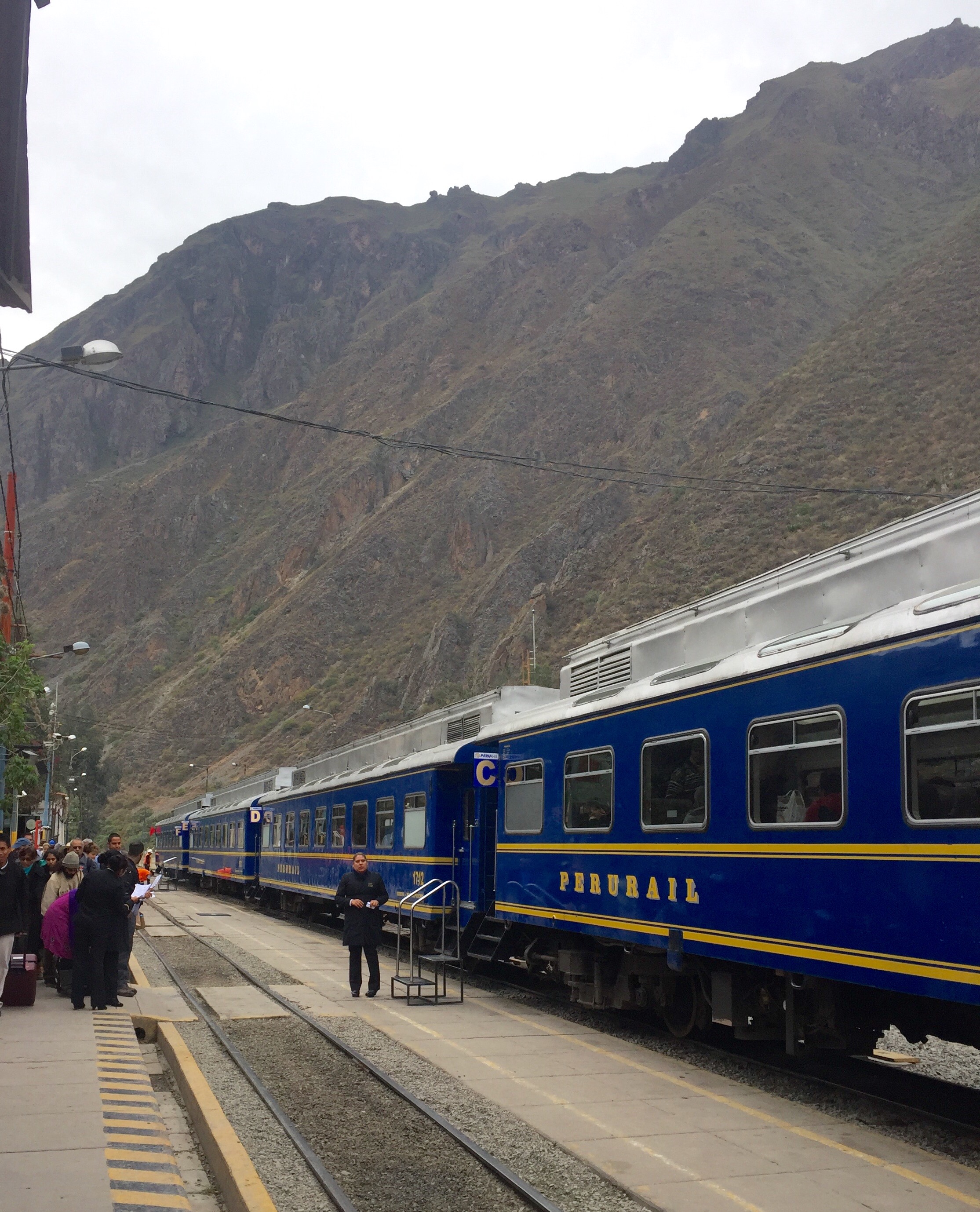
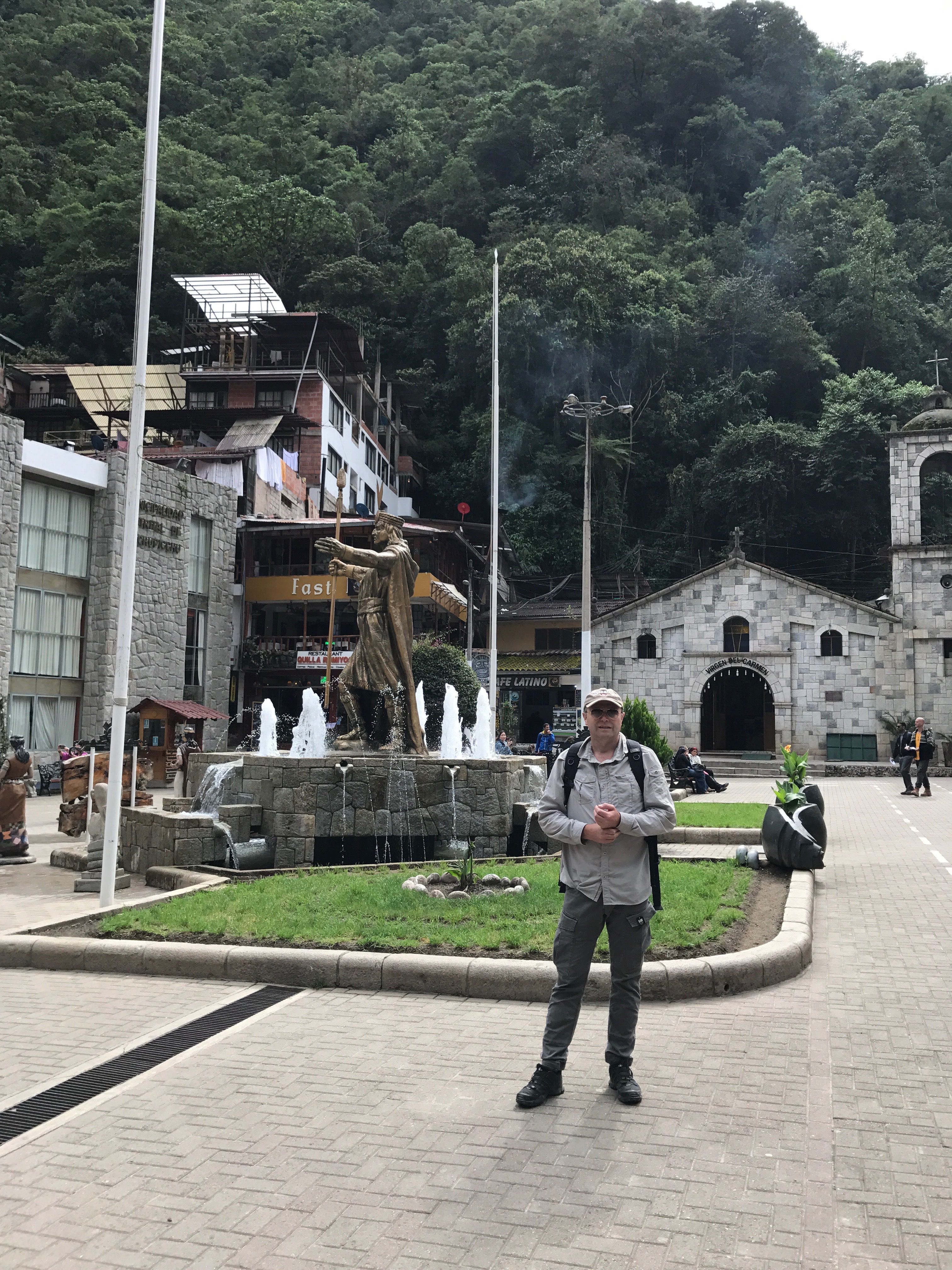
We got up at stupid o’clock to get our train from Ollantaytambo (try saying that after a couple of pisco sours), and poor Willington must have got up at a sparrow’s crack to make the journey from Cusco.   A very pleasant and scenic journey meandering through the valley following the river Urubamba until we got to Machu Picchu village, a town that seems to serve no purpose other than as a stop gap for hikers and us tourists.  

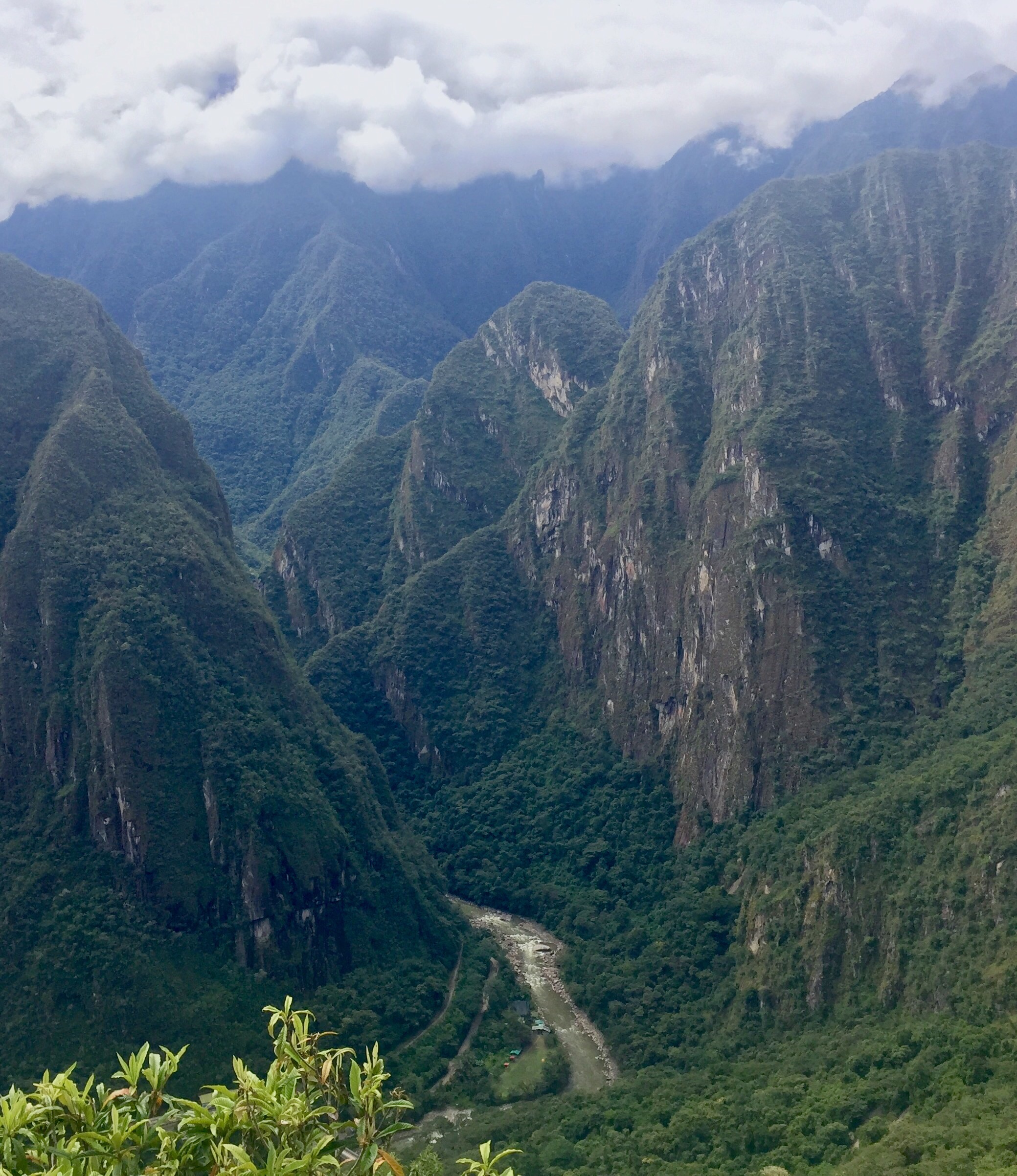
We boarded our bus and headed up the mountain via a series of rather stomach churning bends.   My advice, don’t look down!

The view from the bus.

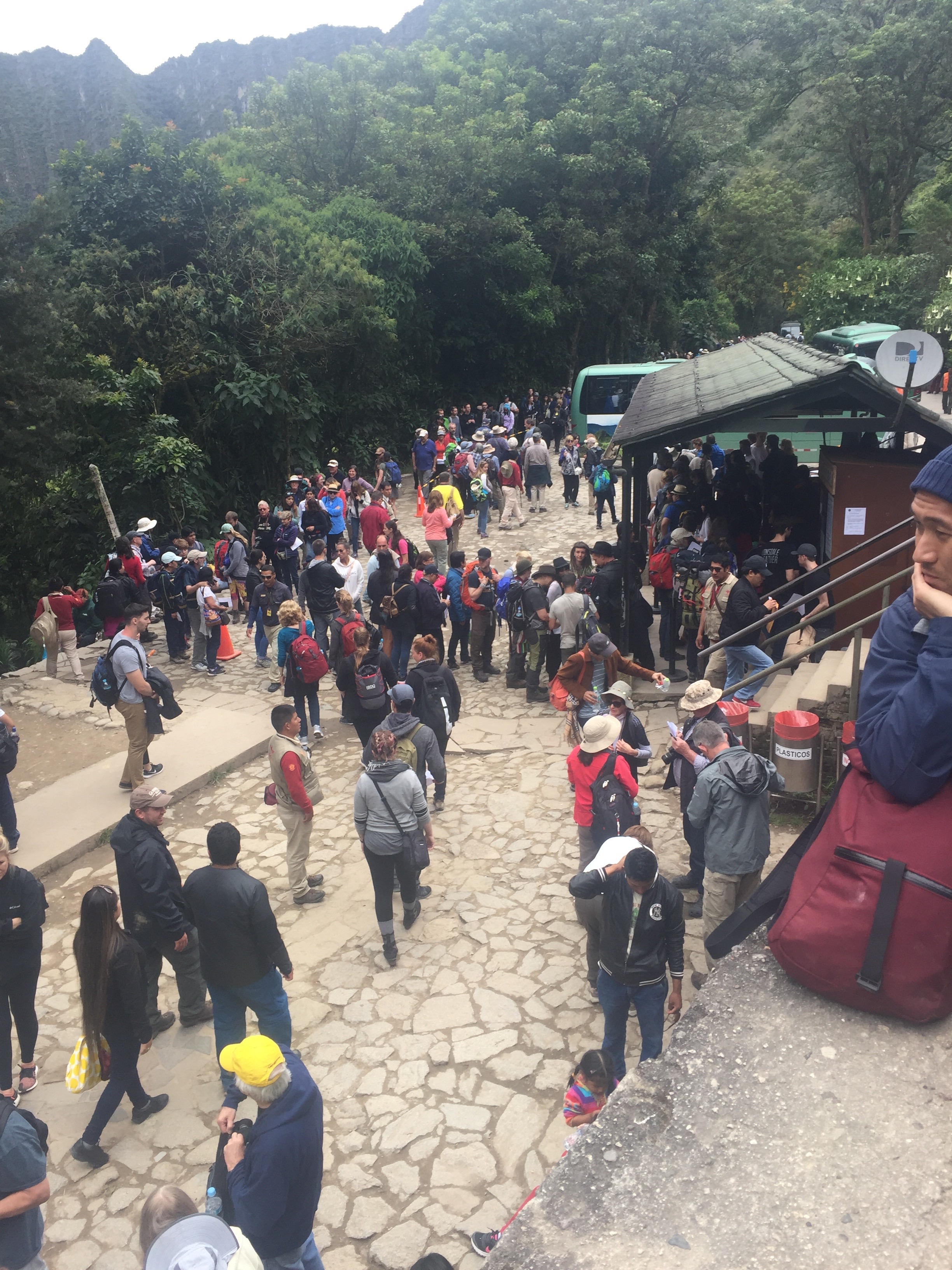
And there we were.  At last.   Crowds of tourists, big queues, and so much beaurocracy just to get in, but when you go through the barriers and climb a few feet then turn the corner, there it is in all it’s glory!
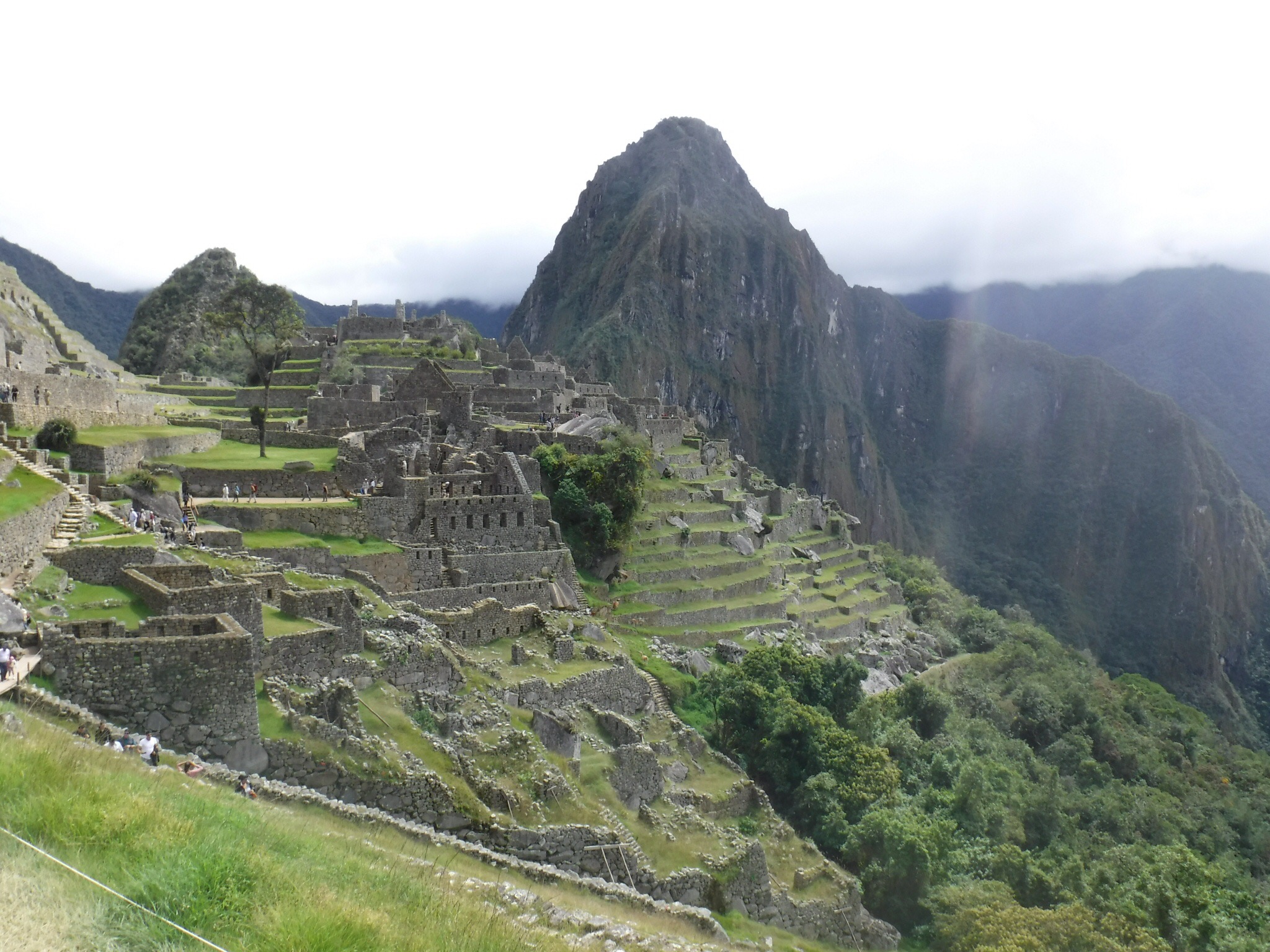

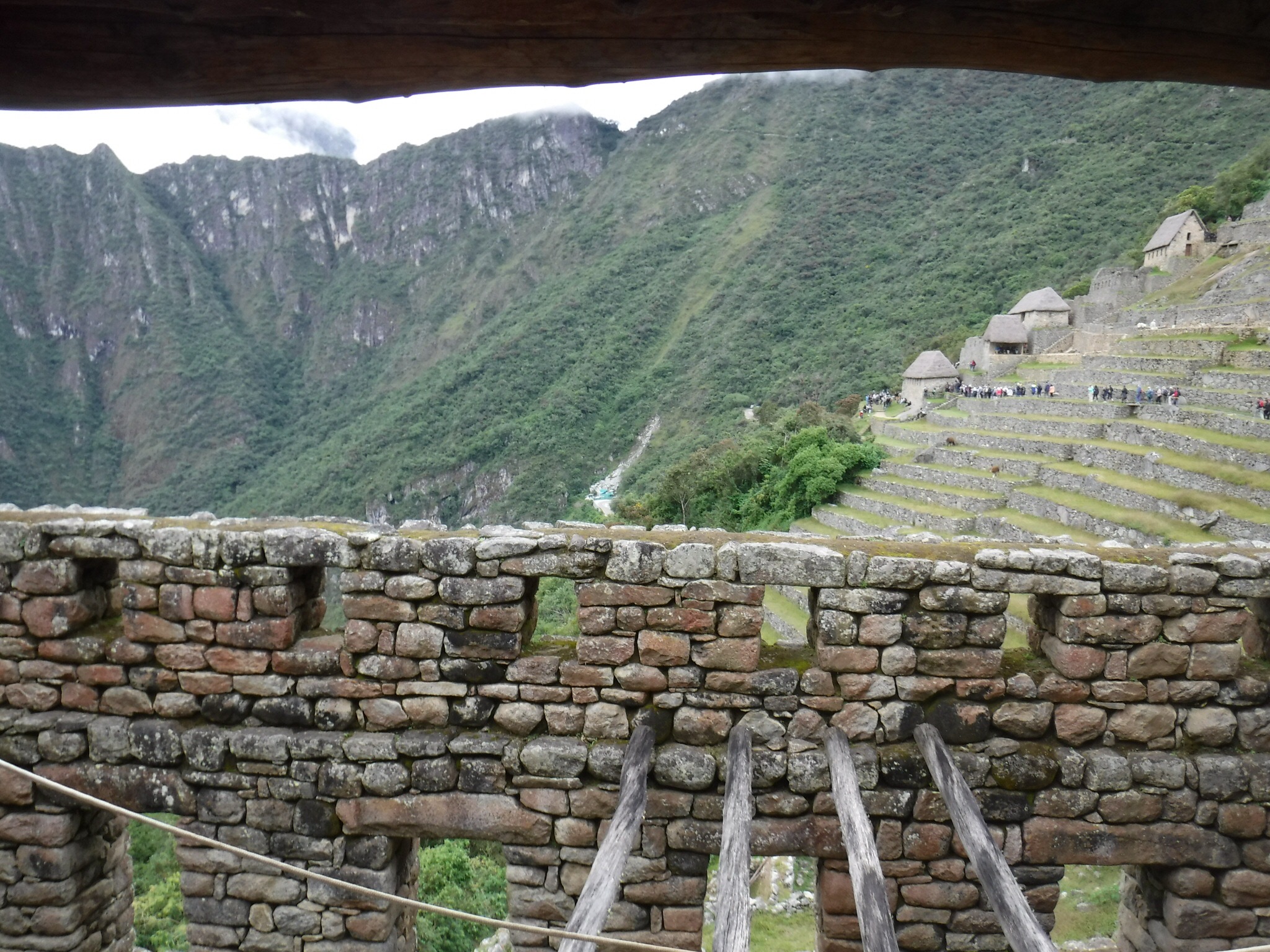
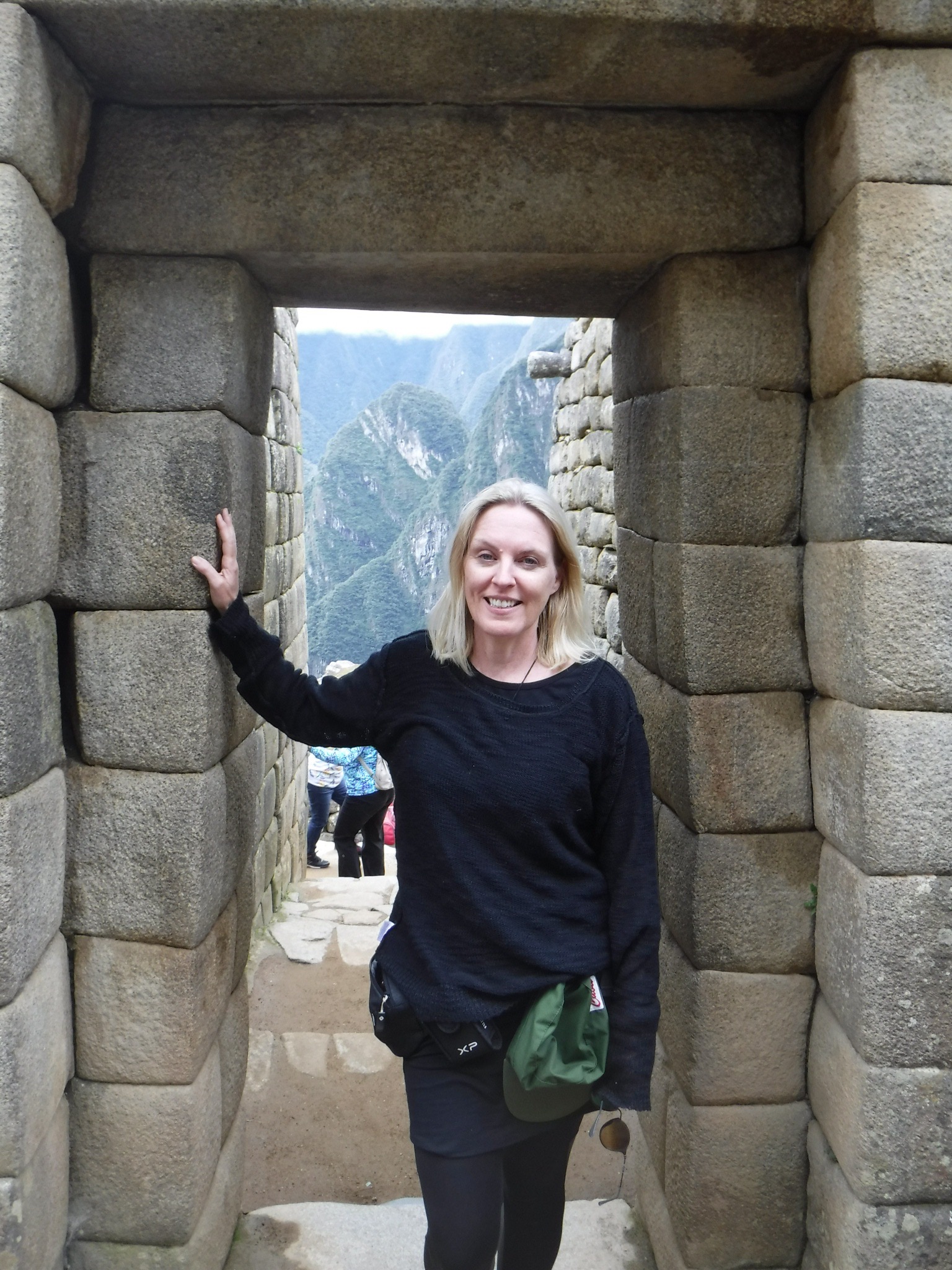
Willington gave us the tour and a run down of the history etc.   No one is exactly sure what it’s purpose is but the popular theory is that it was a summer palace, a holiday pad so to speak, with added spiritual value due to the alignment of various points with the sun at the solstices.  There is a temple, various upmarket houses for the nobles, lesser quality dwellings for the servants, workshops and what is thought to be the school house.   Certain children were scouted for their high intelligence, taken from their families and educated and lived here.   If there was some kind of disaster such as an earthquake or El Niño, a group of the children would be taken high up to the glacier.  Some would die on the journey,  but one of the survivors, i.e. the strongest, would be offered as a sacrifice to the gods.   This seems cruel to us but apparently it was an honour to be even selected to be taken to the school.  Having a child who was sacrificed was an even greater honour because he or she was now living with the gods.   Obviously, children are no longer sacrificed, no matter how bad the weather, but animals still are killed as offerings, particularly during festivities.   The country is 90% catholic but they still use shamans regularly to do cleansing rituals for projects such as building a new house, and to help cure ills.   If someone is suffering from trauma the shaman will bring a guinea pig and rub it over the person to cleanse them.  The animal is then killed and the blood runs black as it has taken the bad spirits away into its blood.   They may also run an egg over the patient’s body and when it is cracked open after the yolk is black and smells putrid.   It sounds odd to us but Willington is pretty convinced of their healing power and appparently you wouldn’t dream of getting building work done without a visit from a shaman first.  It will even be written into the contract before anyone will continue.   

After we said our last goodbye to Willington we stayed for the afternoon.   The queues for the buses at lunchtime can be over an hour as everyone needs to get back for their trains so the site is relatively peaceful after that.  

We wandered around and then started the climb to the Sun gate.
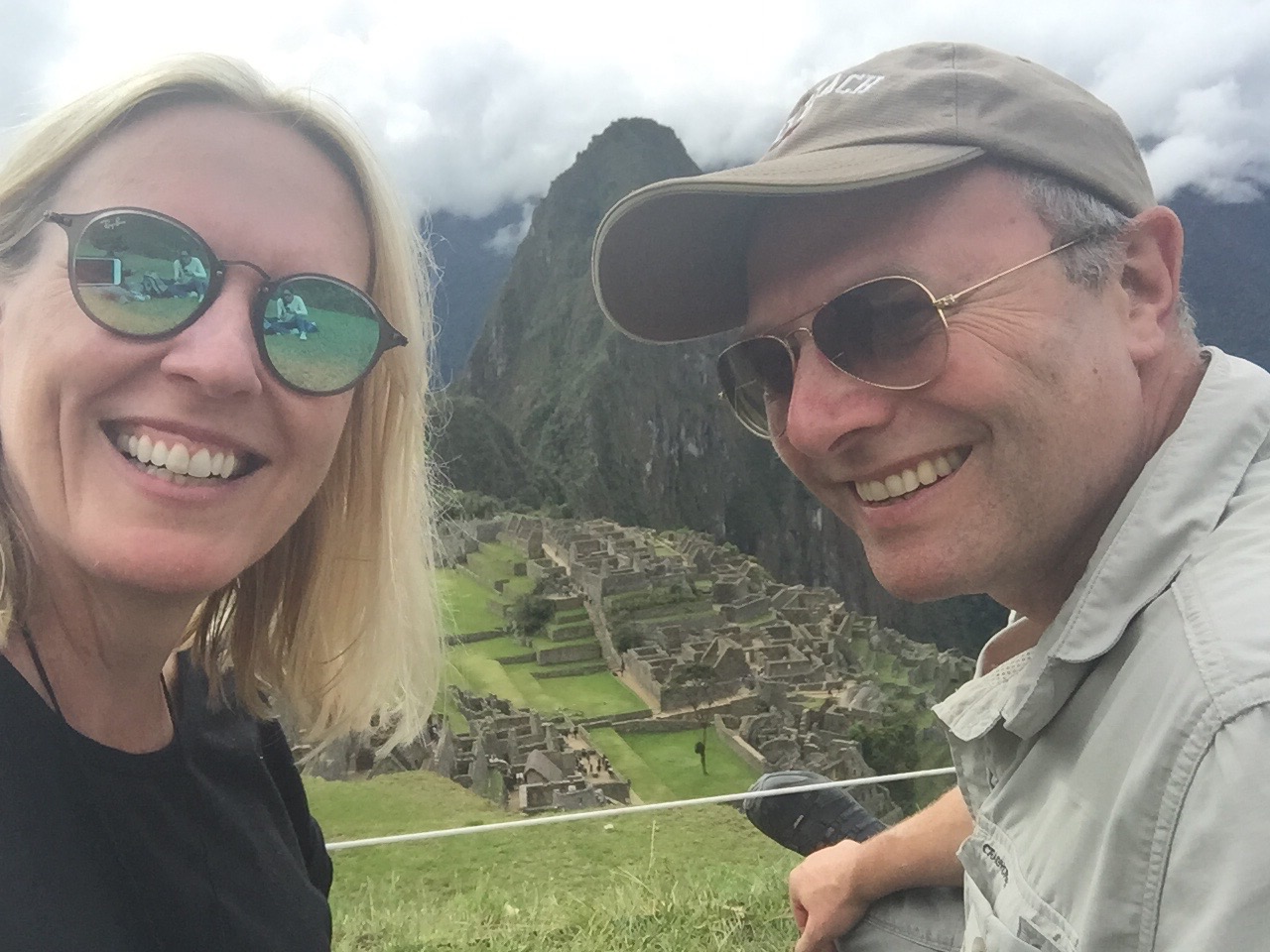

  We only got about half way up because Tim was sweating and puffing like a sweaty puffy thing and we didn’t have time to do it unless we ran up.   Even half way up the views are pretty awesome – not a word I use often or lightly.


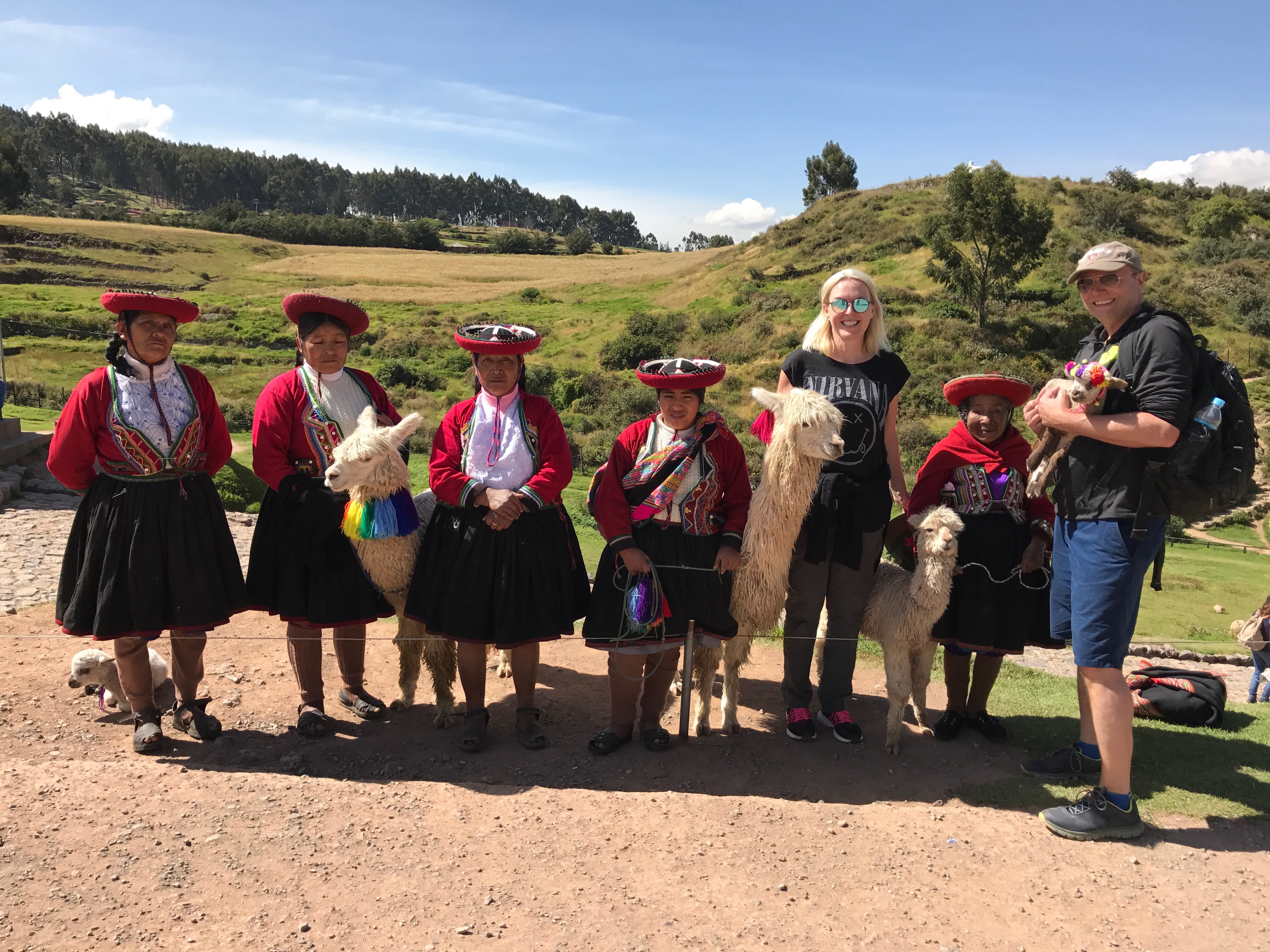
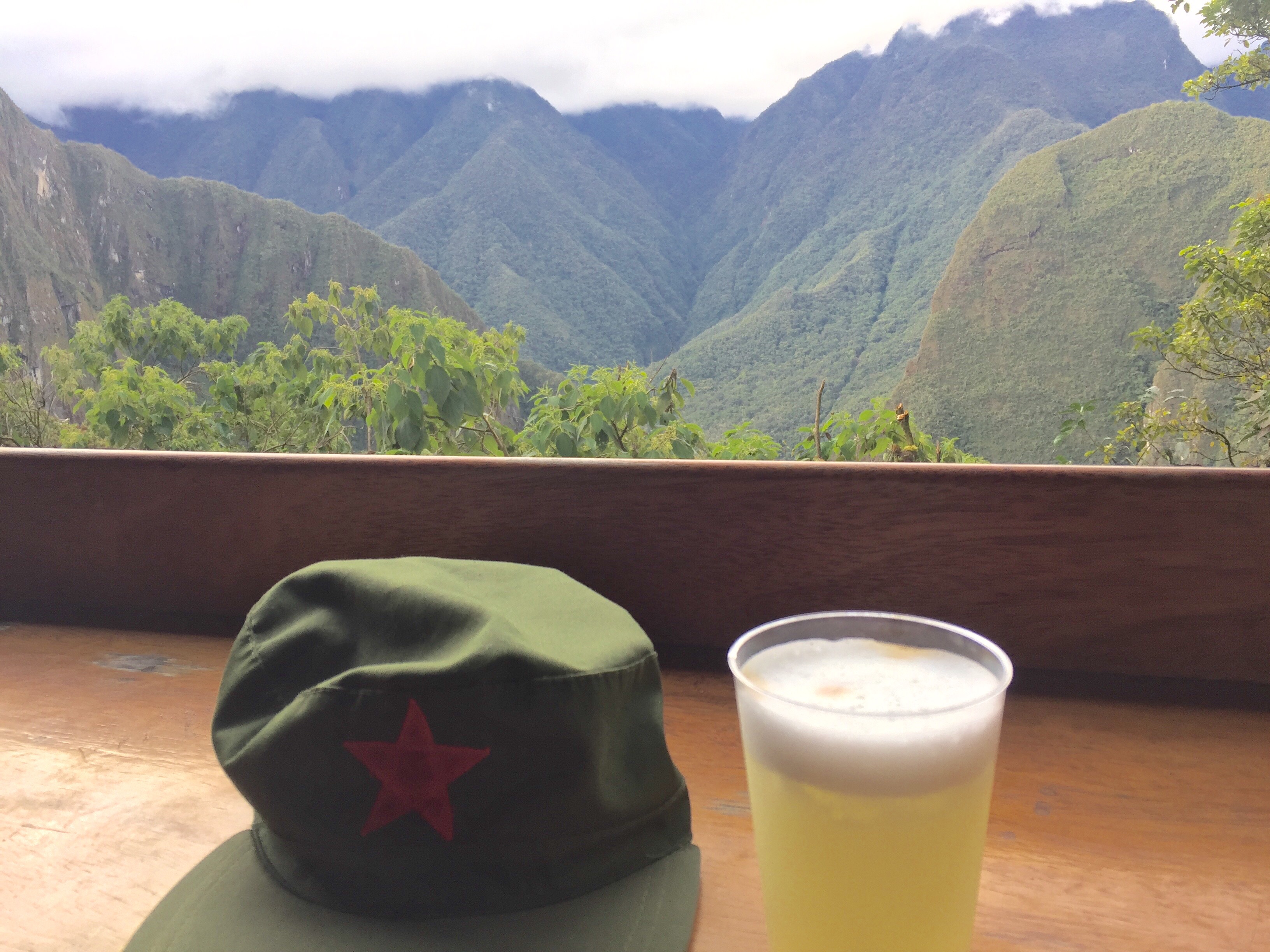
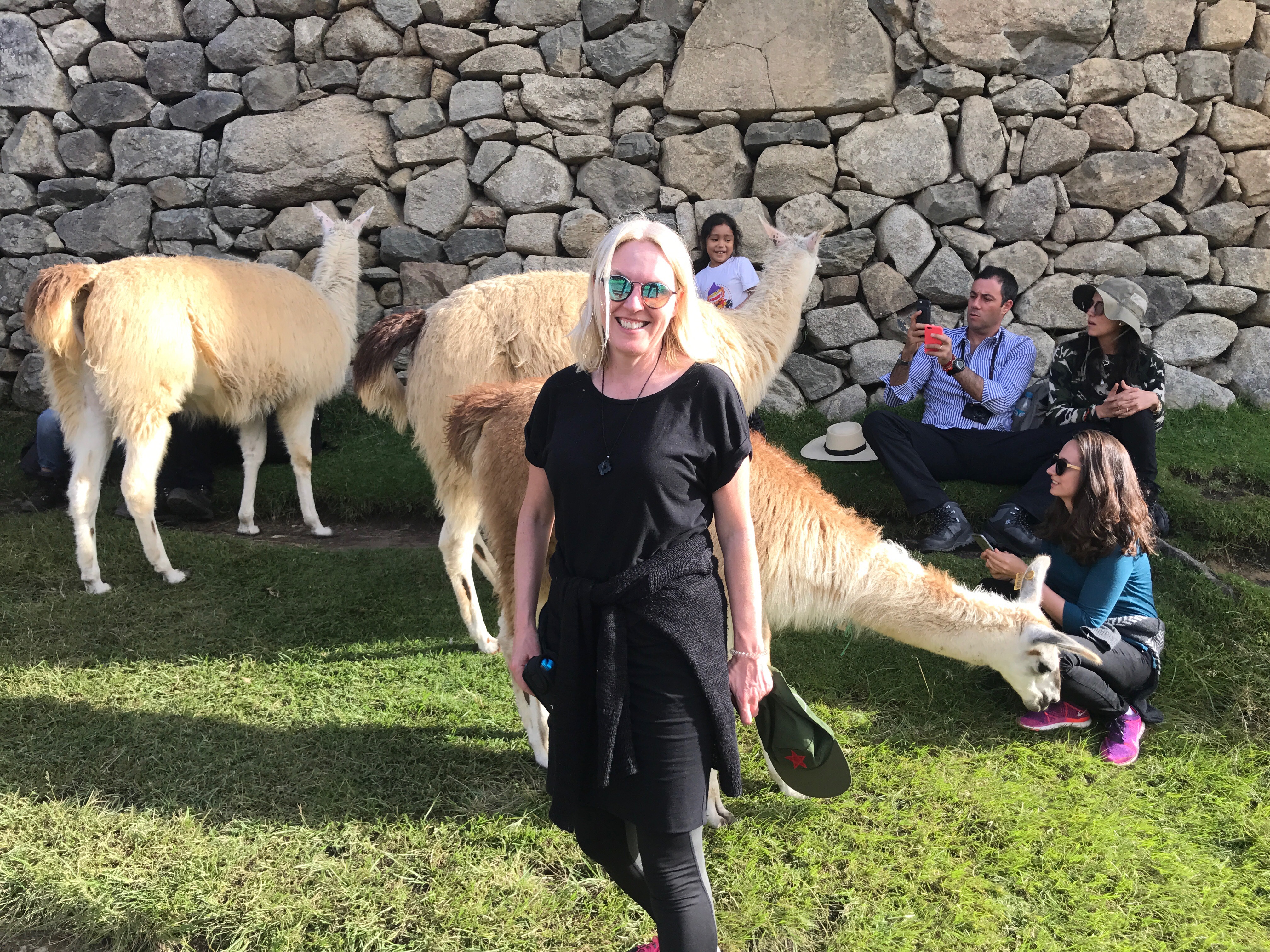
We climbed back down, had a bit of llama fun and finished our day with a pisco sour at the mirador.
The hotel Sumaq, where we were staying, is at the foot of the mountains overlooking the river.   Beautiful and loud.   And a bit smelly.   


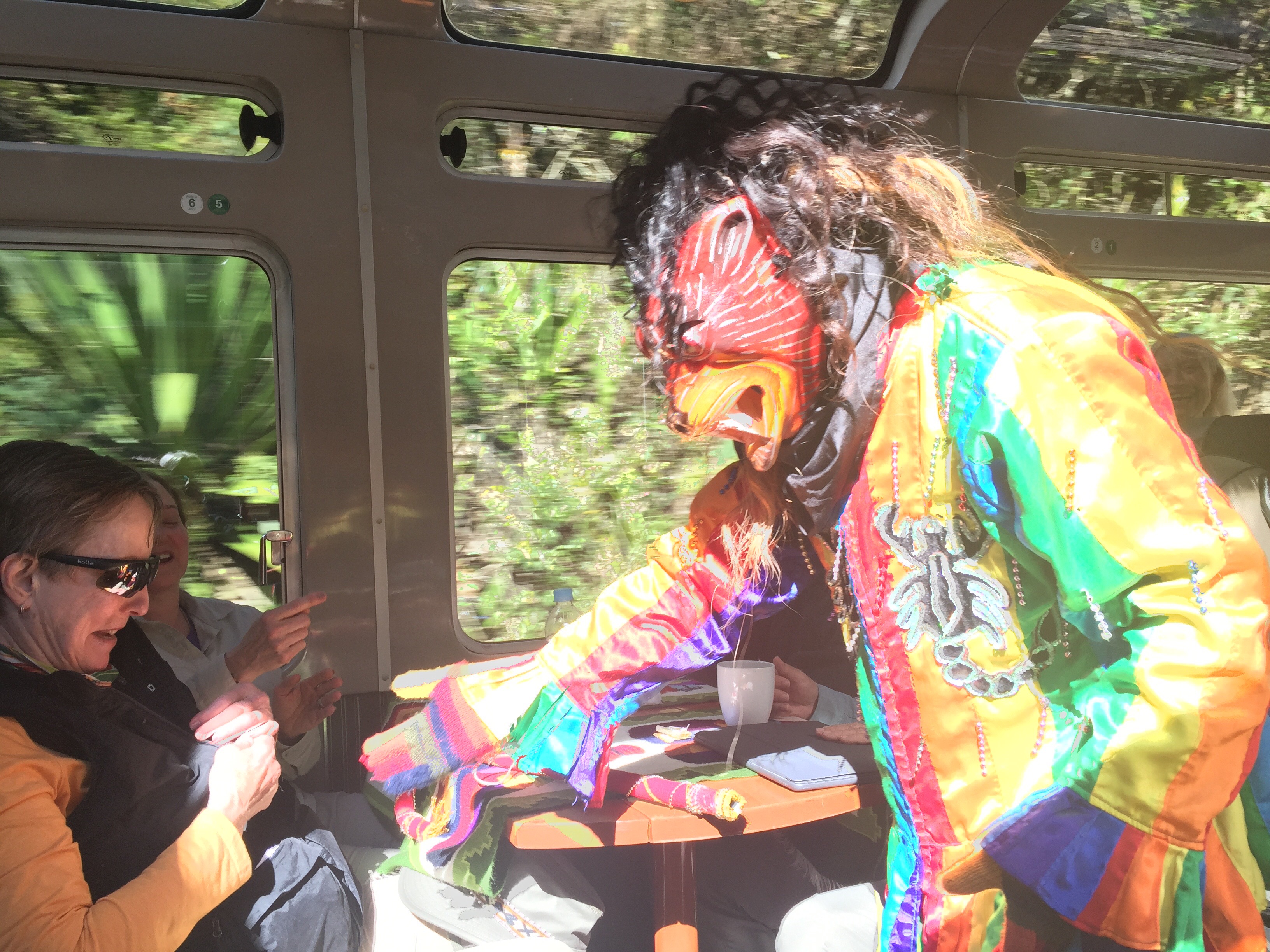
A casual morning the next day and then our train back and onwards to Cusco again for our last night in Peru.  Randomly one of the train staff appeared dressed as a devil half way through the journey and did some dancing.   Then there was an alpaca-themed fashion show.  You don’t get that on Chiltern railways.   

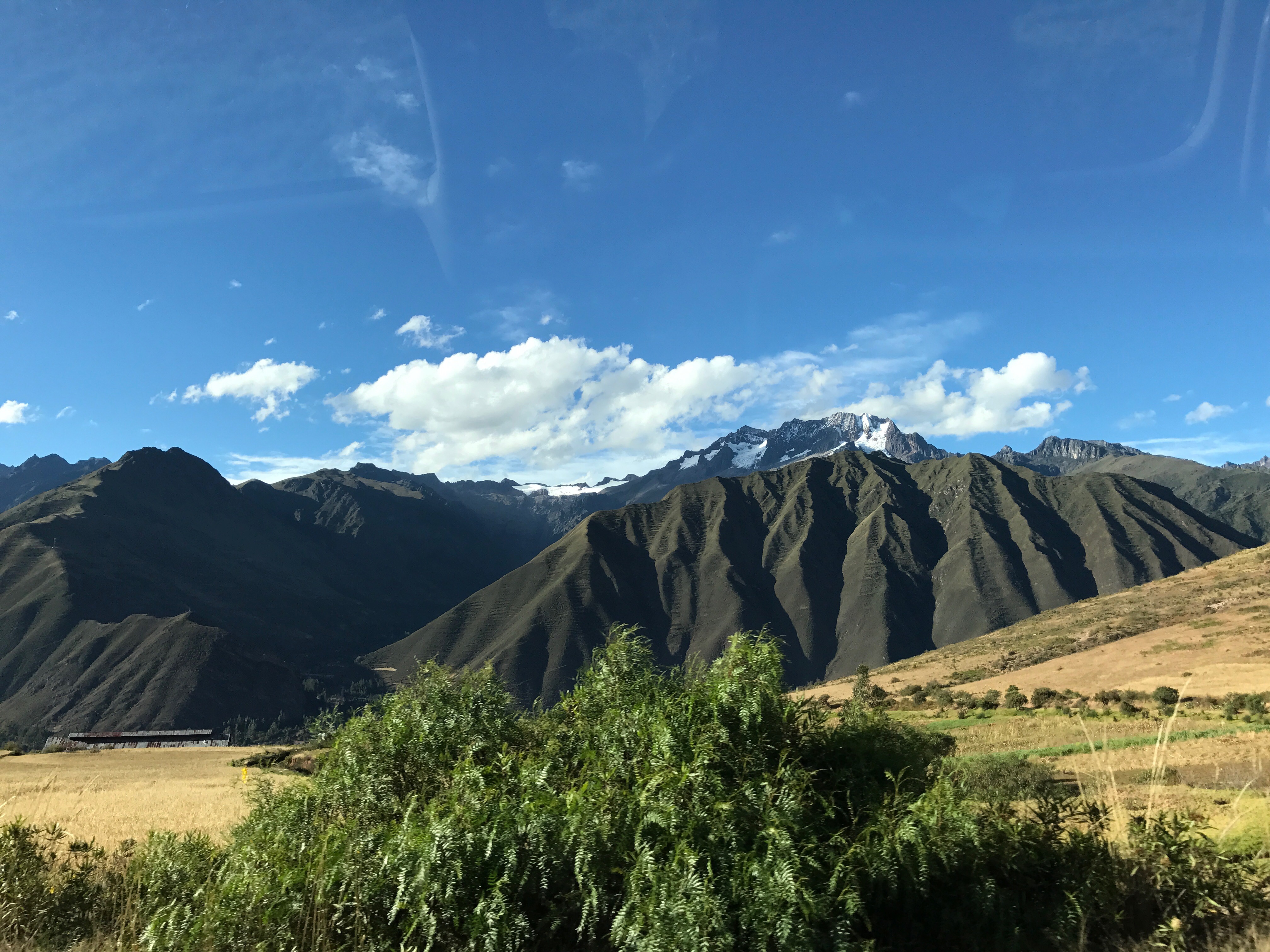
The drive showed more stunning views.  

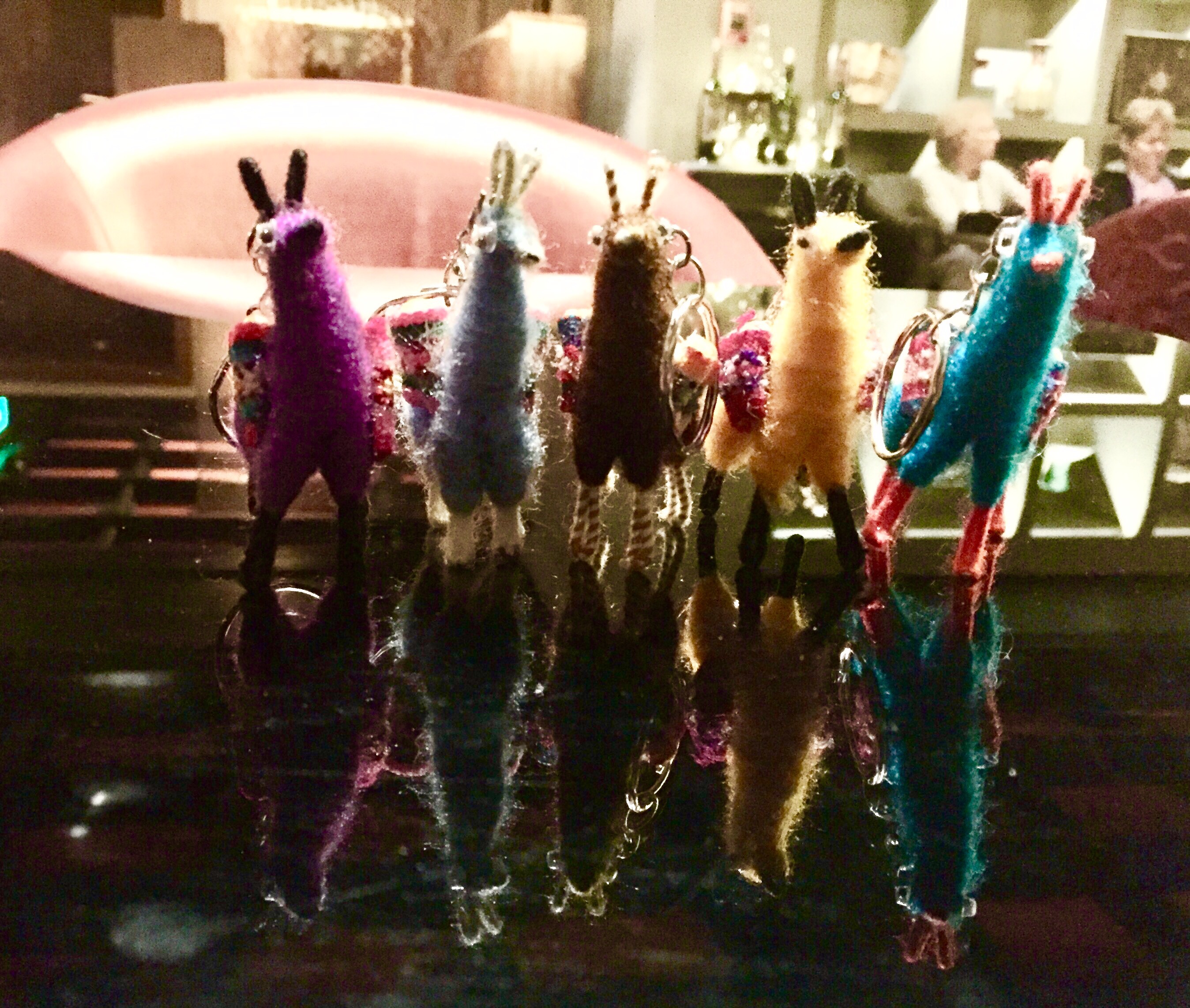
Our hotel for the night was an old Inca foundation with a colonial hat on.   Very atmospheric and slightly disconcerting ambience.    Tim was feeling the altitude again and we had an early start so just wandered around, bought some more llamas and said farewell to Cusco.   

Good bye Peru, you have been wonderful.   
Inca-redible

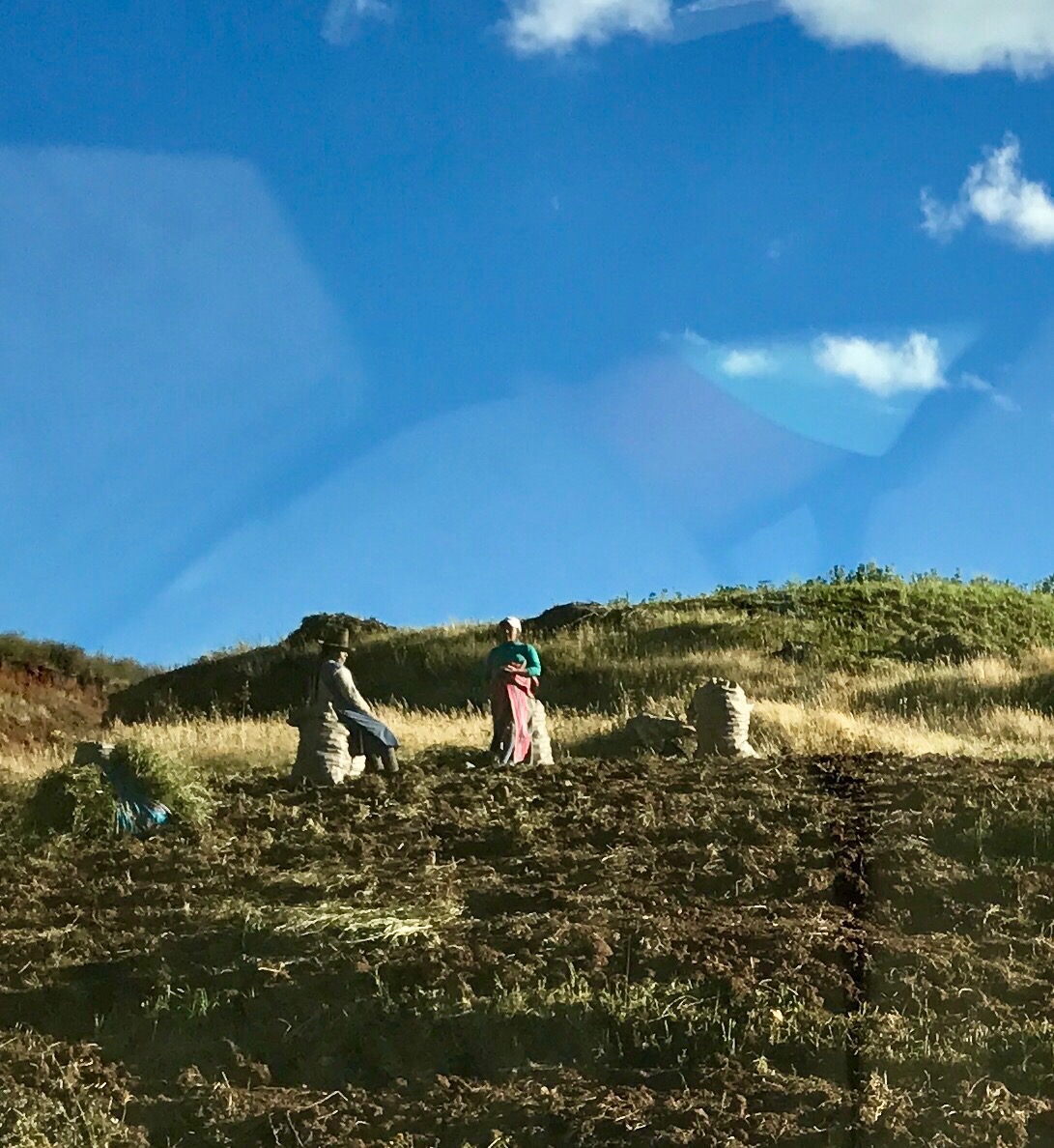
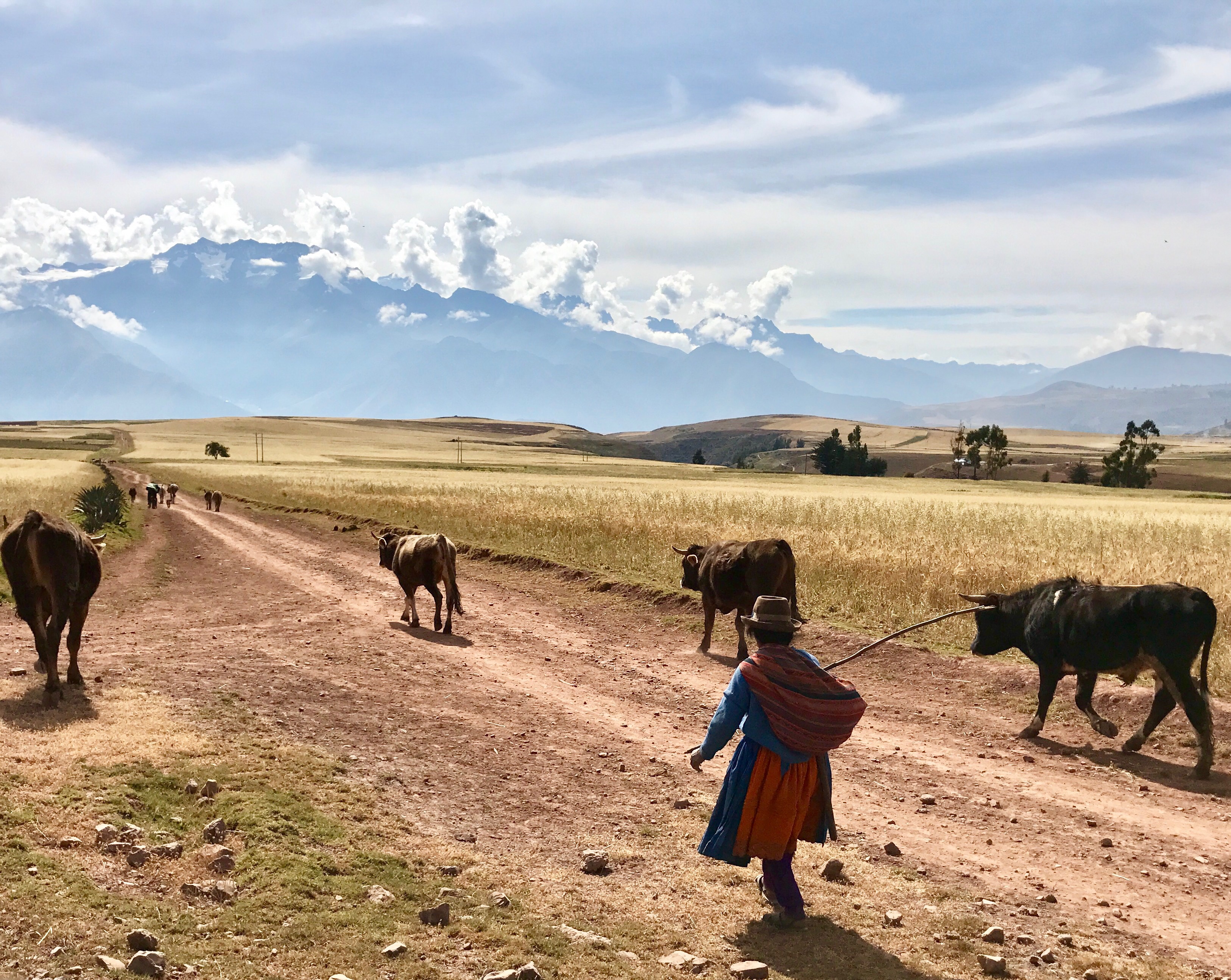
Willington and our driver picked us up early and Tim was looking forward to going downhill.  But first we had to go even higher out of Cusco, passing the suburban makeshift houses perched perilously on the mountainside, then out into to the countryside with the imperious glacier topped mountains looking down on us as we headed towards them.   Rough country roads, villagers working the fields by hand, and the occasional brass band appearing out of nowhere with a decorated donkey.  Obviously.  It’s Monday morning so why wouldn’t you dress up your donkey and bring it out with a fanfare?


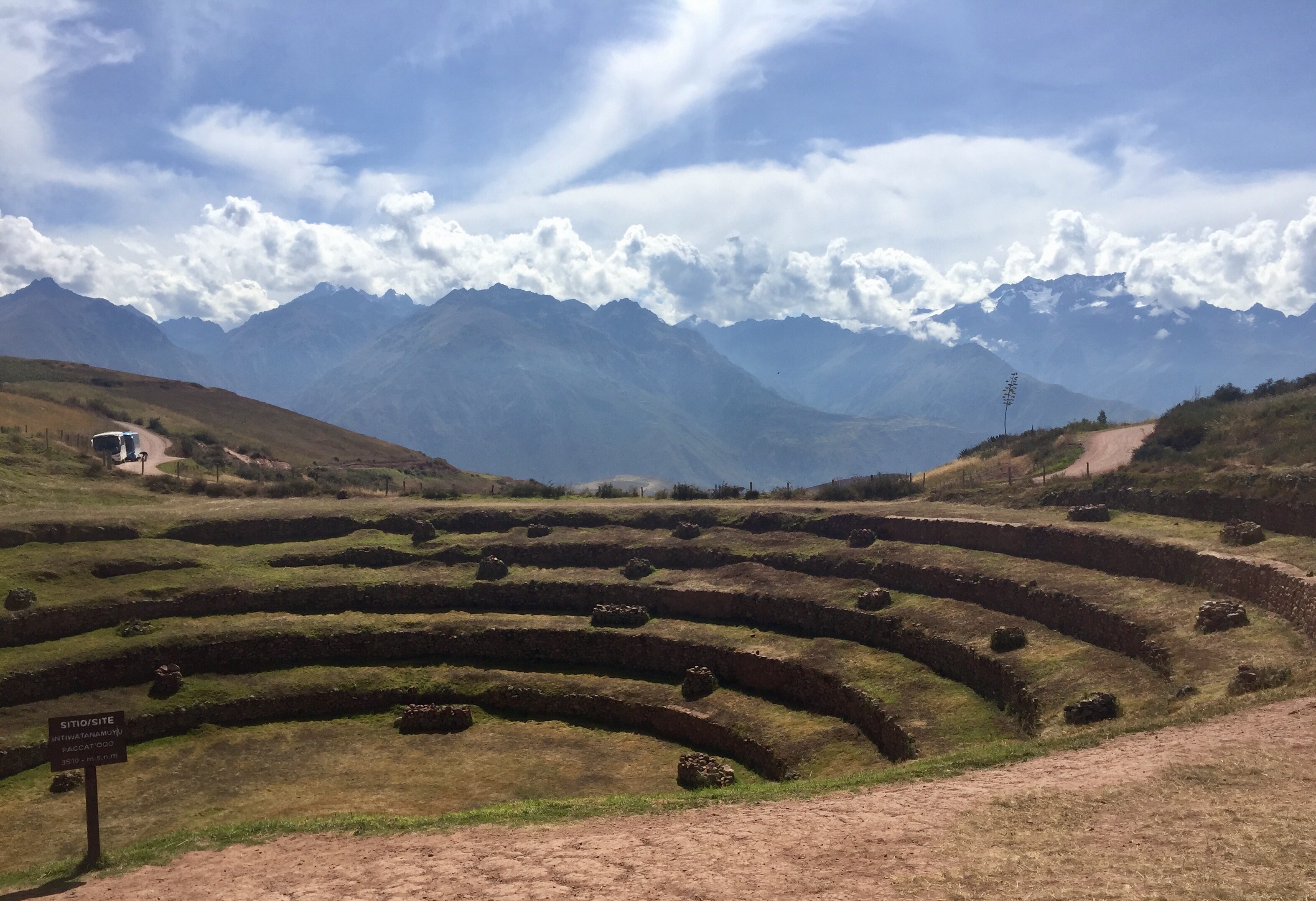
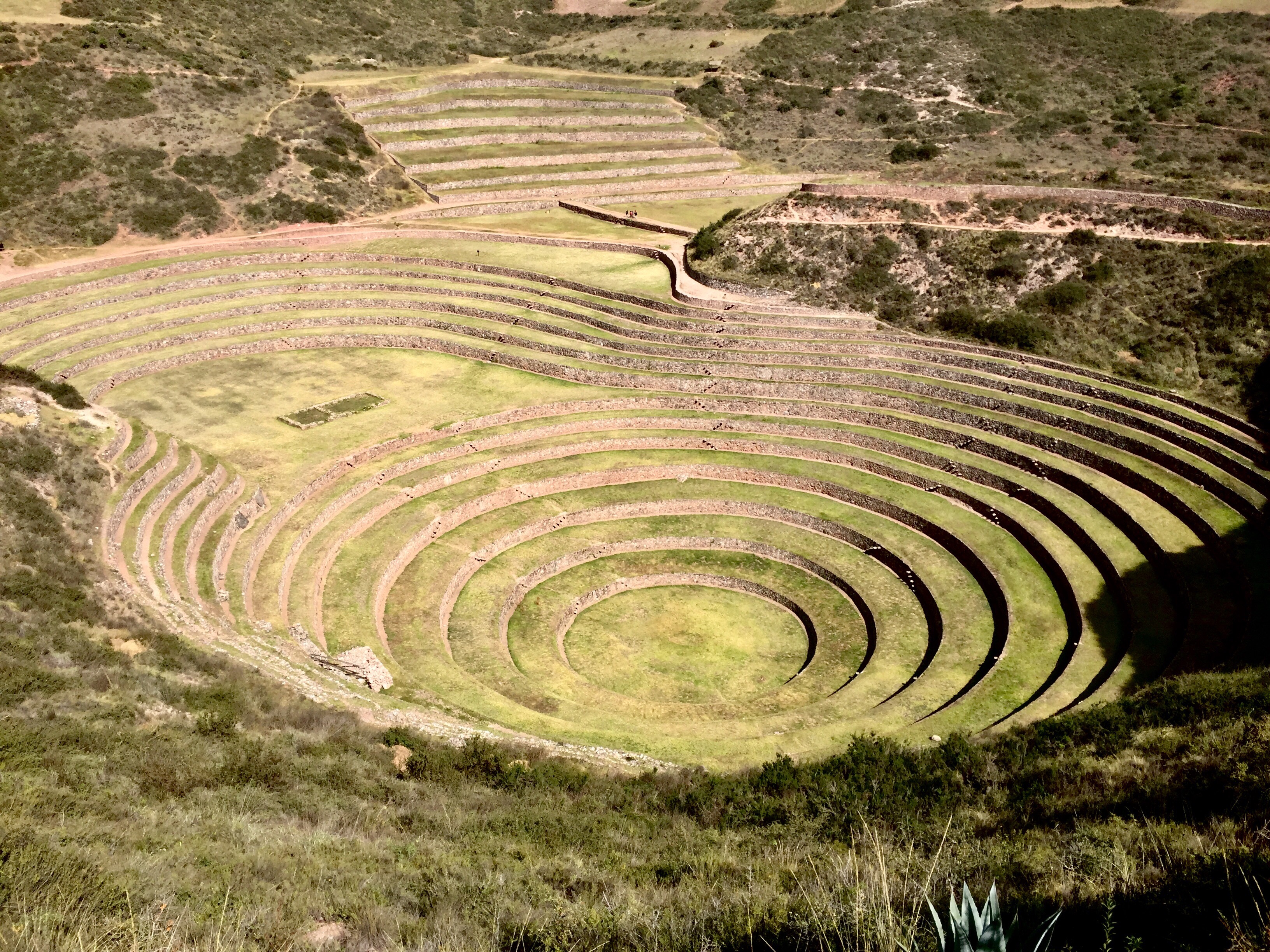
We eventually reached Moray, where the Incas built an ingenious system of terraces in order to modify their seed crops in different altitudes.  So they moved the potatoes, which grow best at altitude, down each season, and the corn, which is better lower down, was moved up.  An early form of genetic manipulation.   And of course,  being the Incas, they did it in style.  


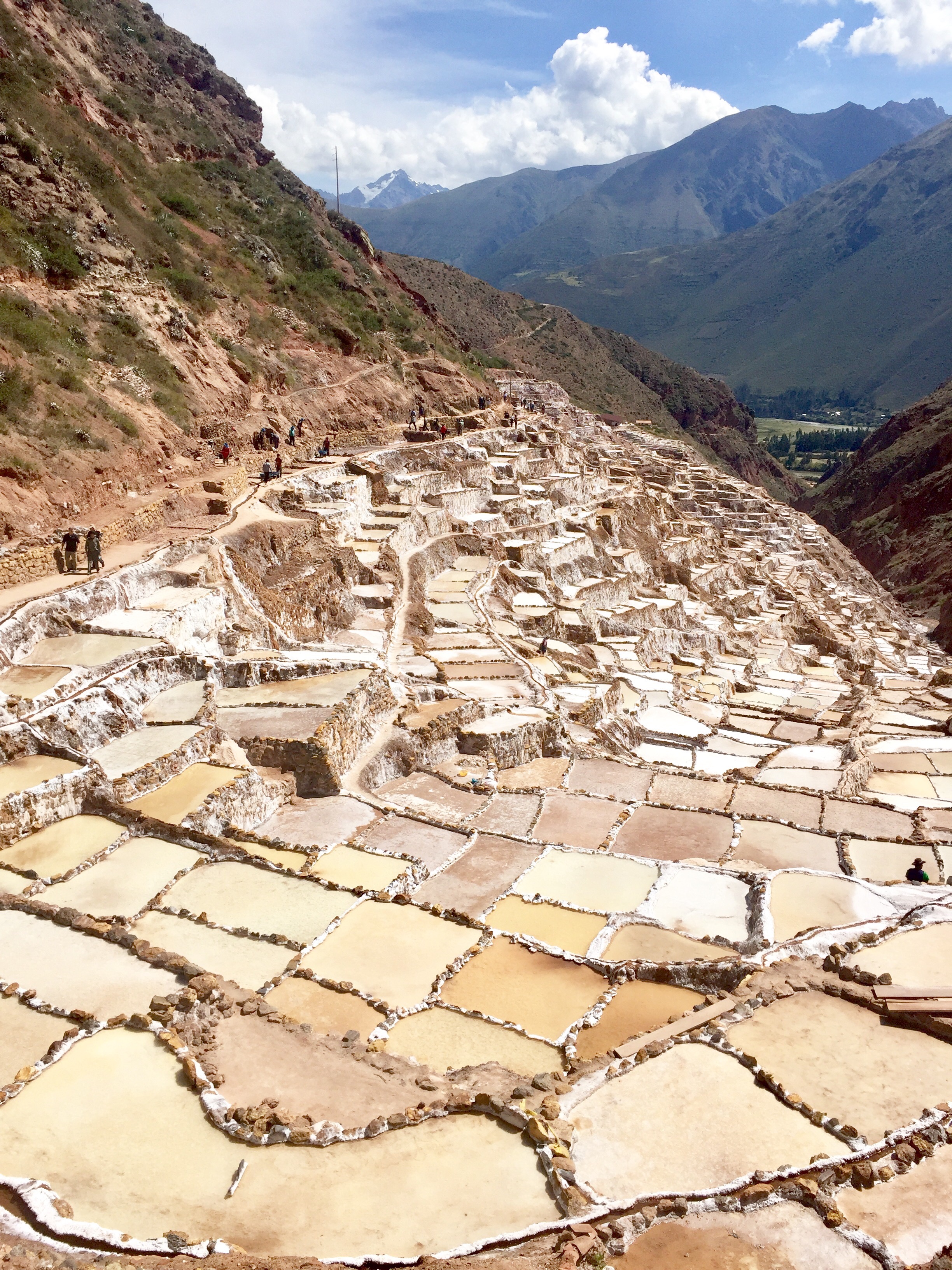
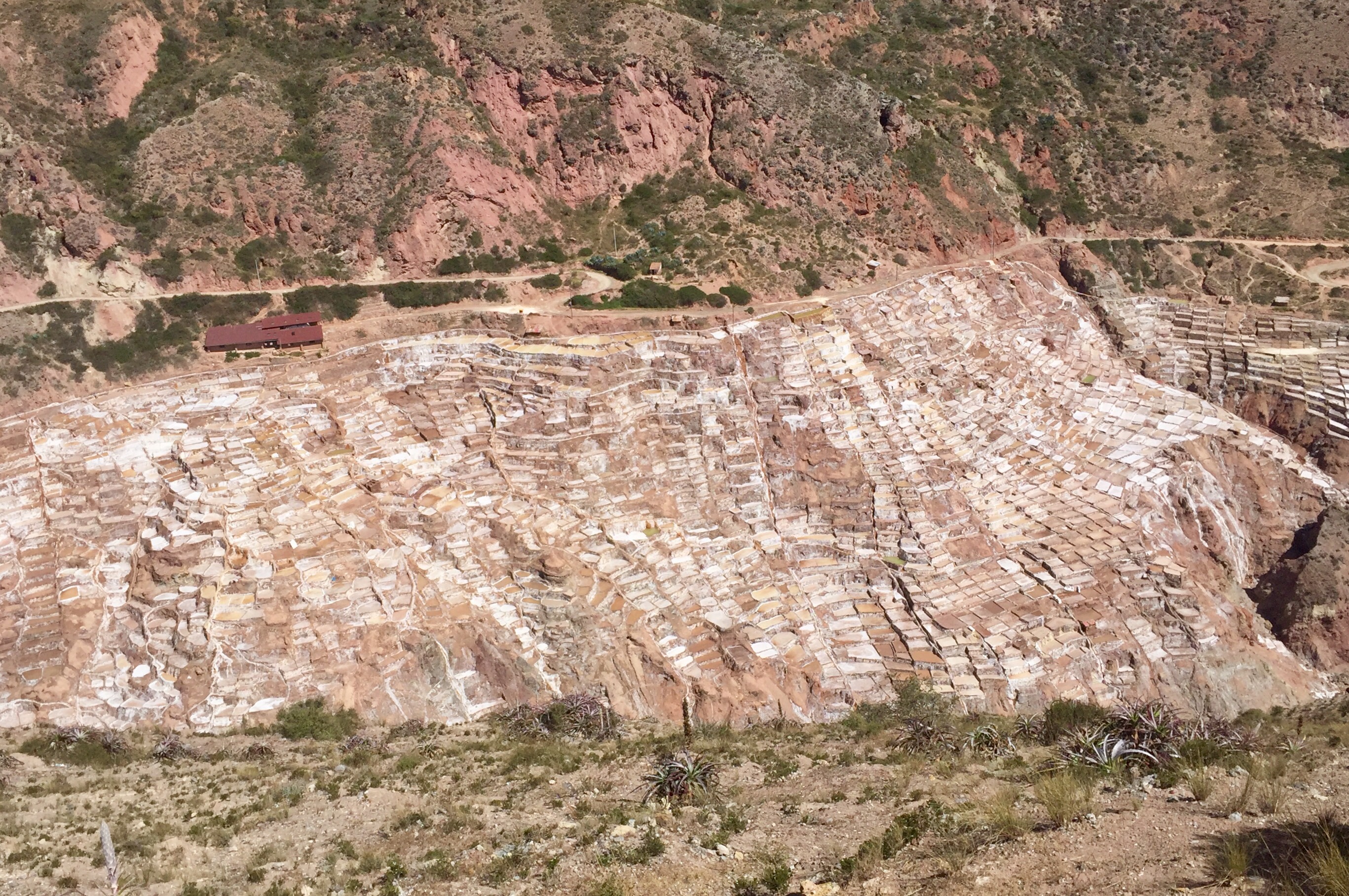
Then to the Salineras at Maras.  A system of shallow pools fed by a salty mountain spring.   The Incas realised they could produce salt by evaporation and the pools are still producing that very trendy pink salt today.  


From here we could see the Sacred Valley, our next stop.
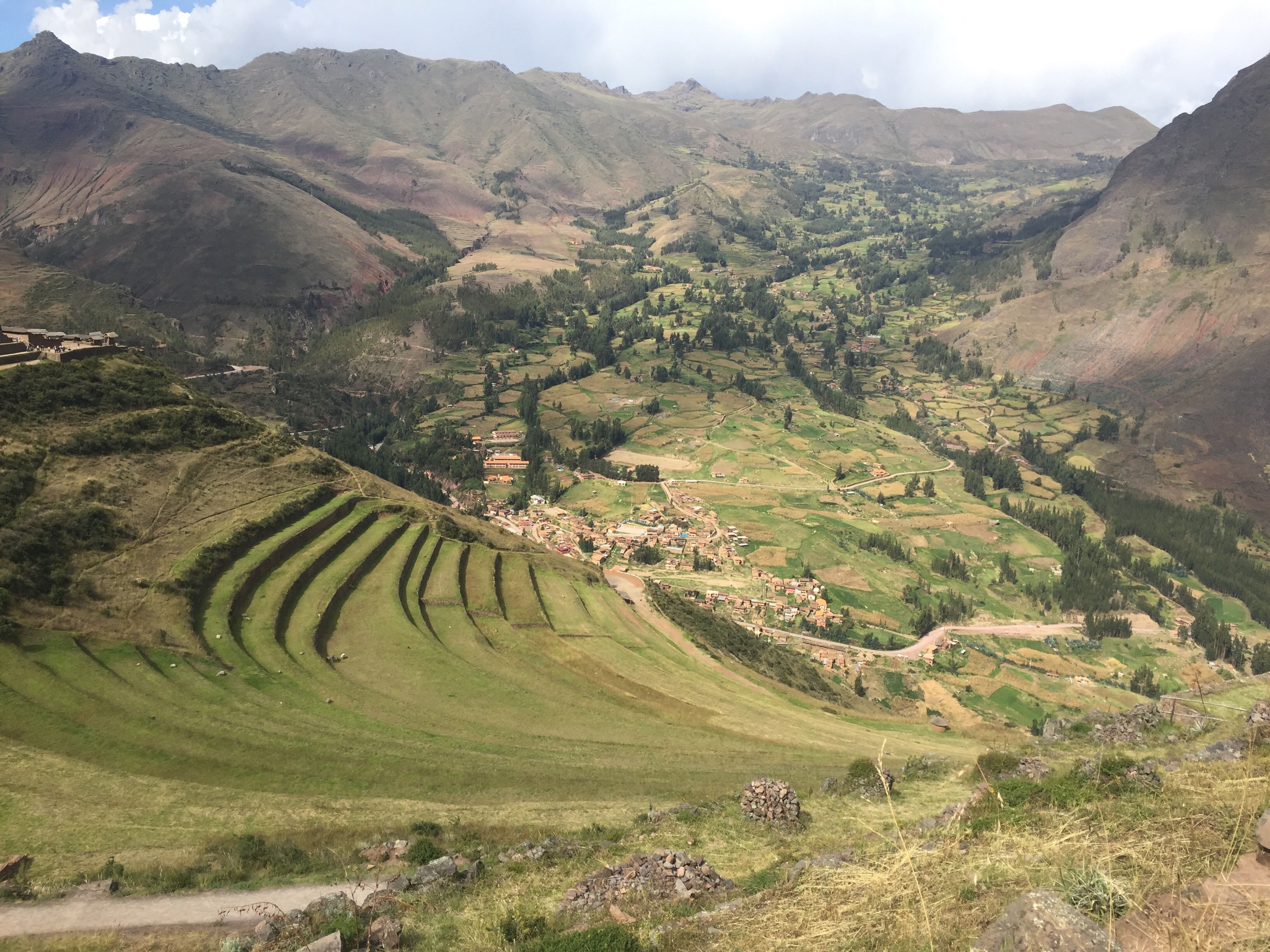
Down we went, but then up again, now to Pisac.   More terracing and Inca remains and the most wonderful mountain views.   


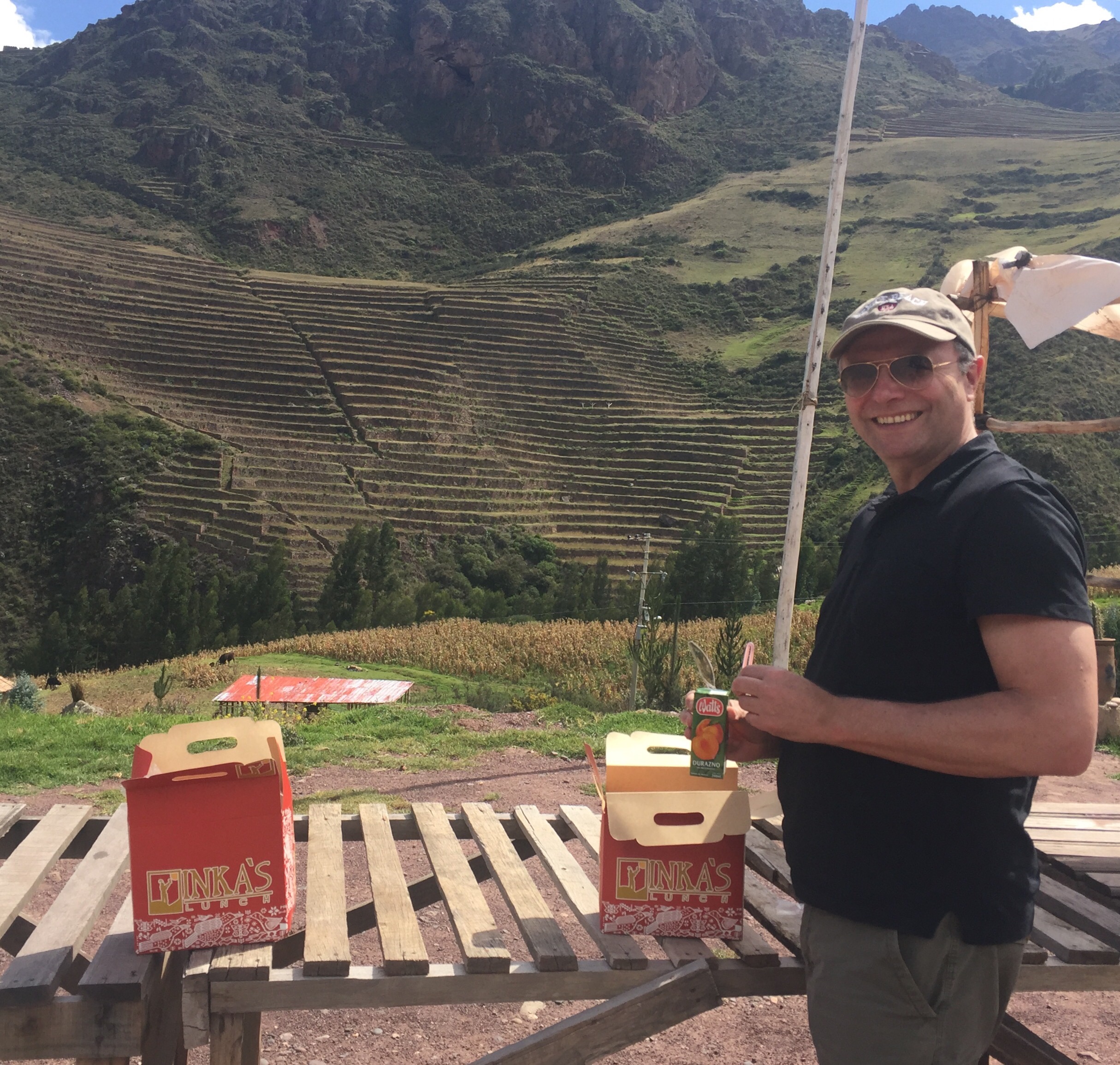
Inka packed lunch!

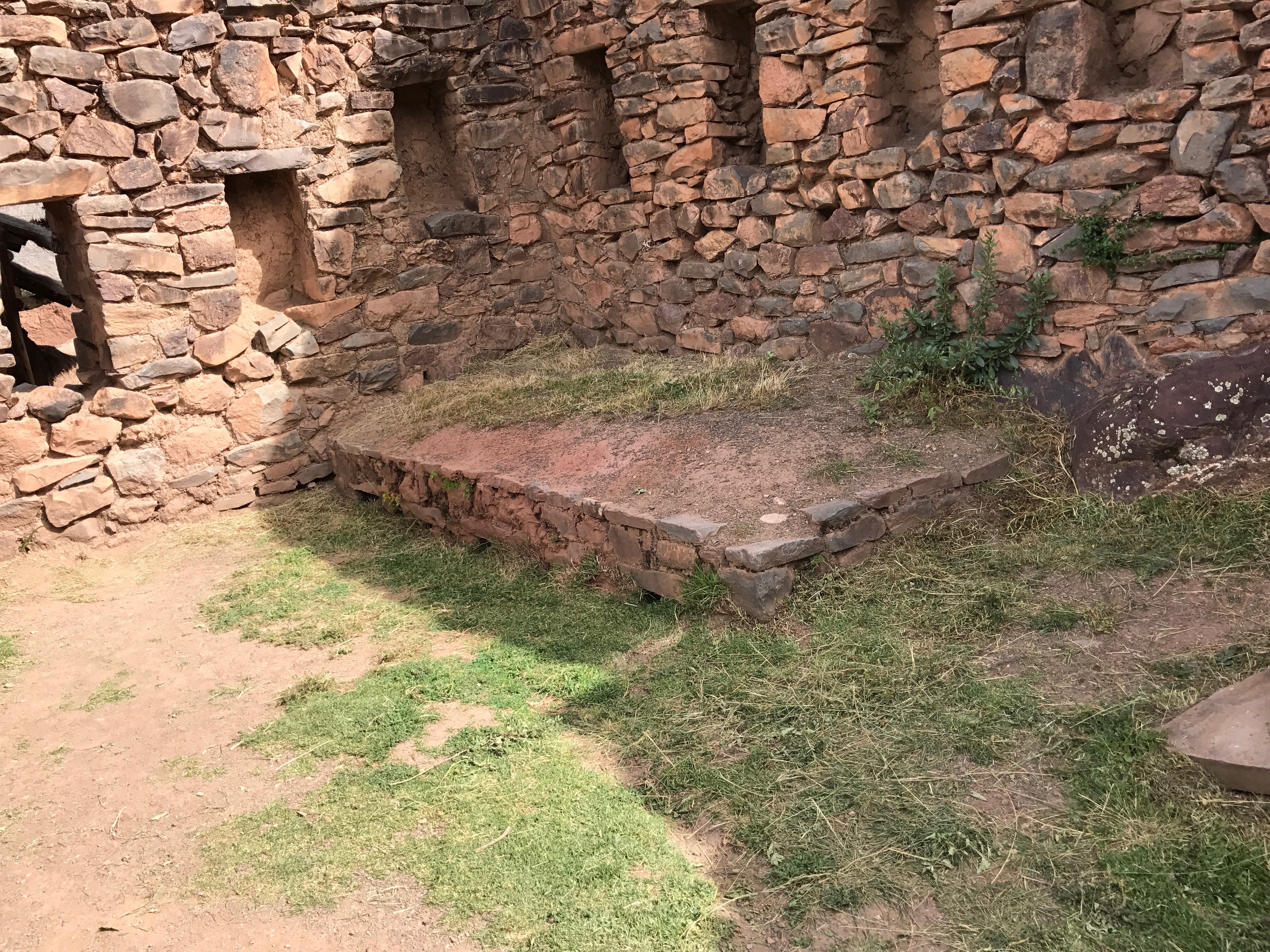
A guinea pig house within a dwelling.  They weren’t pets and still aren’t.  They run around the home in the way chickens might in a farmhouse.   


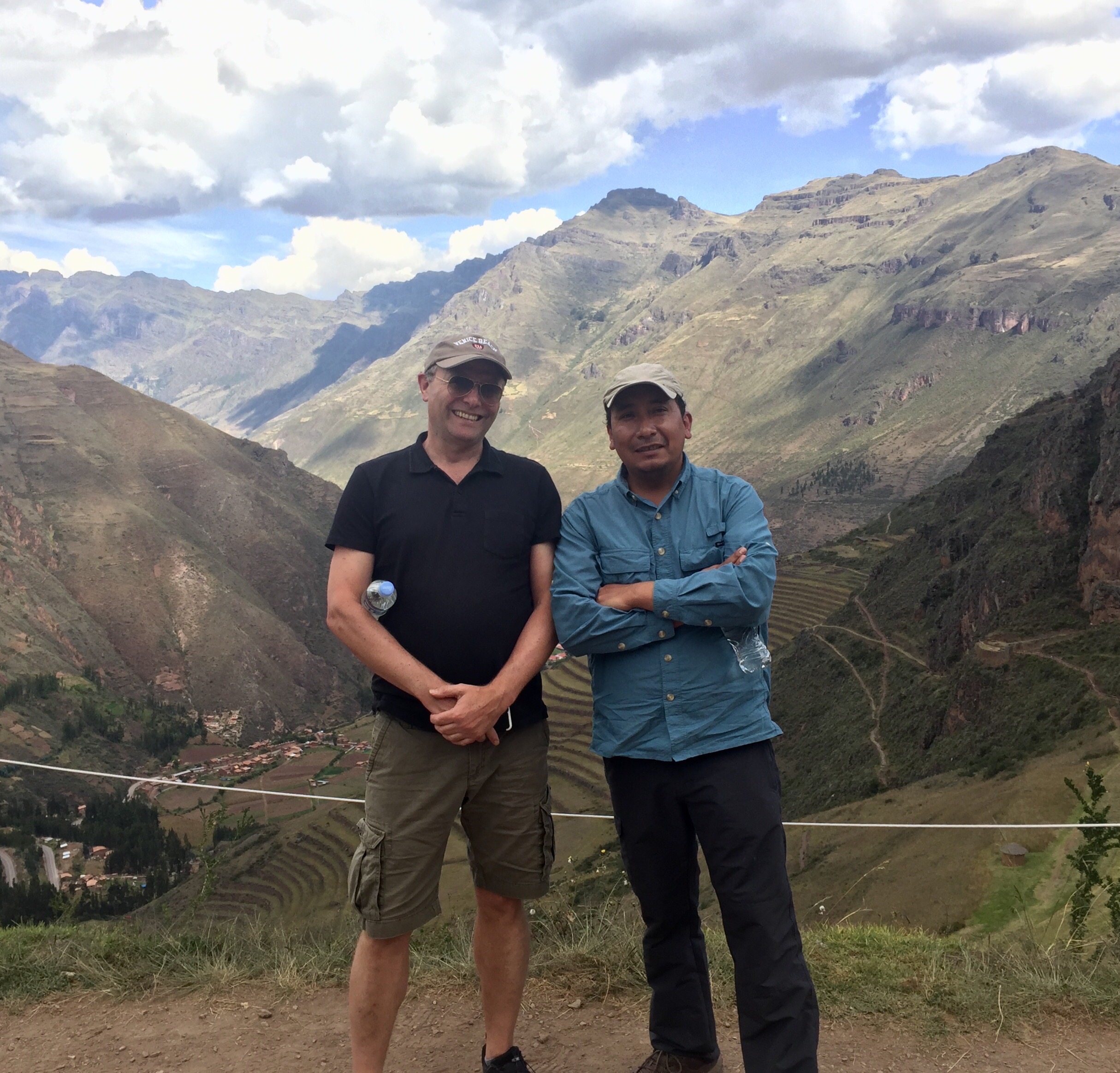
Tim and Willington.

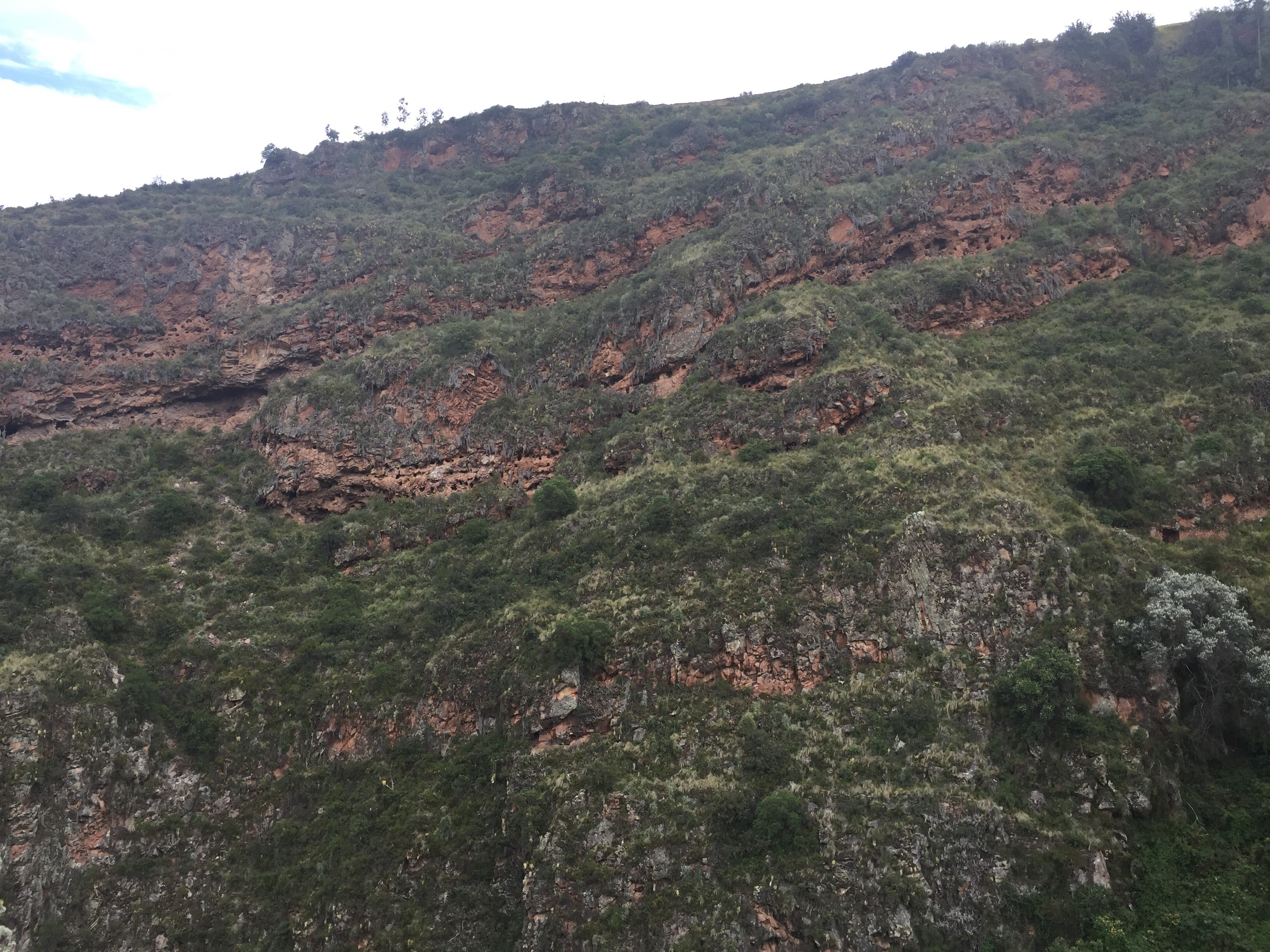
Looking at the cliffs opposite the settlement you can see thousands of small holes.  This is where they put the mummified bodies of their dead.   They would have been covered over with stone but when the Spanish came they looted the graves for the gold they were buried with.  To add to this disgrace, locals in more recent years have been selling the mummies to tourists.  Who on earth wants to buy a mummy and what would you do with it?  I doubt your average Ikea display cabinet has a niche for preserved human remains.  As we were talking about this Tim said , ah yes, they mummified them in the coital position.  I kicked him.   Willington looked perplexed. He said it again, clearly thinking we hadn’t understood.  “They buried them in the coital position didn’t they?”  No, I said, it was the foetal position.   Quite different.   Willington had given up trying to be polite and was giggling by then.   Ah, the joys of having a dyslexic husband….  What in earth would those mummies look  like?   And they’d never have got them into those tiny holes in the cliffs.   Best not go there!


A sheer cliff with about 8000 holes dug out.  

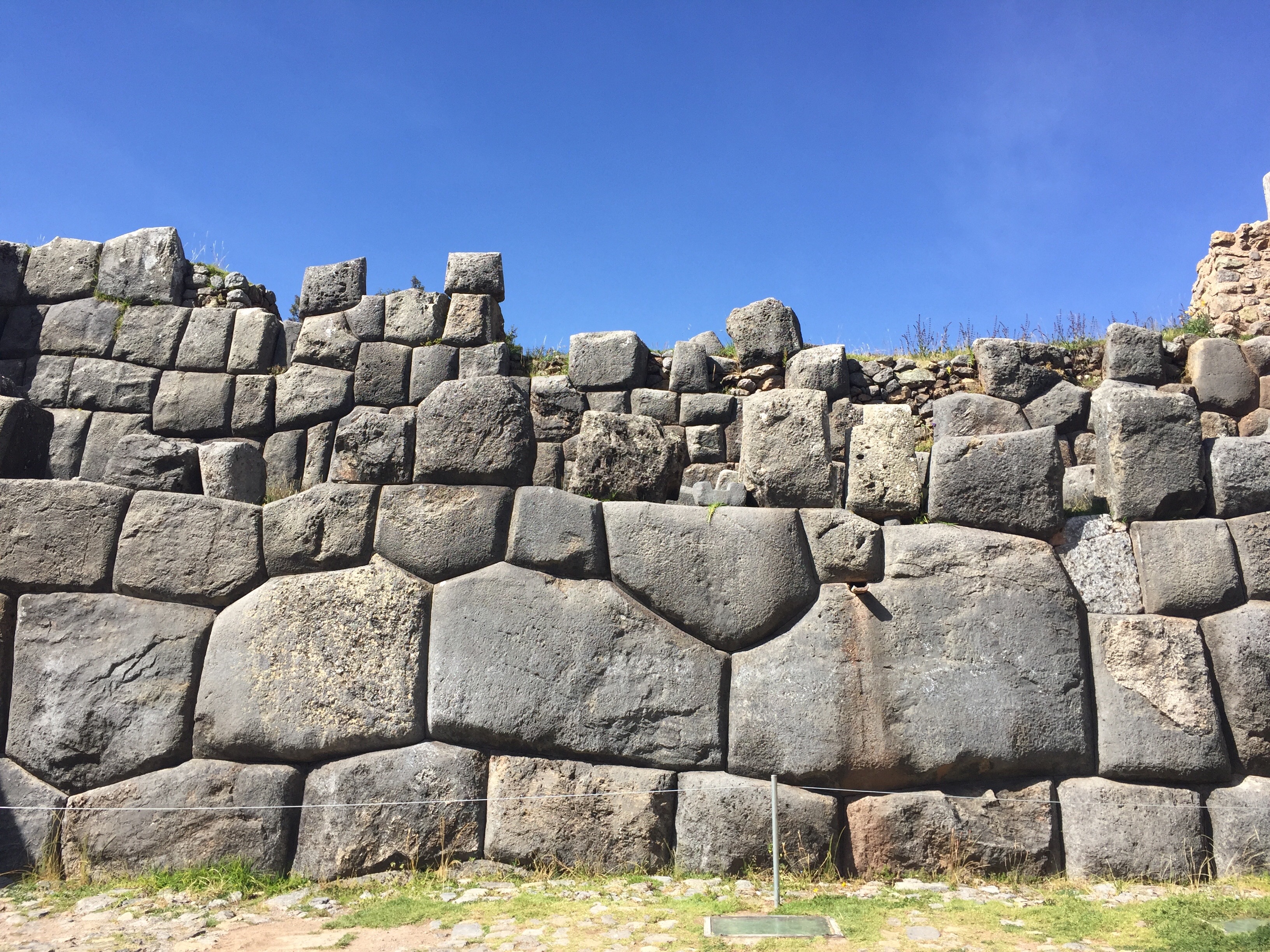
All these Inca sites keep begging the same questions.   How the hell did they get those huge stones to the top of the mountain?   How did they have the technology to devise such sophisticated water systems?   How did they get the bodies up a vertical cliff to lay them in those holes?  On and on.   

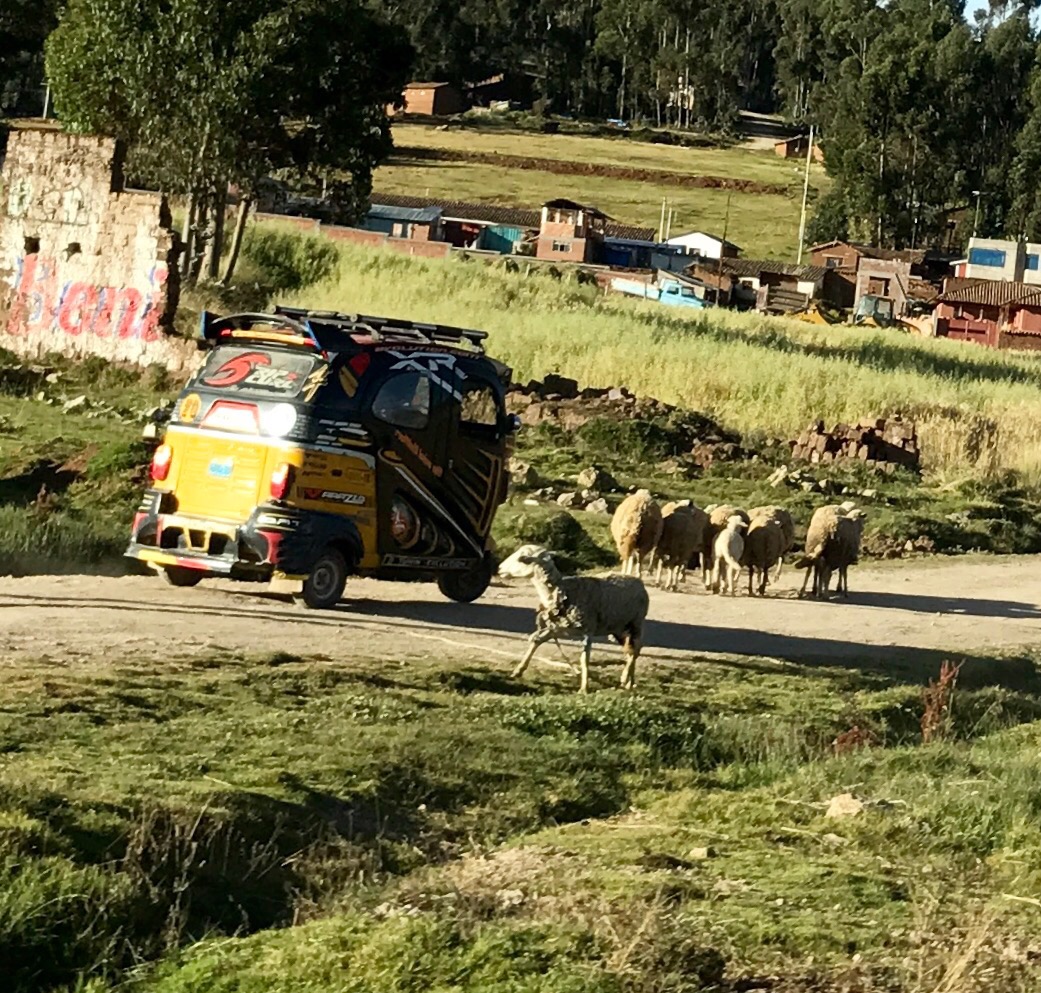
Anyway, enough of questions.   We got to our latest hotel, The Tambo del Inca in Urubamba, and it was so beautiful and peaceful we collapsed into a little bubble of luxury for the evening and chose not to go far the next day.   We wandered around the little town which has a nice square and local market and is mostly populated by strange tuk tuk drivers buzzing round the streets.   After dinner that night we walked through the square and were greeted by a gang of teenagers practicing their dance routine for the upcoming festivities in June.   I wish we could be here then.   Willington says it’s a crazy time, but it sounds like a lot of fun as long as you can dodge the fireworks!


There’s a child in there somewhere!


Early bed for the main event tomorrow.   Machu Picchu!

Colours of Cusco

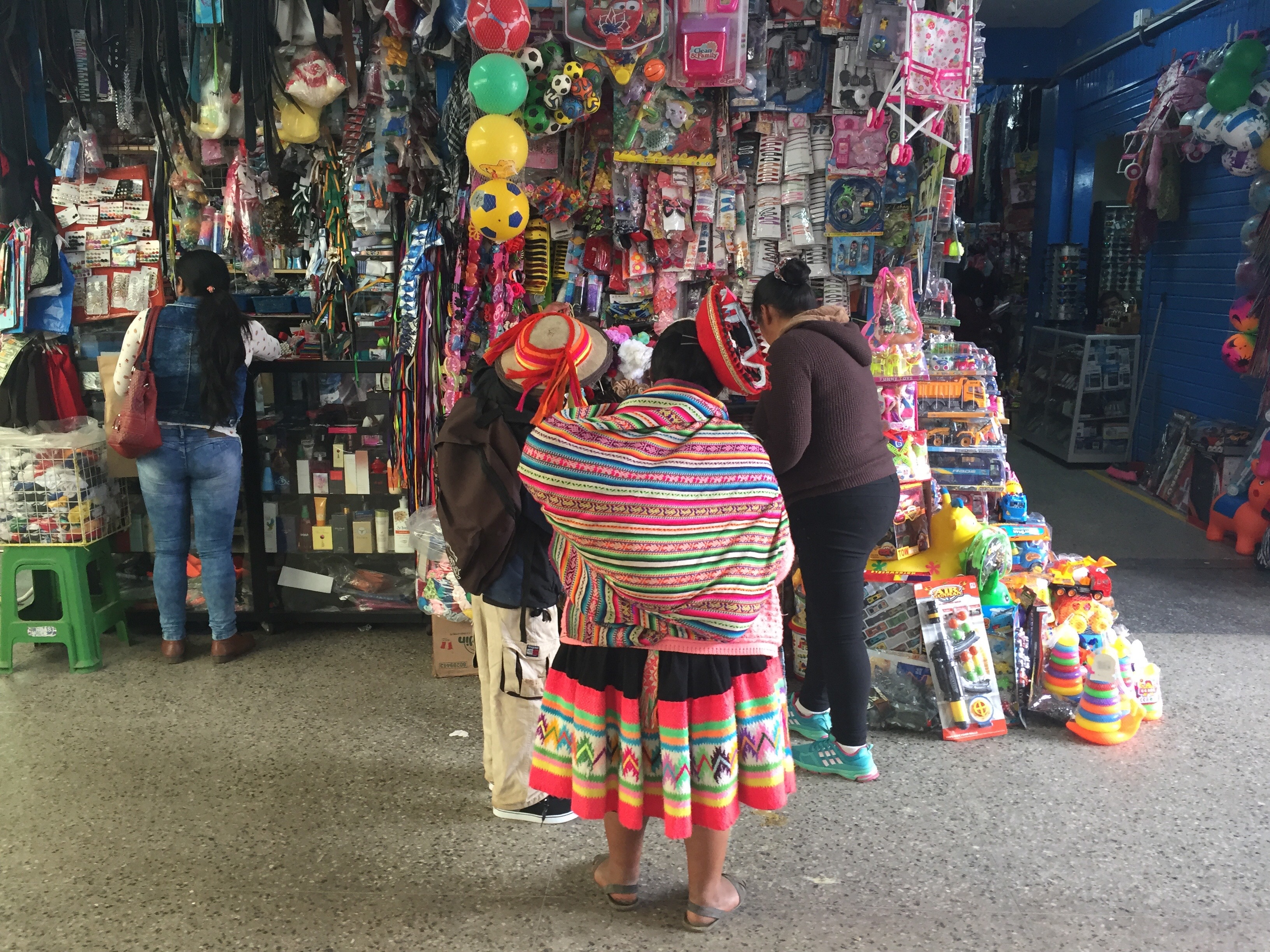
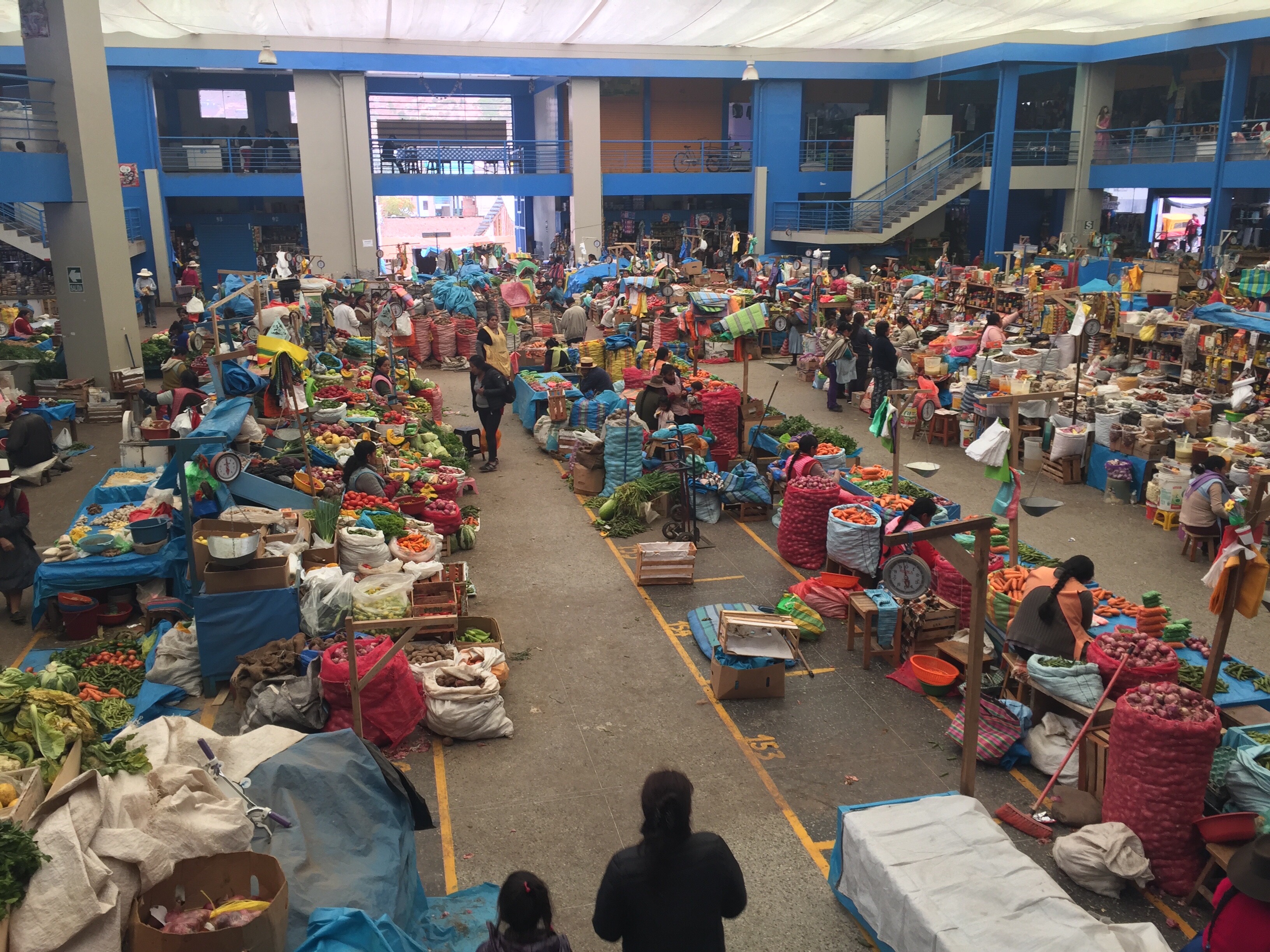
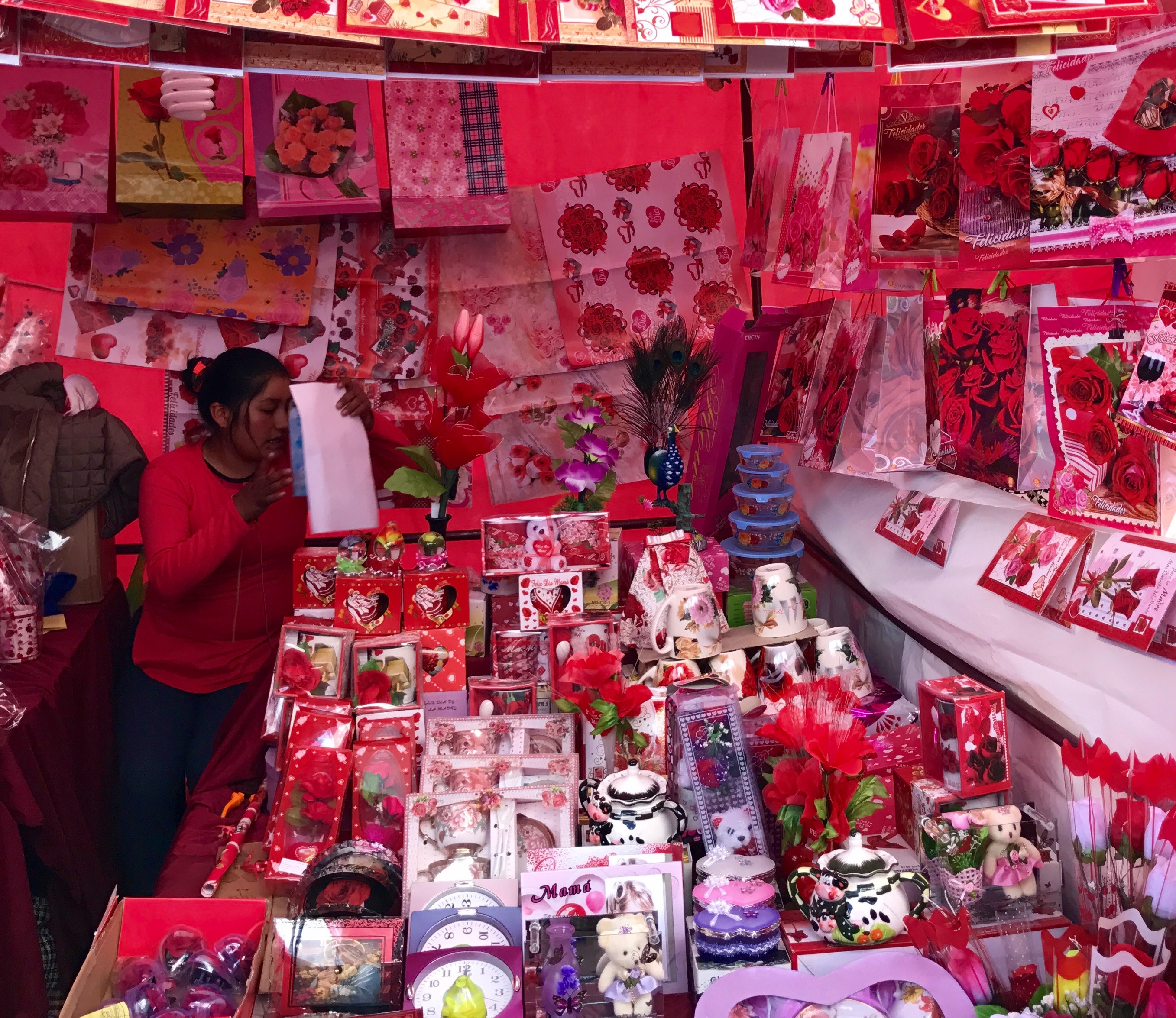
With a free day we headed for the local covered market.  Dia del Madre.  Mother’s Day and it’s a big deal.  Flowers and hearts everywhere.  More like Valentine’s Day.


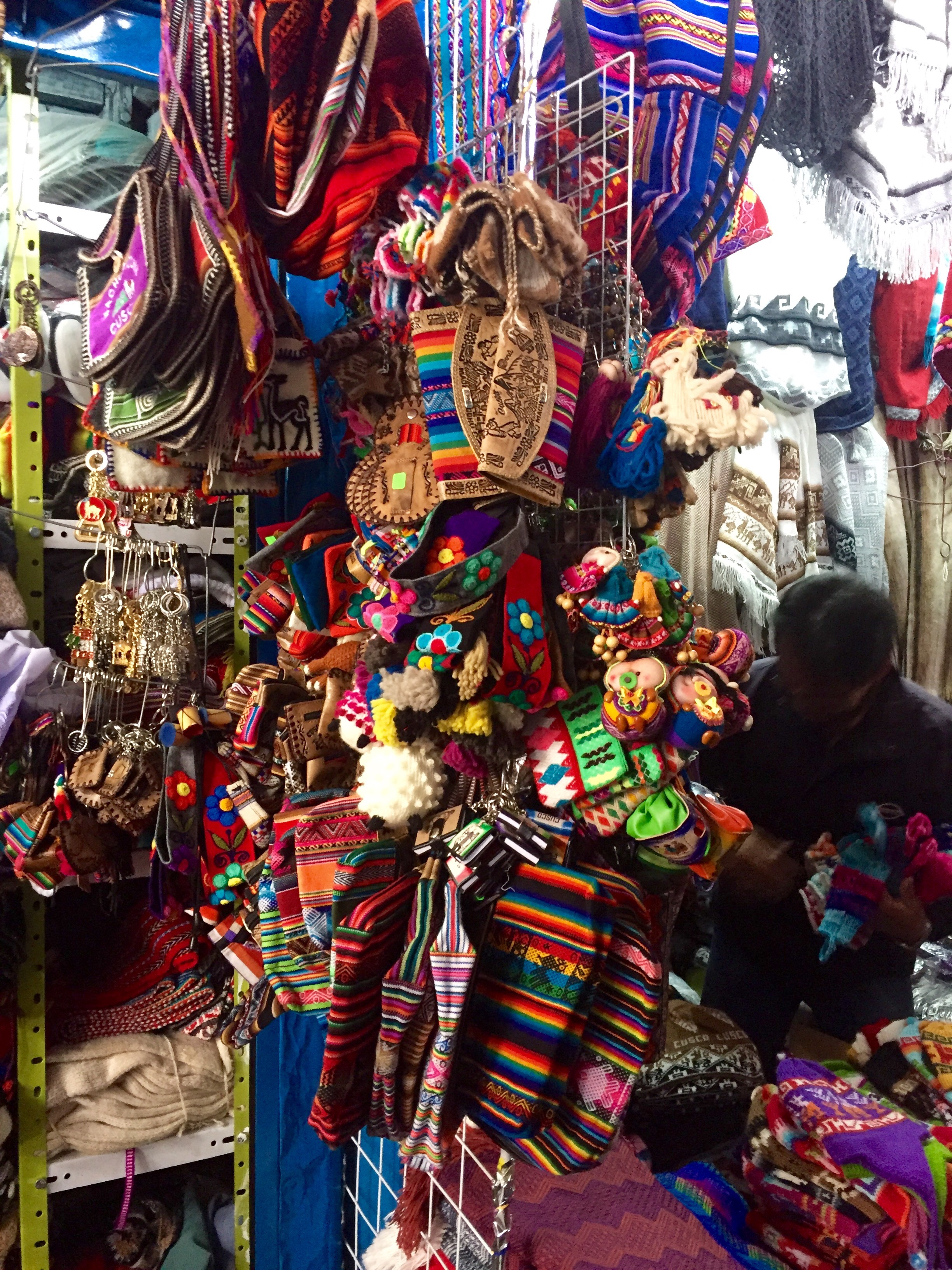
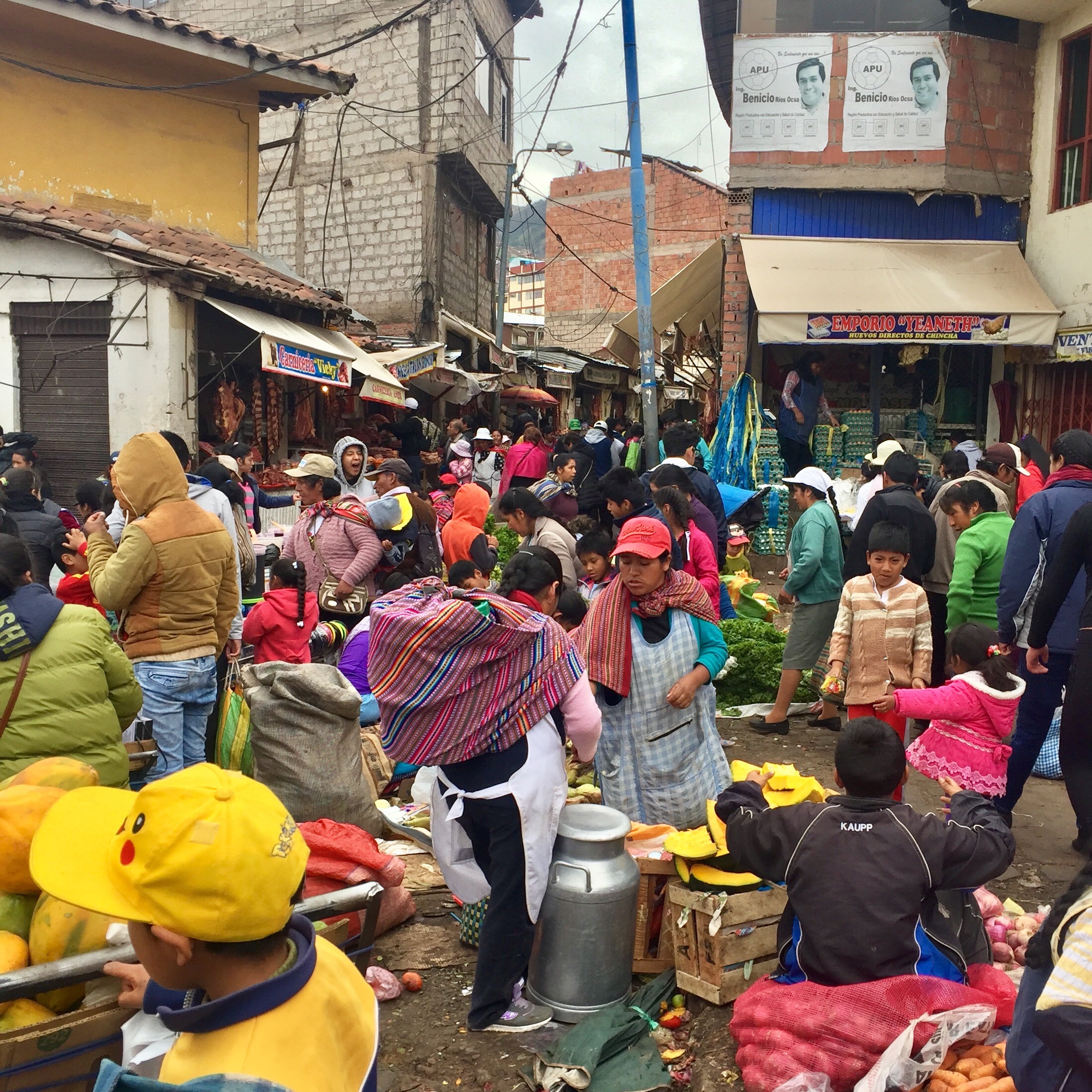
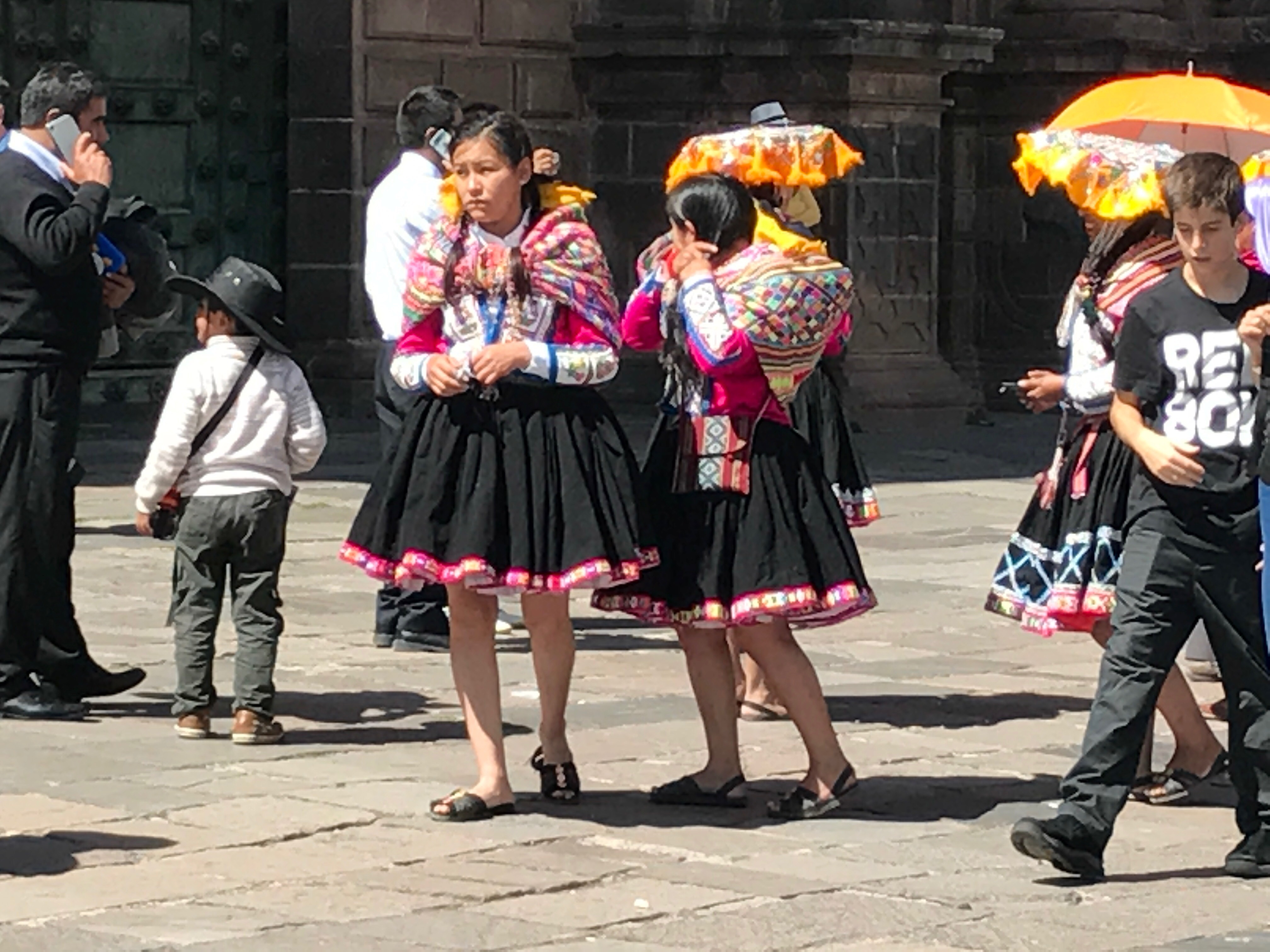
There was the usual tourist llama stuff but mostly it was for locals buying food and clothes.  These people do colour big style.  The Cusco flag is a rainbow but 7 colours just aren’t enough.  Nothing matches and it’s just brilliant.


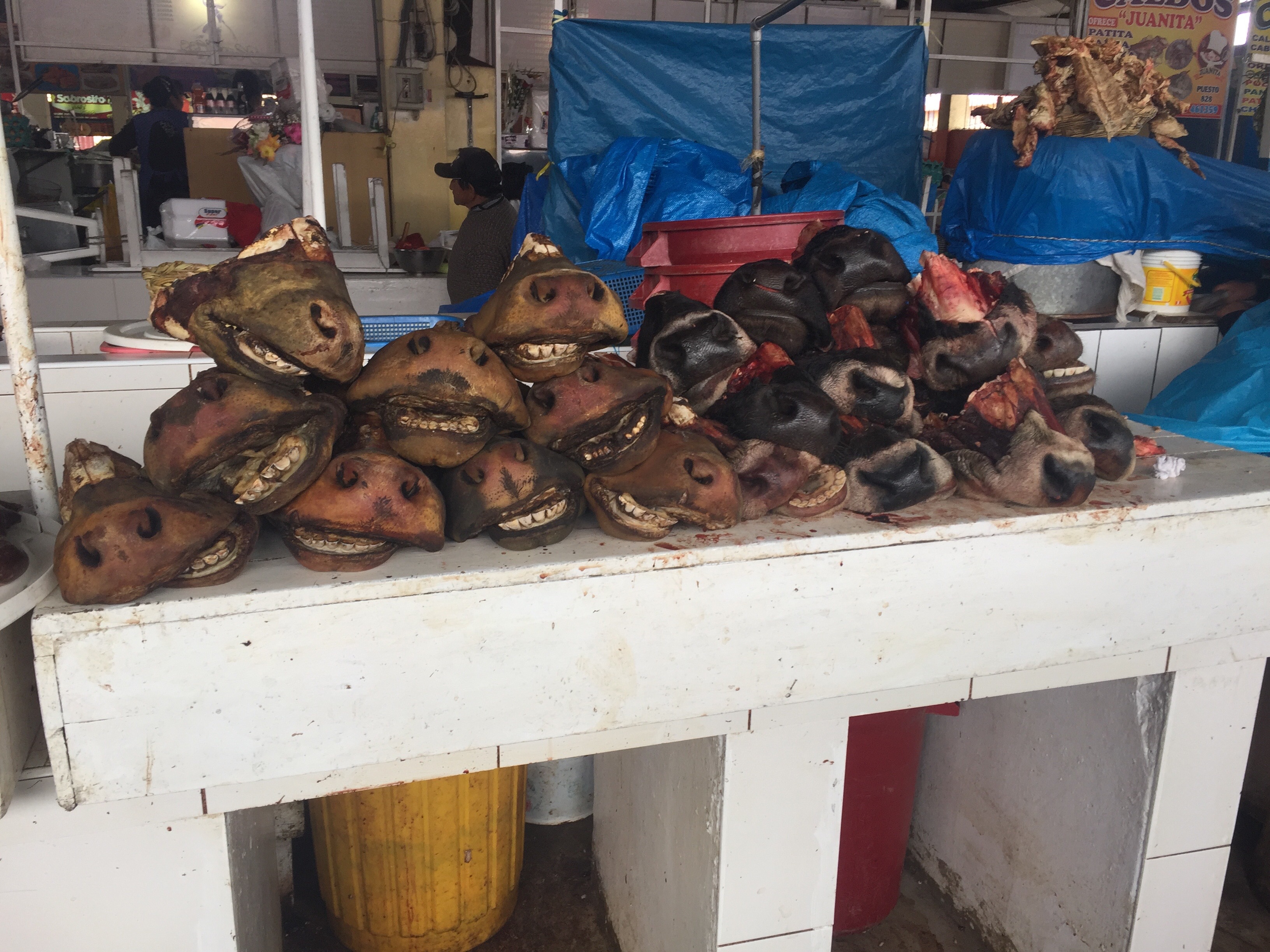
Aisles of fruit, bread, cheese then enough seeds, nuts and quinoa to keep any foodie happy.   One aisle just of fruit juice.  Anything you want blended for about £1.50.  We went for the safe options.  Orange juice and egg?   Not sure about that.  Then the hot food aisles selling chicken soup and various stews with crowds of families sat for Mother’s Day lunch.   It reminded me of the Singapore hawkers markets.  Then the meat.   Dried alpaca in huge flat yellowish sheets, the usual pork and chicken etc, and then the bits we don’t see at home.   Pig heads and testicles, cows noses , alpaca trotters, a whole aisle of tripe.  The smell was pretty overwhelming.


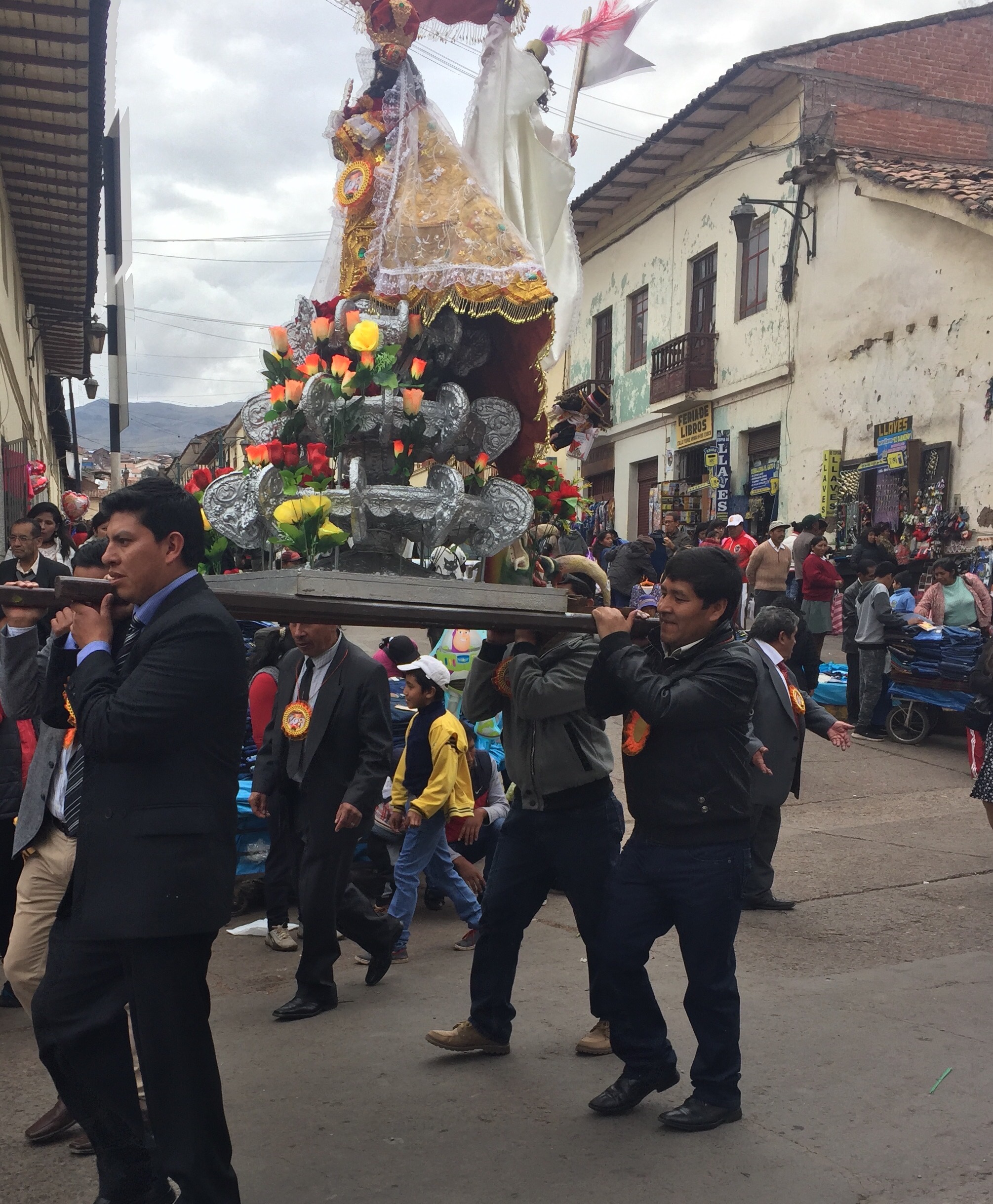
Outside was more chaotic, every inch of pavement taken with plastic sheets laden with whatever produce, loudspeakers proclaiming their mandarins were the cheapest, fireworks randomly going off, cars ploughing through the crowds blaring their horns to let you know to get off the street, but you can’t because the pavement is full of fruit and veg, then a random religious parade with a brass band.


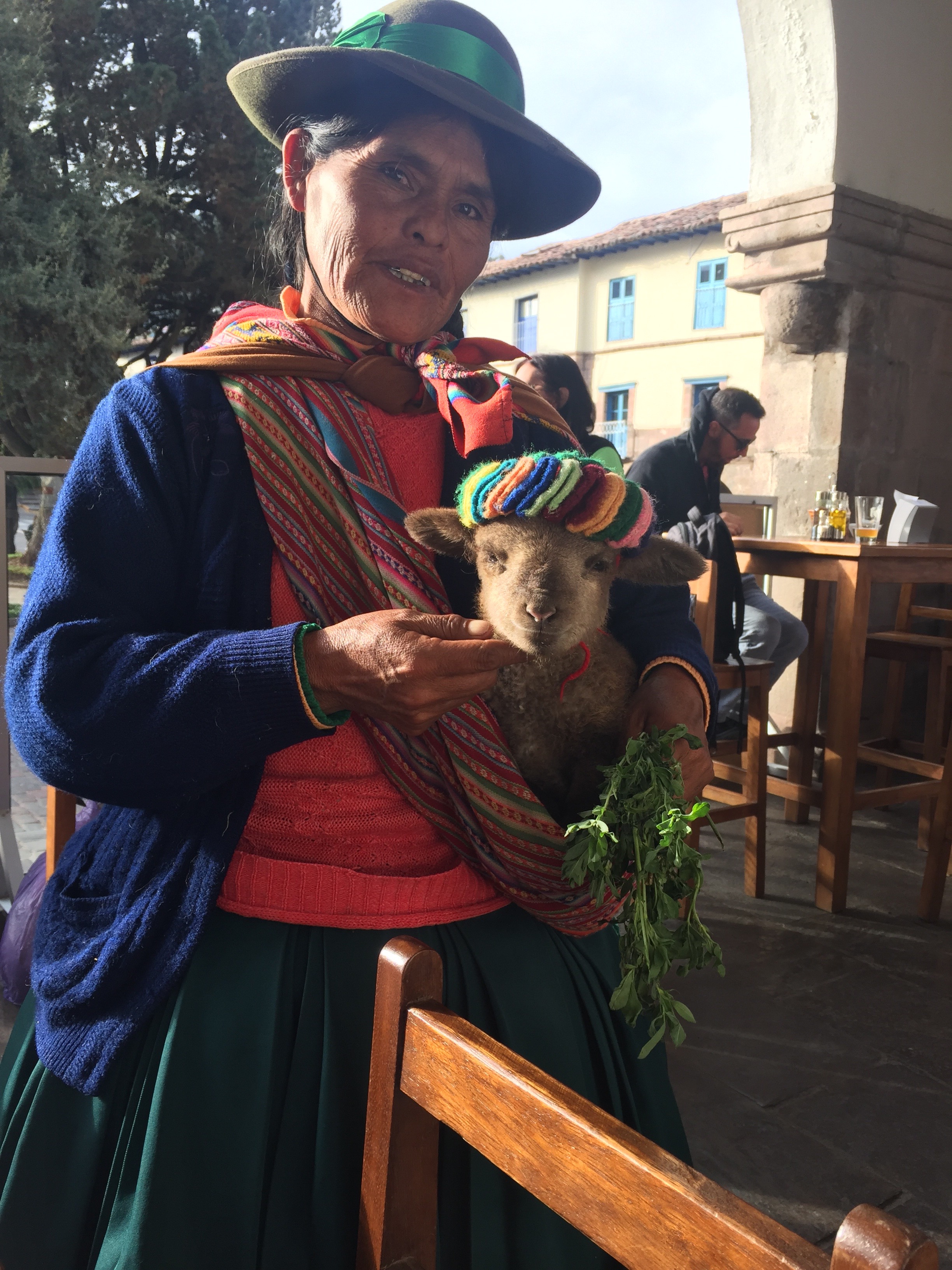
Tim’s altitude sickness returned in the afternoon.  We will be going lower tomorrow to the Sacred Valley.  He can’t wait although he’s loved it here too but he’s suffering.  I am completely in love with this place.  I had been led to believe it was a tourist watering hole on the way to Machu Pichu and it couldn’t be further from the truth.  Yes, the city thrives on tourism and every other shop is selling you a hiking trip or pony trek, but it’s beautiful and vibrant and you can feel the history in every stone.  Admittedly I have bought a llama hoodie, gloves and hat (it’s f*****g freezing at night) and you are all getting llama key rings as souvenirs (they are sold by really cute kids….), but there is so much more to this place.  The llamas are cute though, especially the baby ones with hats.  

Llama hoody – not cold at all!

El umbiglo del mundo


I have to admit I knew pitifully little about Peru before we came.  There’s Paddington of course, they eat guinea pig, and it must be deep and dark because there are bits that are deepest and darkest.  All I knew about the Incas was that they worshipped the sun and the Spanish nicked all their gold.  So in preparation, Tim and I read a couple of books, Turn Right at Manchu Pichu and The Last Days of the Incas.  You know how much I love the Spanish, but god those guys were bastards.  The Incas weren’t exactly as cute as a baby llama either.  Sacrificing children because the weather’s not holding up or having all your servants slaughtered when you die to look after you in the next world, doesn’t give them mother Teresa status.  They were an amazing race.  The architecture and engineering is mind boggling considering the limitations of the age.  And not just technically brilliant, but beautiful to look at as well.  

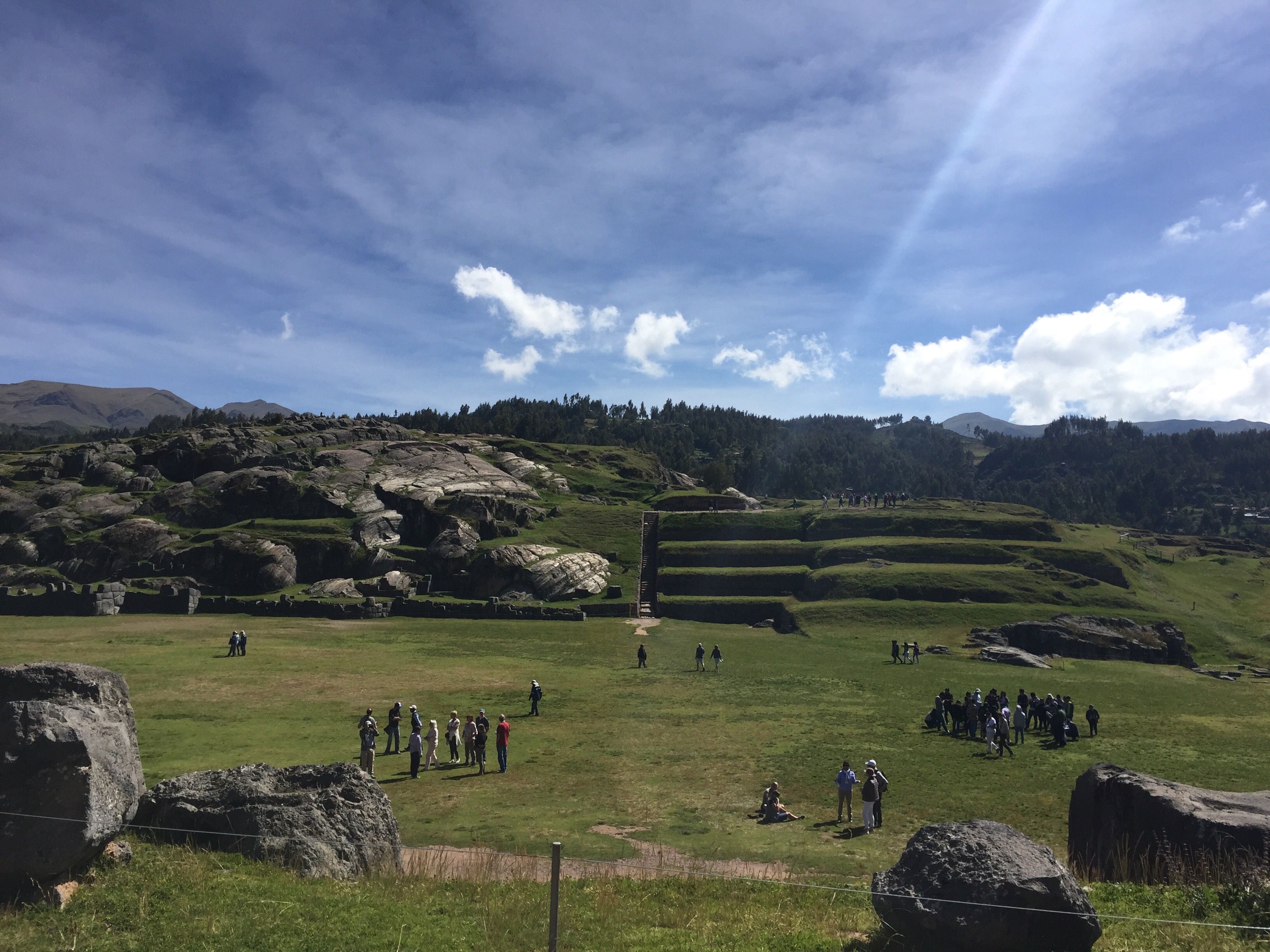
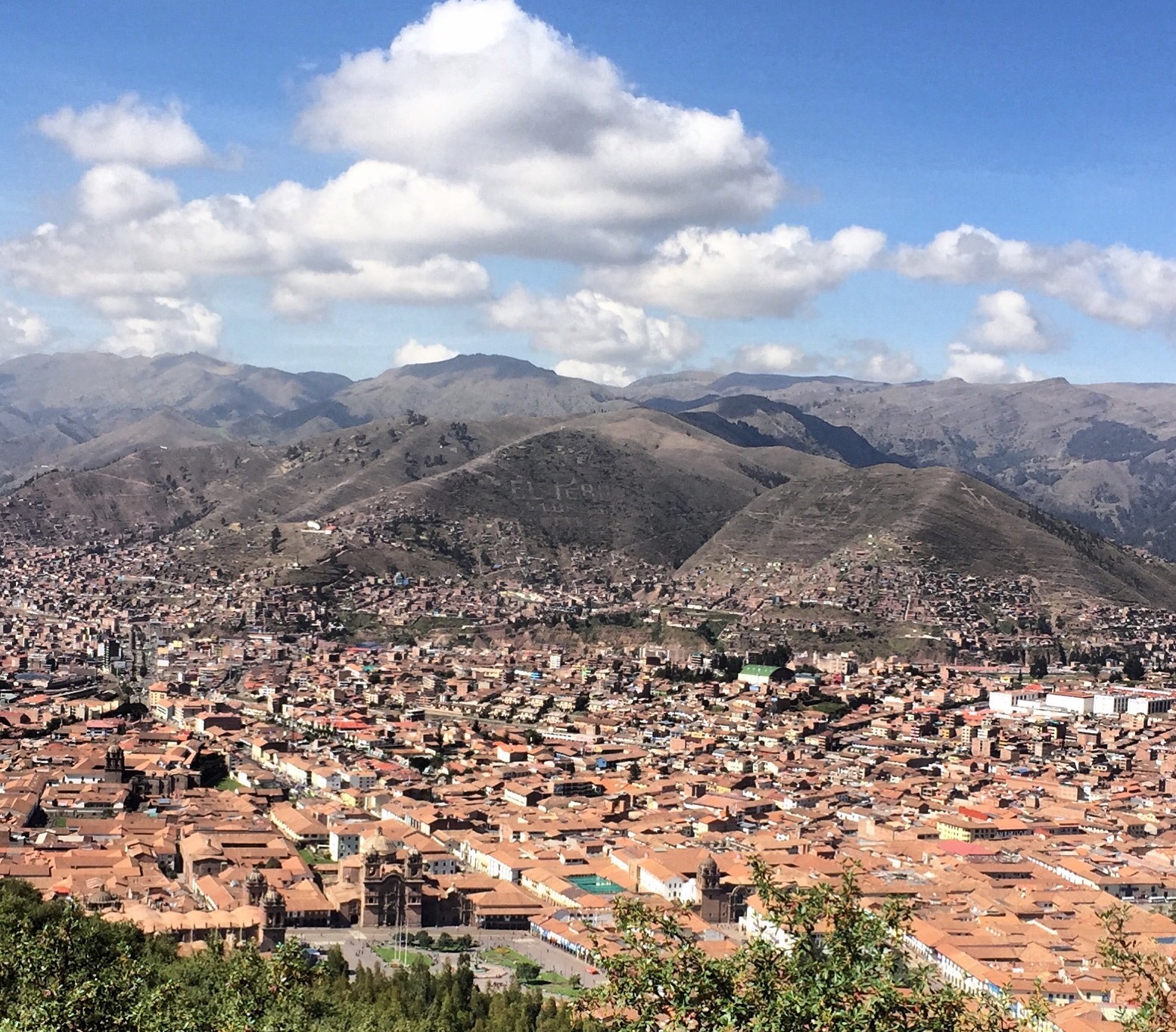
Anyway, new city new guide, Willington.  First he took us even higher out of Cusco.  Getting our breath was still a struggle but much easier now.  First stop was Saqsaywaman, a fortress and ceremonial ground overlooking Cusco lying in the bowl of the mountains, the umbiglo, or belly button.   


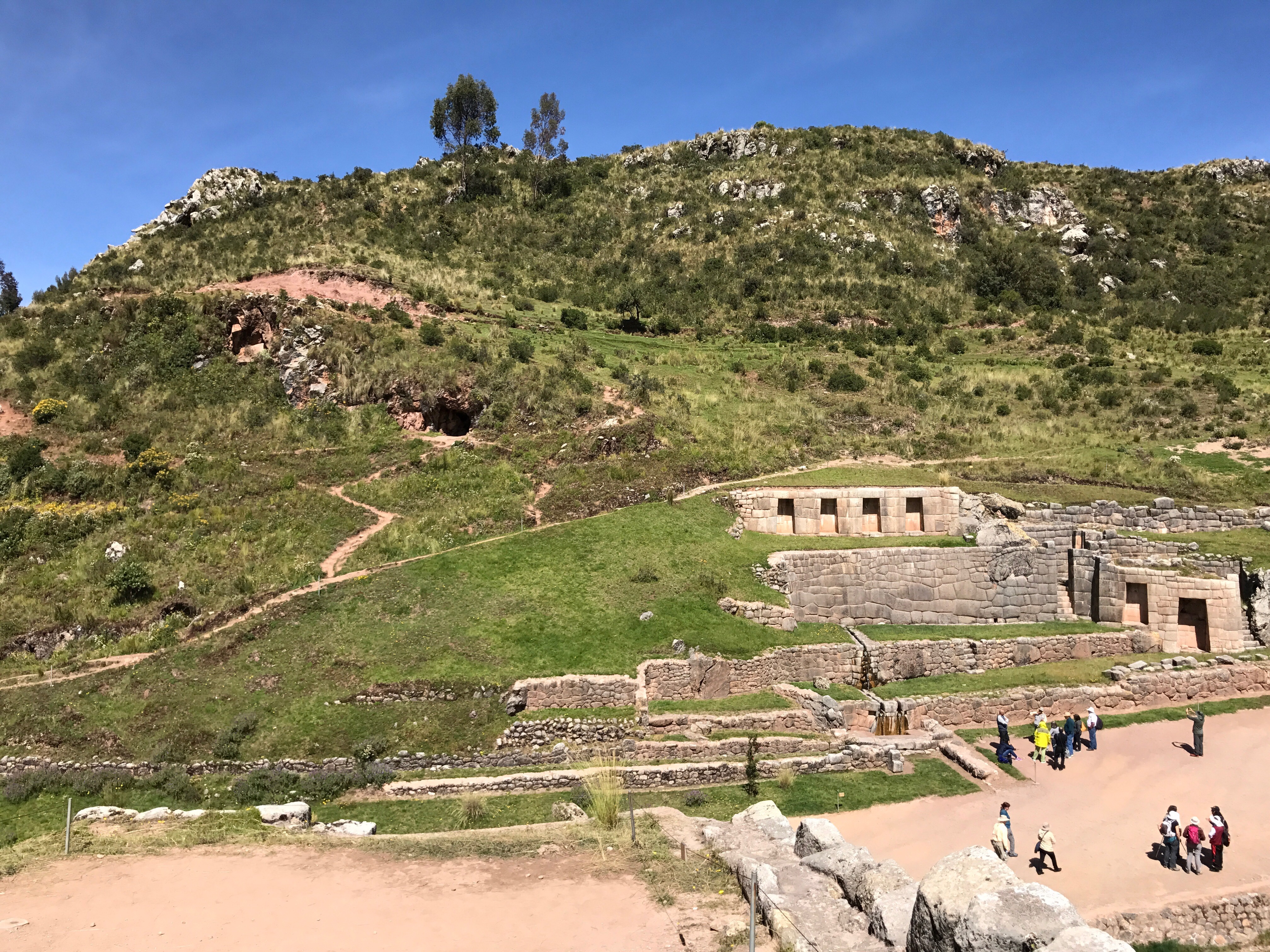
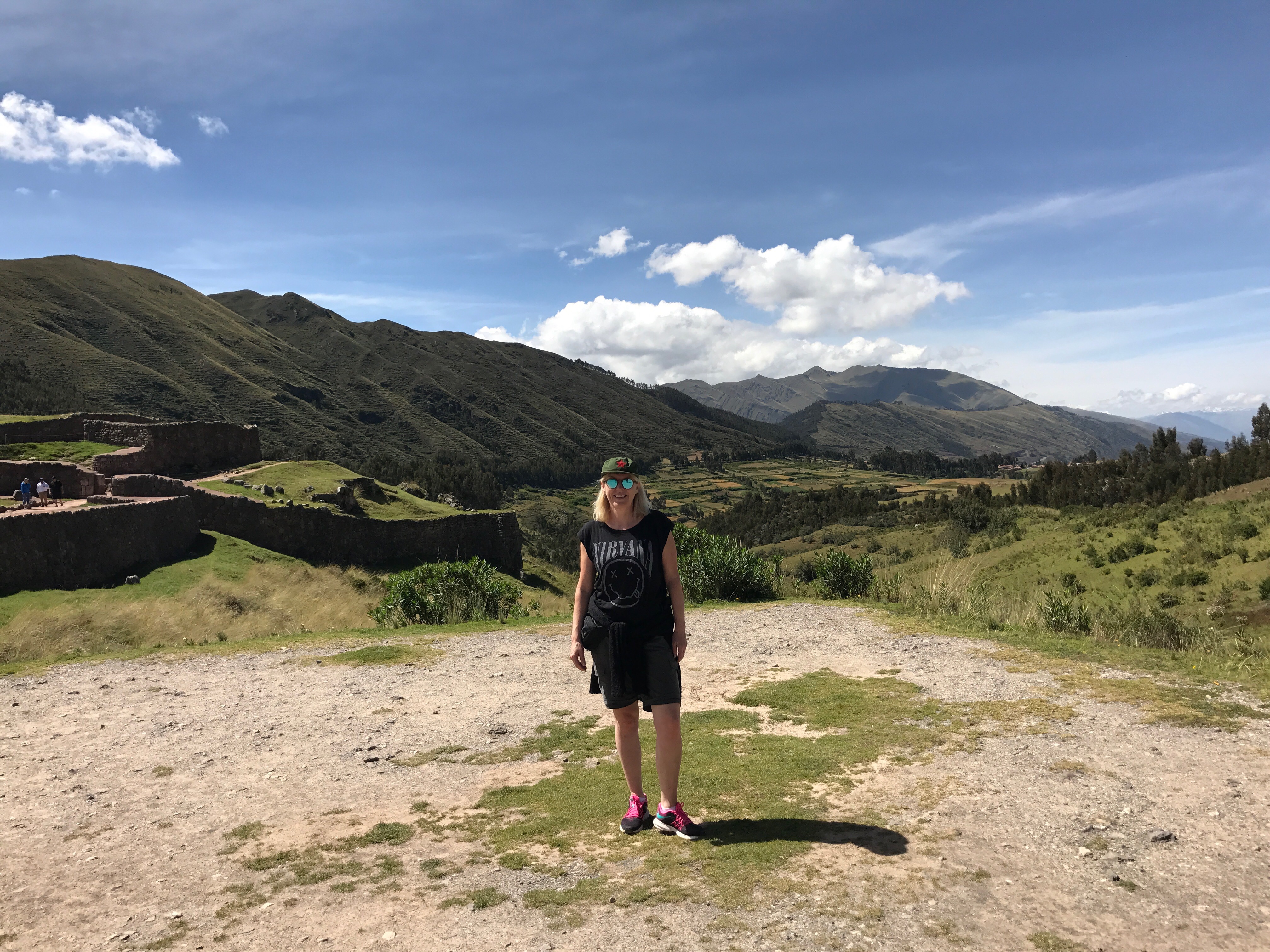
Then to Pukapukara and Tambomachay.


We then headed back into town where Willington gave us a walking tour of the historic centre. It has been really worth having a guide.  He knows everything about everything it seems, and a very pleasant person to spend time with.   

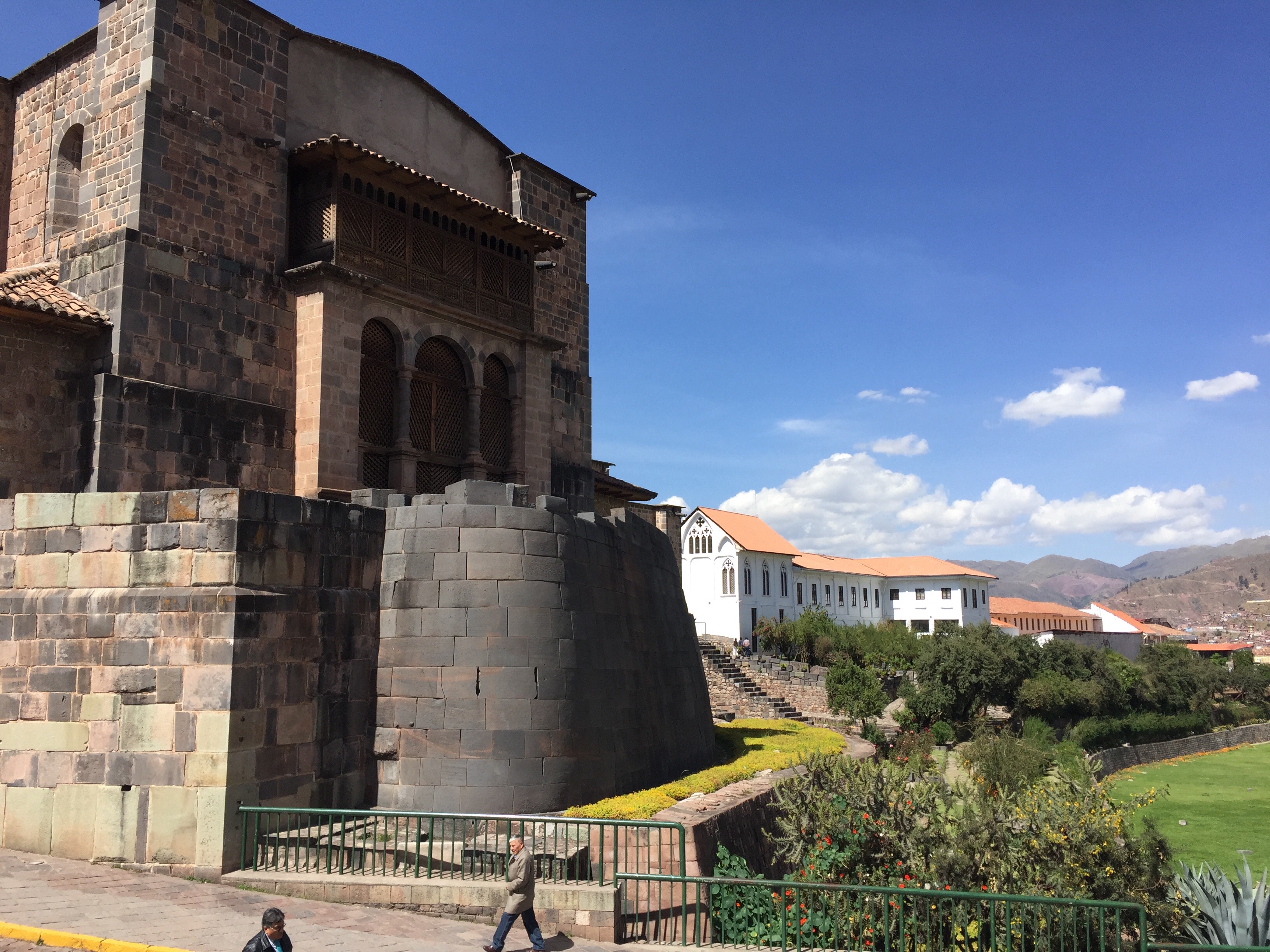
When the Spanish did their conquering they demolished all the Inca sacred sites, took the gold and silver, then built their own churches on the Inca foundations, using the precious metals to create some of the most ornate and over the top altar pieces you will ever see.  It’s stunning but leaves a bit of a sour taste.   As karma would have it, a huge earthquake hit in 1950, demolishing the colonial buildings, but leaving the Inca foundations, built for strength, intact.   


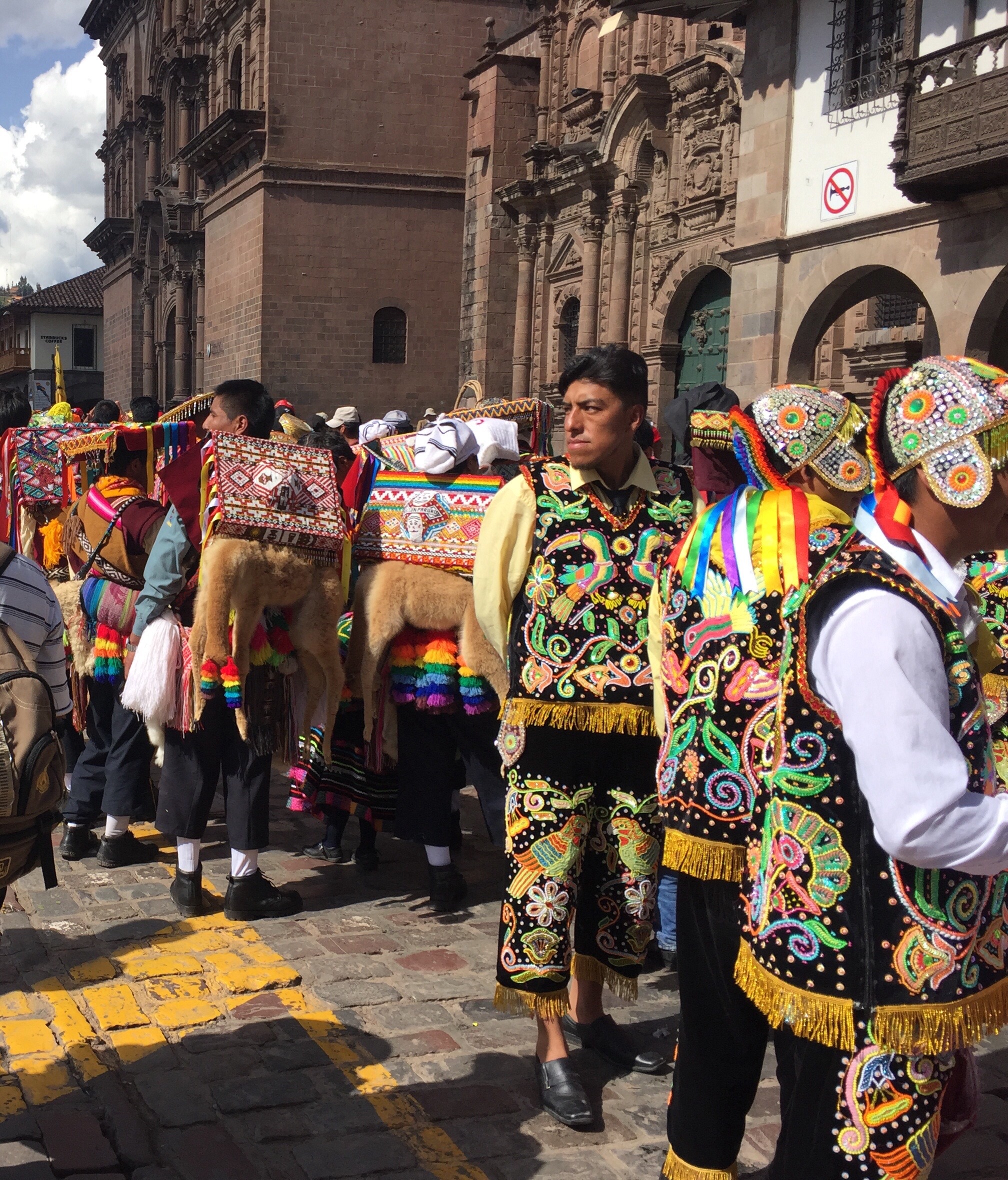
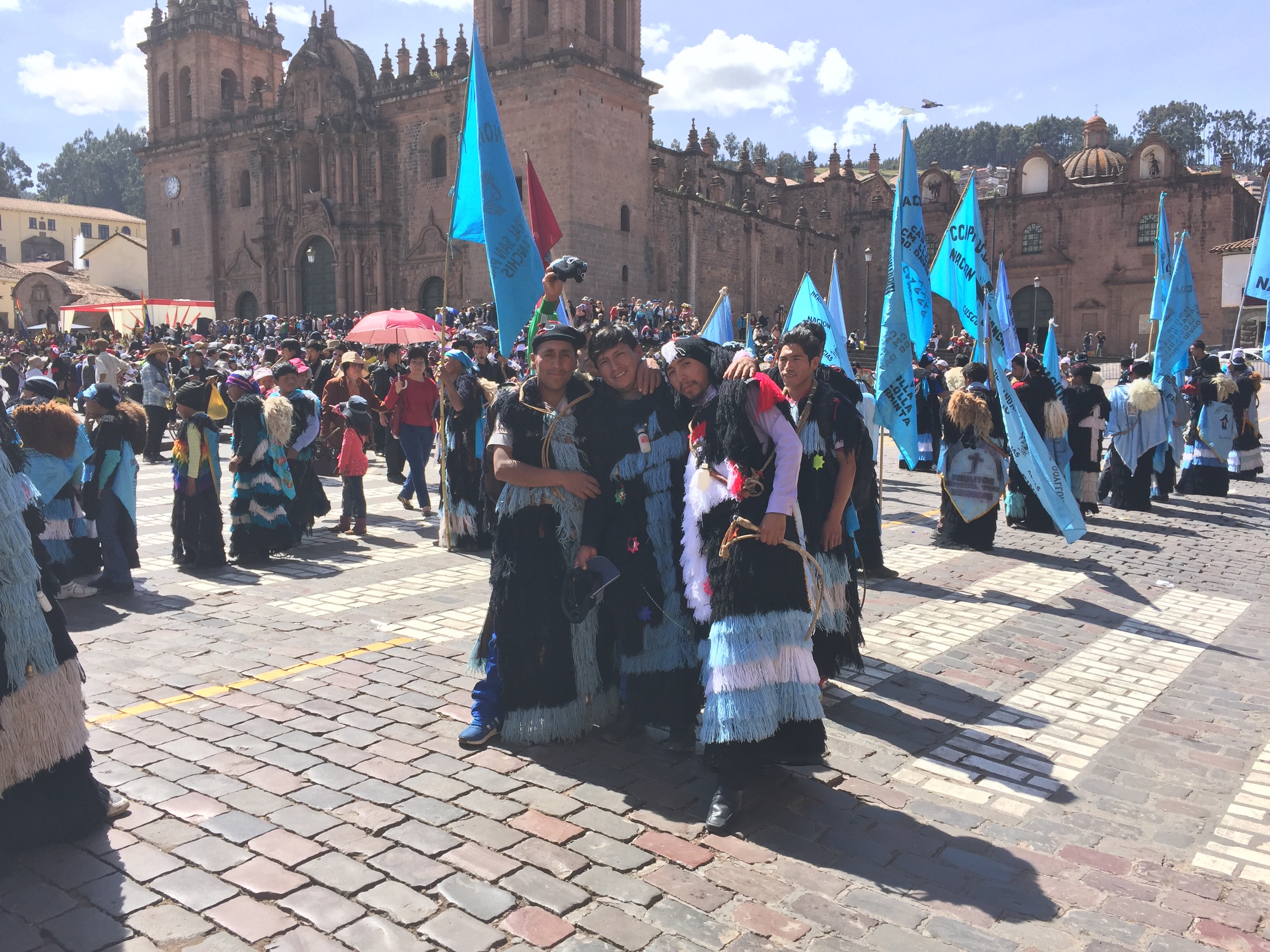
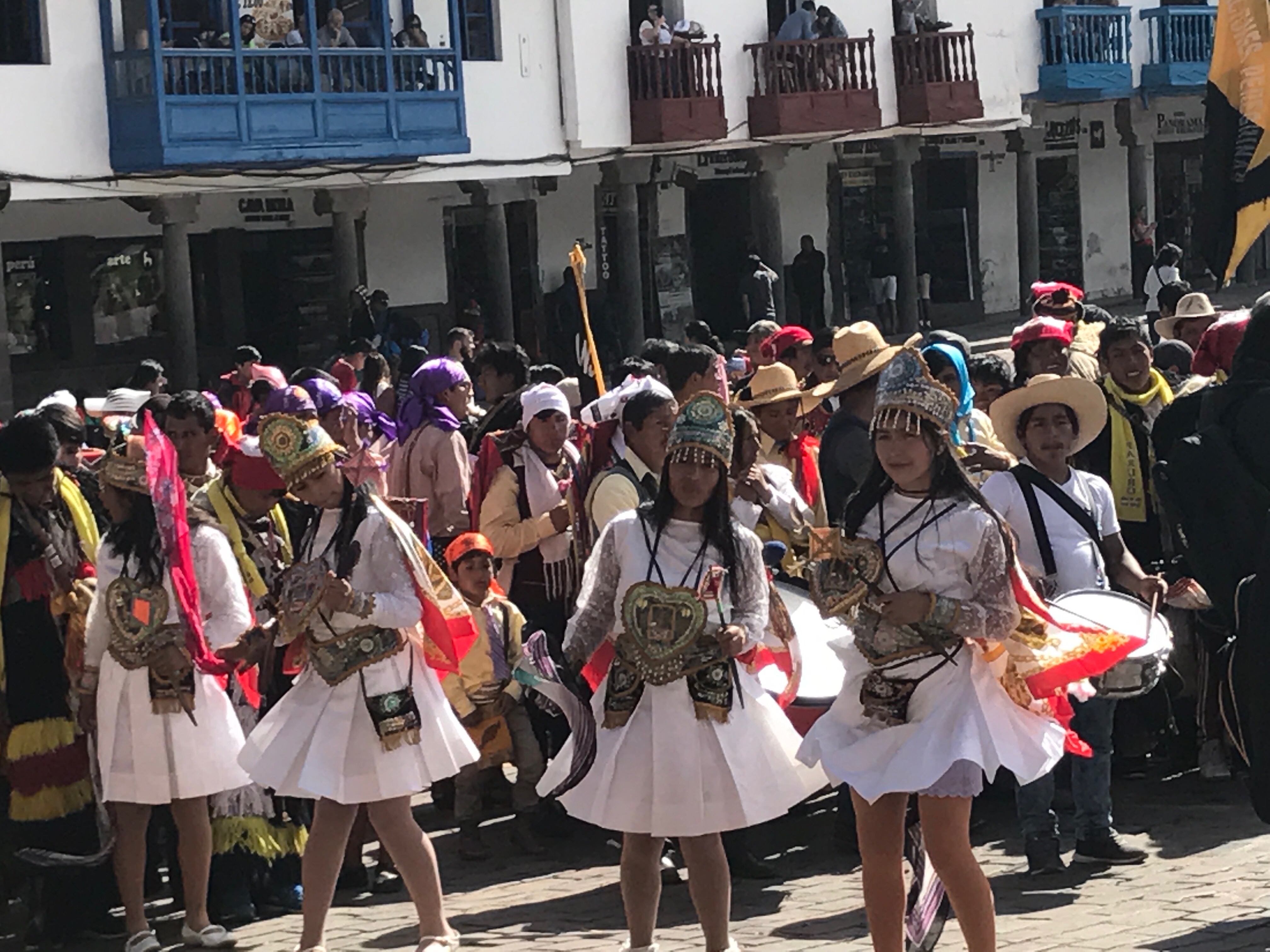
As we reached the square there was a cacophony of music and chatter of people.   A procession of children and young people was in progress, all dancing in the most colourful and sparkling outfits you can imagine.   Willington had no idea what it was for.  Apparently they are always doing parades at the drop of a stovepipe hat, with the month of June being non-stop partying to celebrate the foundation of Cusco.   Peruvians love to dress up and party, that much is clear and they dont do it subtly.   

Cusco

It’s a 35 minute flight from Puerto Maldonda to Cusco which is at 11,000 feet.  Basically you’re flying uphill.  Within 5 minutes of disembarking I was struggling to breath.  They were handing out coca leaves to chew at the baggage carousel.  Thanks, but an oxygen tank would be more useful and definitely less leaf like.   We were prepared and had drunk our body weight in bottled water but the dehydration took hold within minutes.  Tim was fine though.  What we weren’t prepared for was the cold.  After the blazing heat of Cuba and humidity of the Amazon it came as a shock.  It’s hot in the afternoon but goes to 4 degrees in the evening and morning.   It explained why the hotel has a fire pit and sells puffa jackets rather than bathrobes.  


After a rest at our hotel we headed to The Plaza de Armas for dinner.  A beautiful colonial square with the cathedral dominating the view.  The old town is in the bowl of the valley and the mountain surrounds it.  In the dark with the pinpoint lights of the houses scattering the slopes like fat Christmas trees looking down on you.  

We were careful to eat light, not much alcohol, lots of water, walk slowly etc, but by the time we got back Tim was suffering with altitude sickness, puffing and panting, bad tempered and at times disorientated.  I was a bit worried, but with the now novel ability to use the internet I googled the symptoms and was reassured that as he wasn’t yet gurgling in his chest or frothing at the mouth with pink bubbles, he’d survive.  Our nice Australian friends had given us some medication for altitude sickness and he took that and was thankfully alive in the morning.  I woke with a headache that would have felled 15 llamas but nothing that a good dose of neurofen couldn’t deal with.   Thank goodness, as we had the whole history of the Incas to deal with that morning.  Onwards and upwards. Literally.  

Amazing Amazon

I wasn’t looking forward to this bit of the trip.  I’d envisaged sweaty jungle treks for hours, huge bugs in our room and was a bit daunted by the idea of limited electricity and no phone for 3 days.  I couldn’t have been more wrong.  

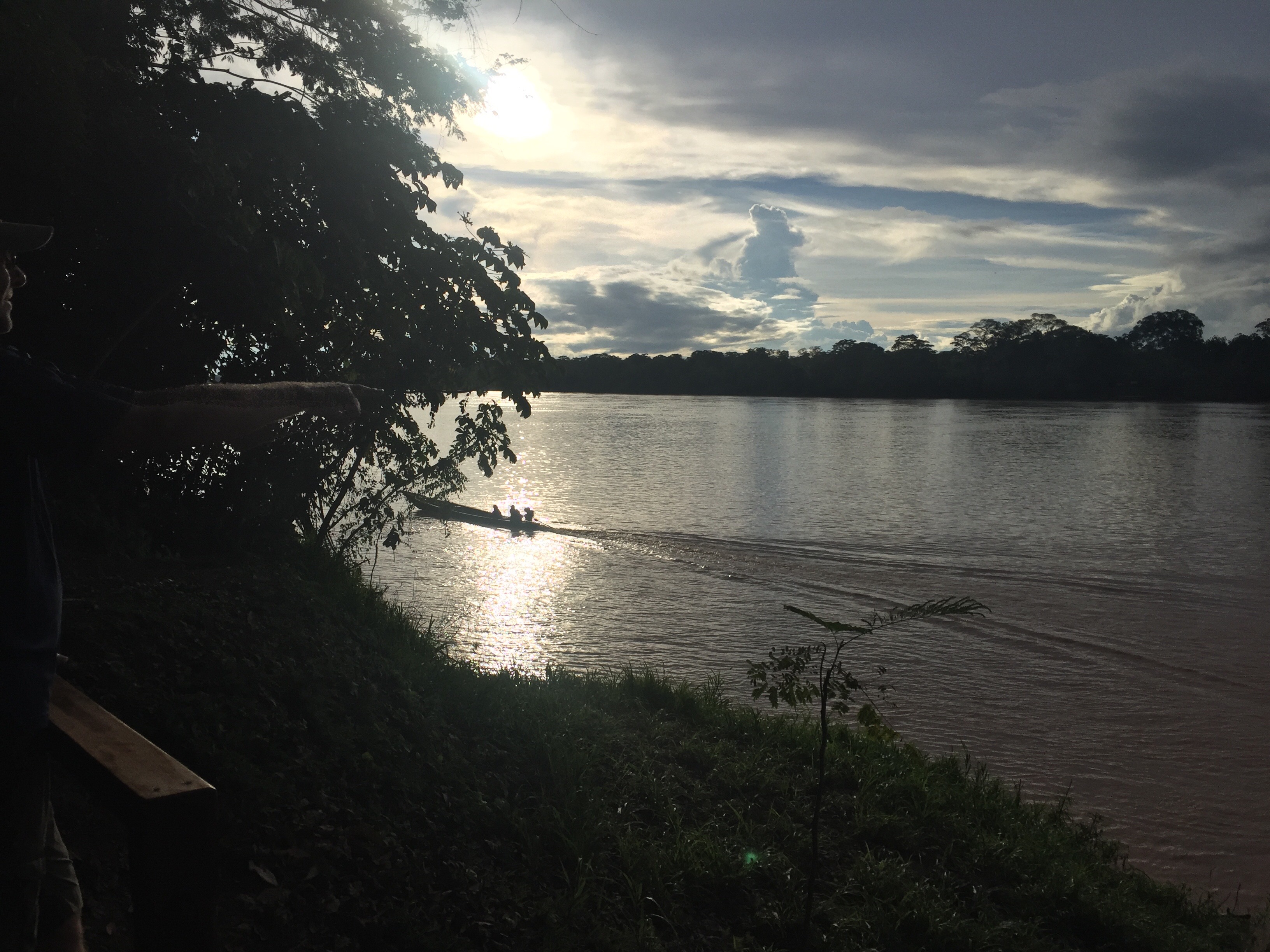
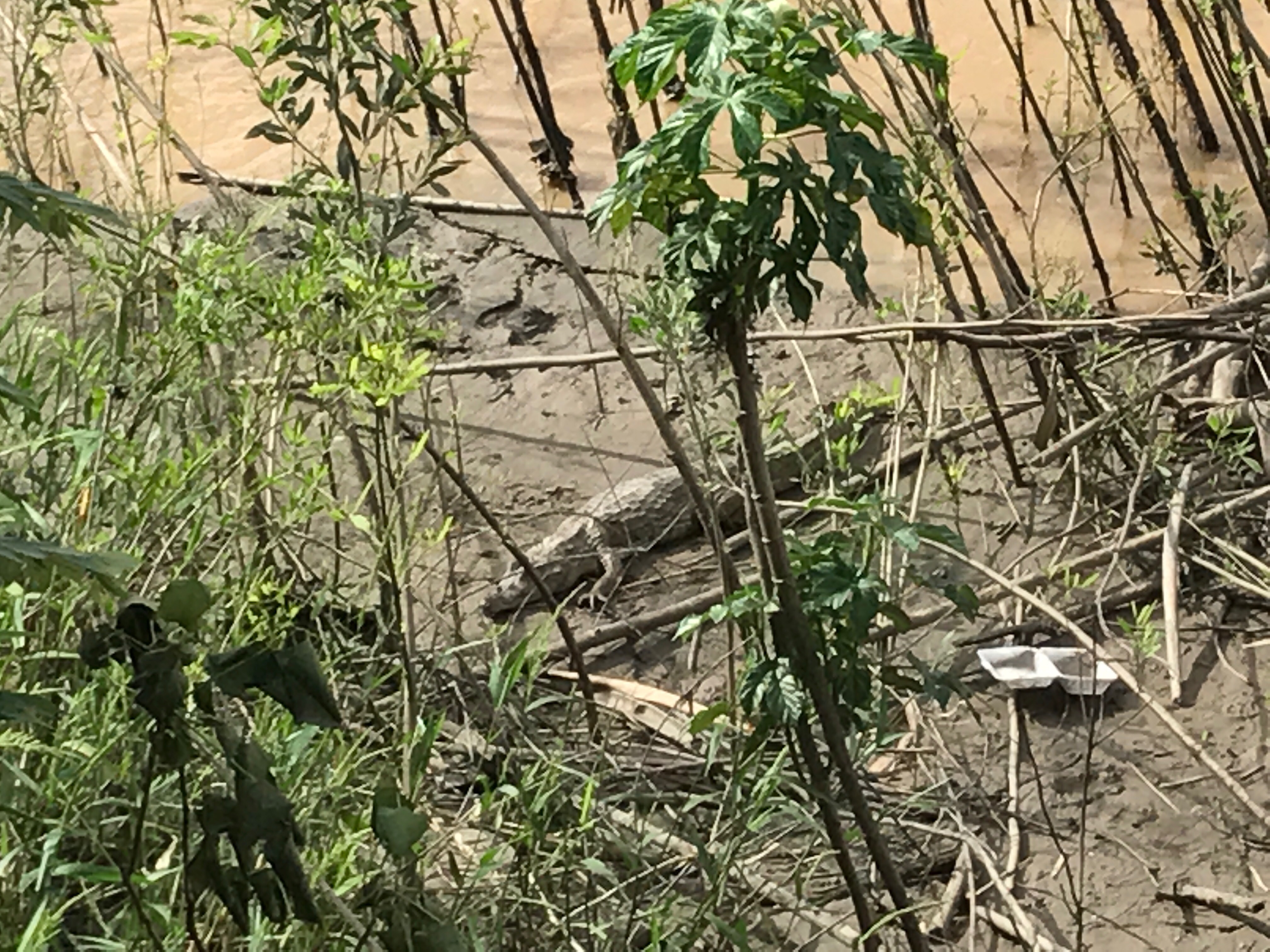
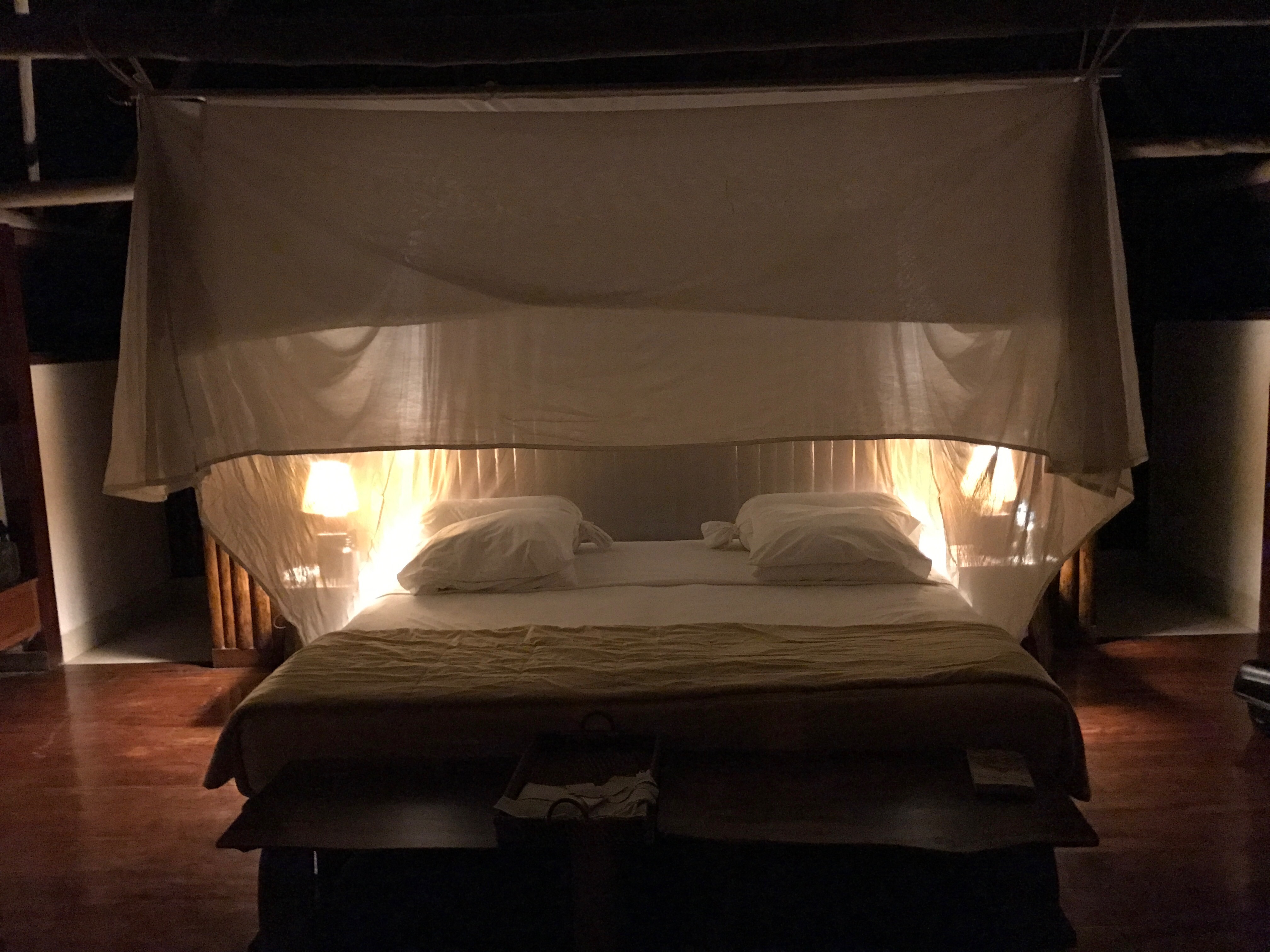
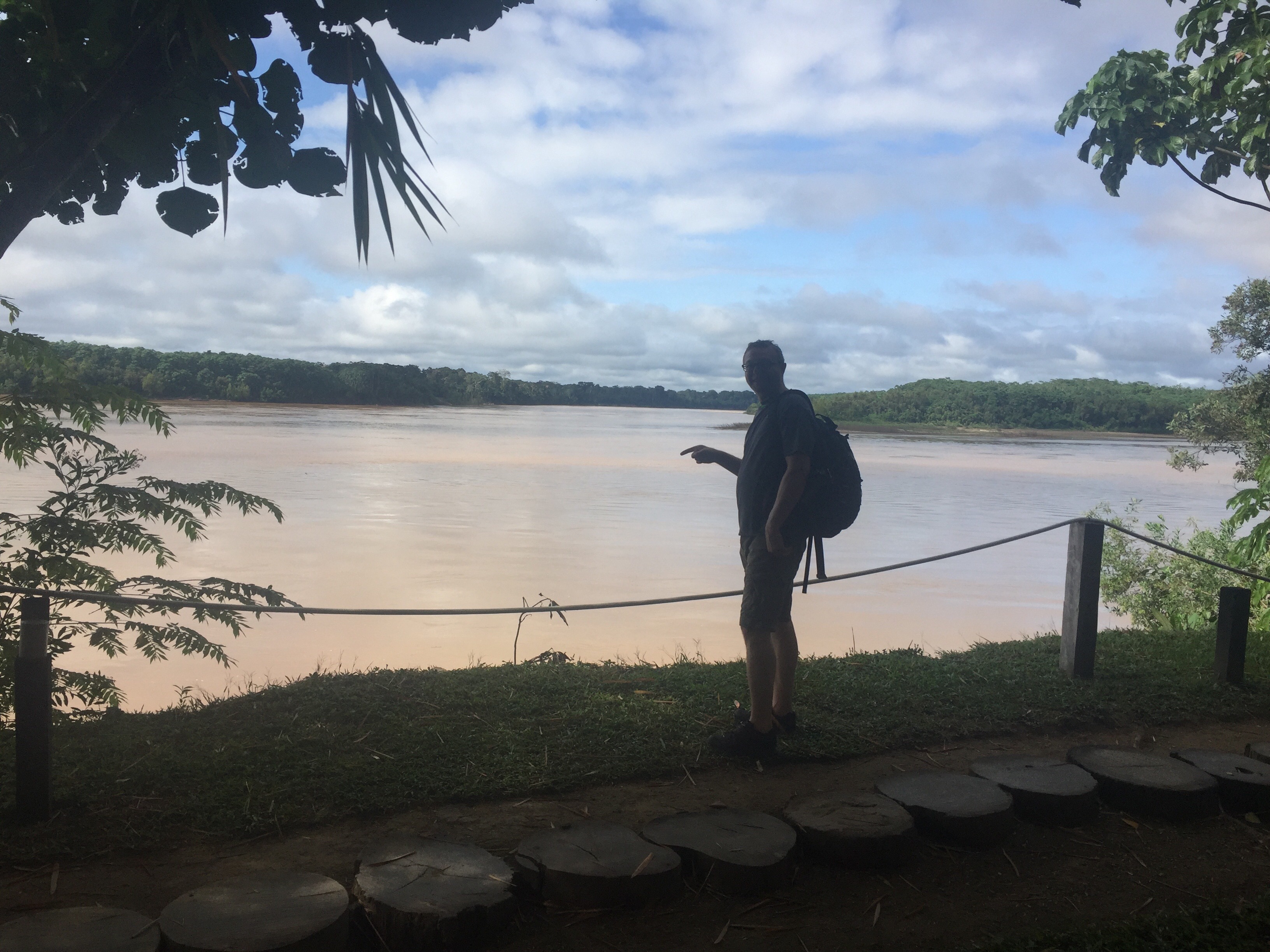
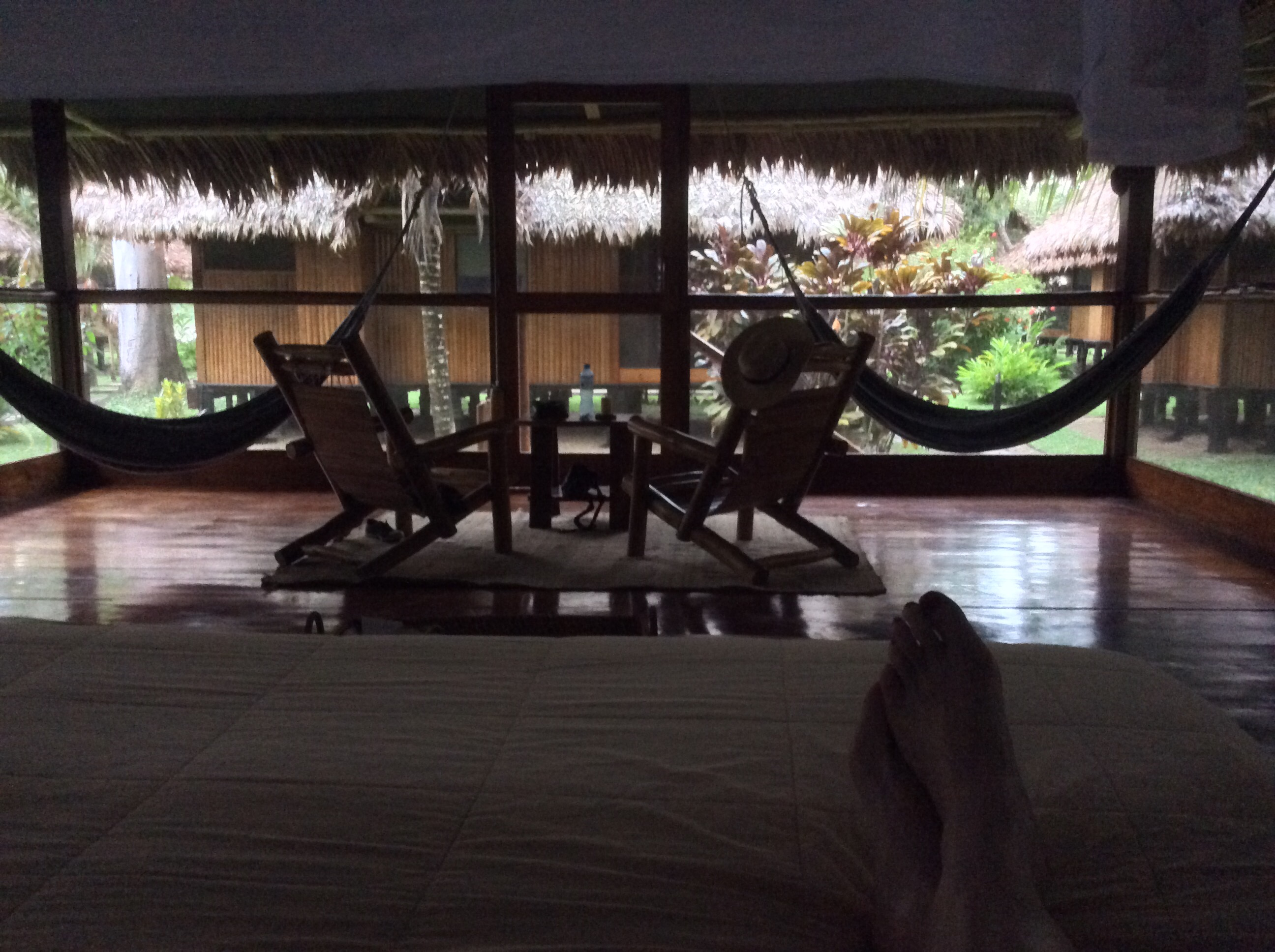
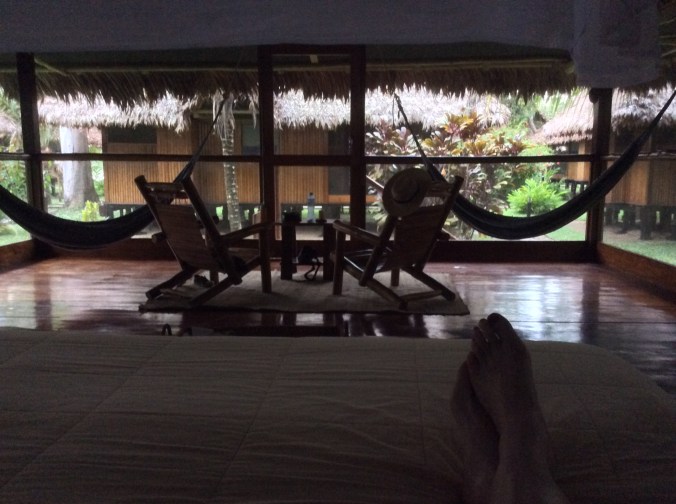
We were taken by boat to the lodge about 40 minutes down the river from Puerto Maldonda.  The electricity was off when we arrived but we were still served lunch and shown our cabin which was beautiful.  A wooden structure on stilts with mosquito mesh for windows. I’d been really unwell that day so gratefully collapsed into a hammock on th porch and just relaxed listening to the sounds of the jungle behind us.  In the evening we went for a moonlit boat ride and saw various birds, caiman and an ocelot.  

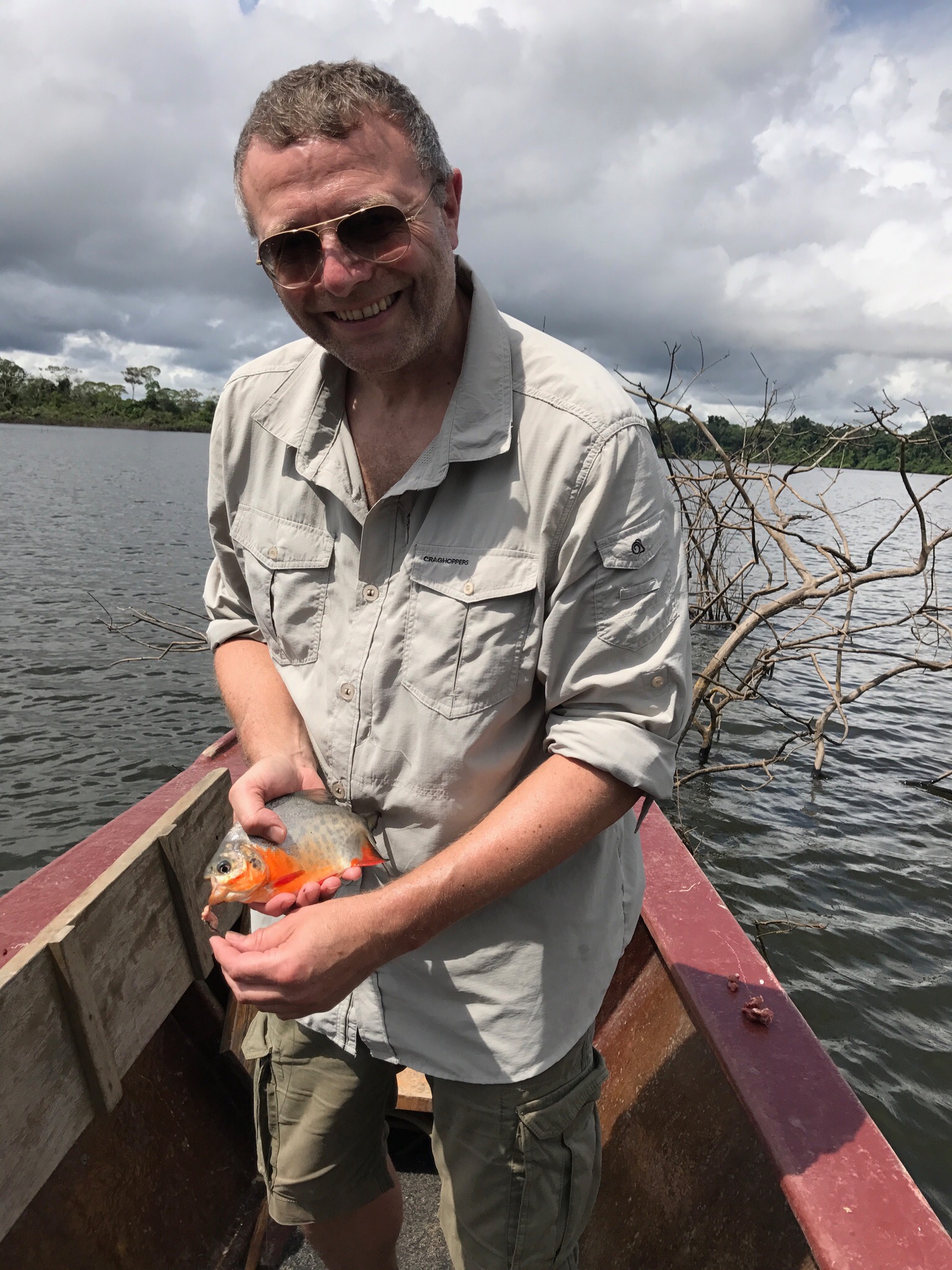
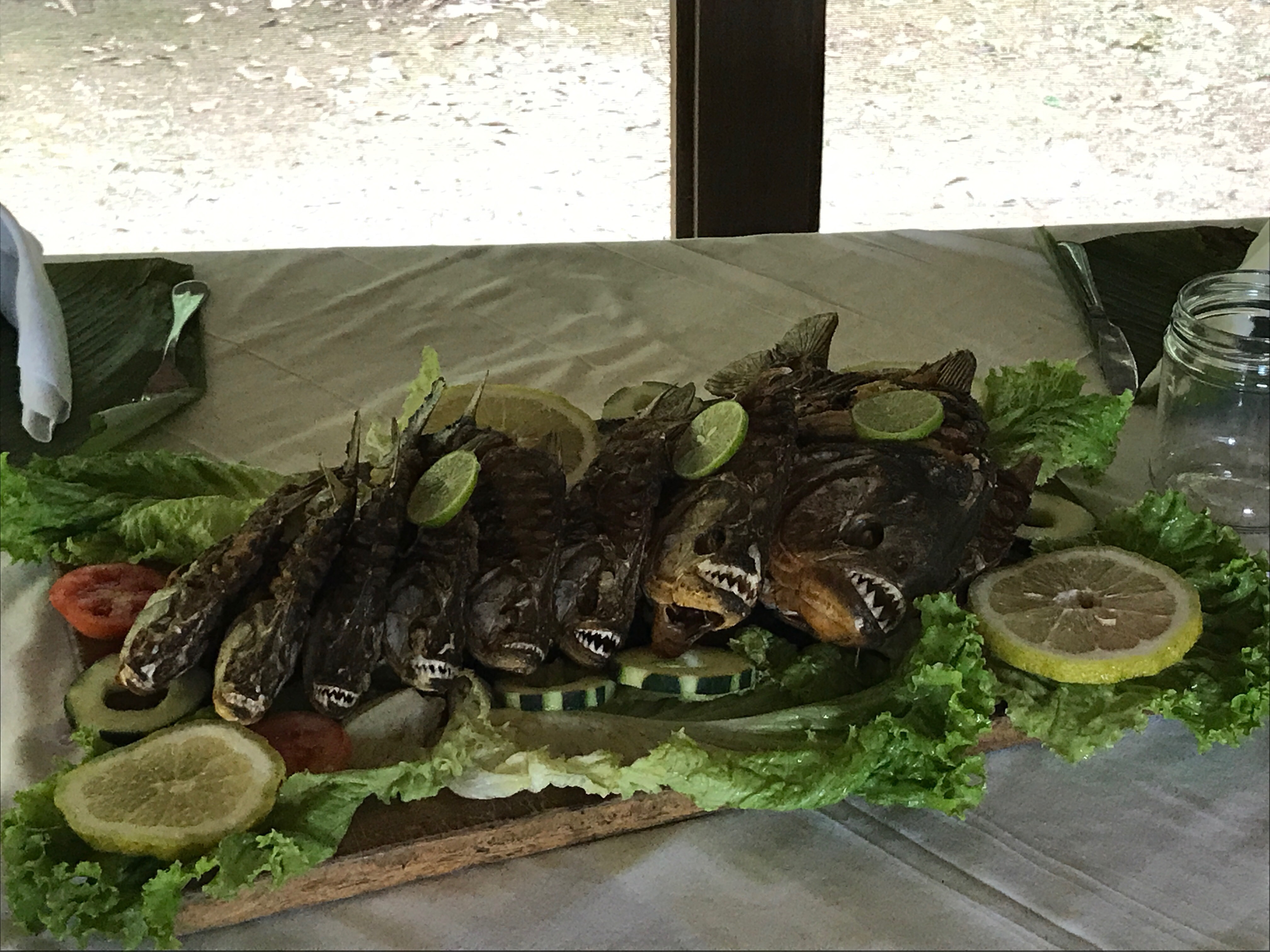
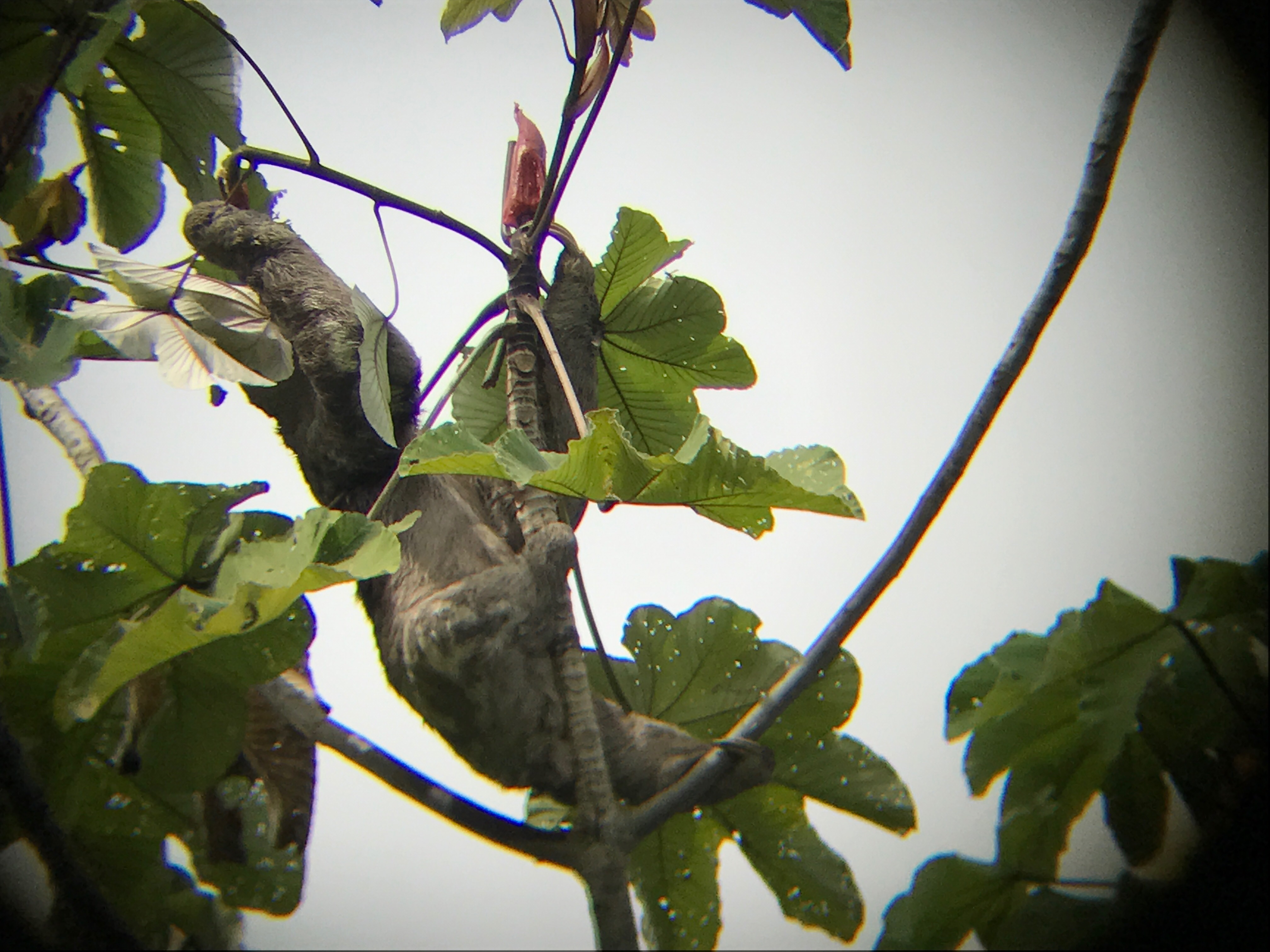
Tim went on a fishing trip the next day but I opted out as I still felt unwell so thought a couple hours at the spa might be a good alternative.  Tim was well pleased with his adventure.  He caught loads of piranha, which they then cooked and ate for lunch.  He opted out of swimming in the lake though.  Apparently piranha are no more appealing swimming companions than sharks.  On their boat journey they saw many animals, including a sloth (no comparisons to me please….) and a jaguar which is very rare.  Even the guide hadn’t seen one in 3 years.  


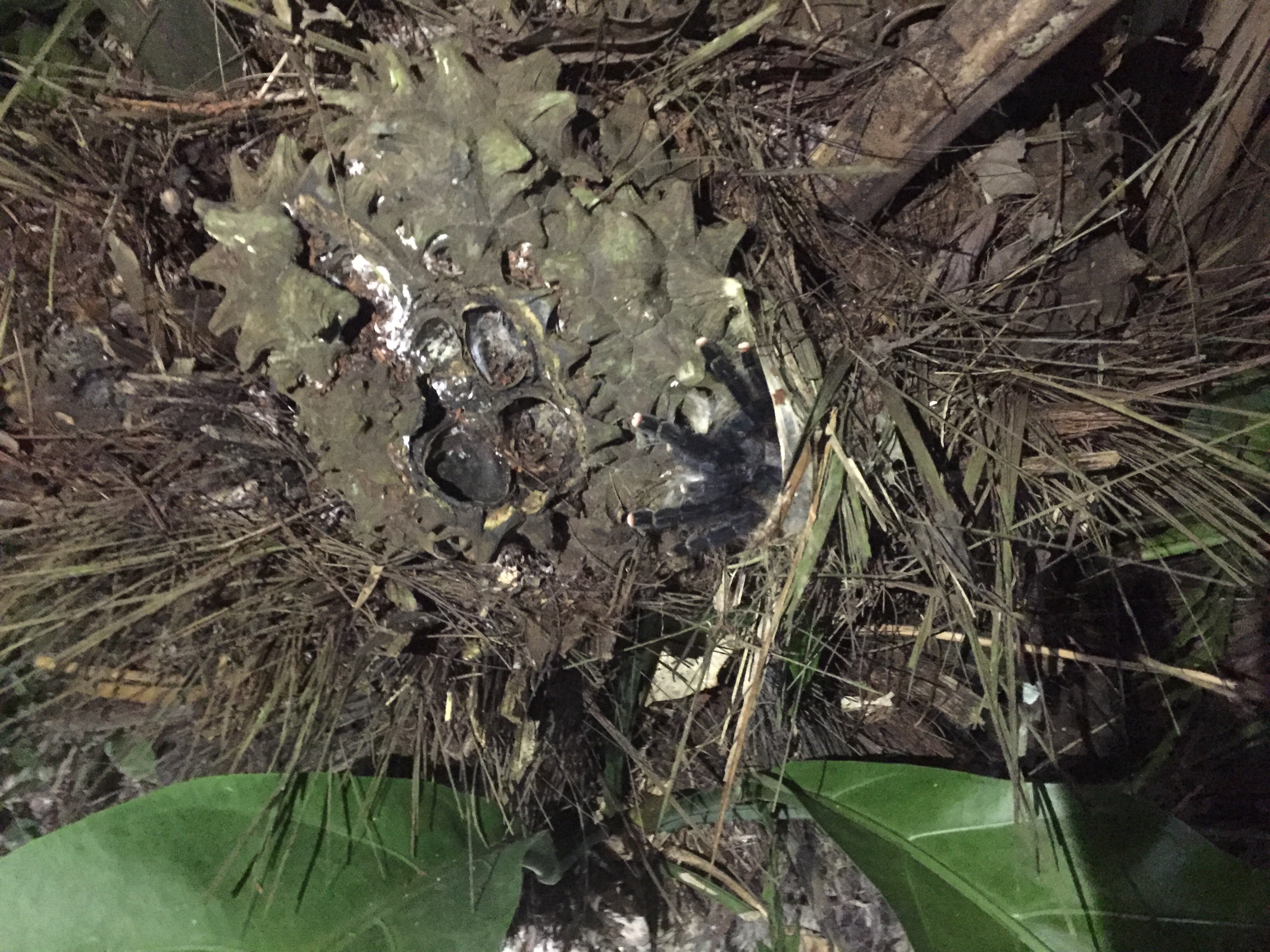
That night before dinner we took a spider trail.  There are quite a few tarantula type spiders to be found when you’re shown where to look.  The pink-toed spider, so called because it has pink toes.   Genius.  Then the chicken spider.  And guess why it’s called that?   The one we found would have only managed a chick but apparently they can be the size of a plate.  A plate of chicken perhaps….We also saw legions of leaf cutter ants which were more fascinating than you’d imagine, particularly when one ran up Tim’s trouser leg, followed by all his pals.  That was pretty hilarious watching Tim jump about in the dark and mud trying to get ants out of his pants.  
 

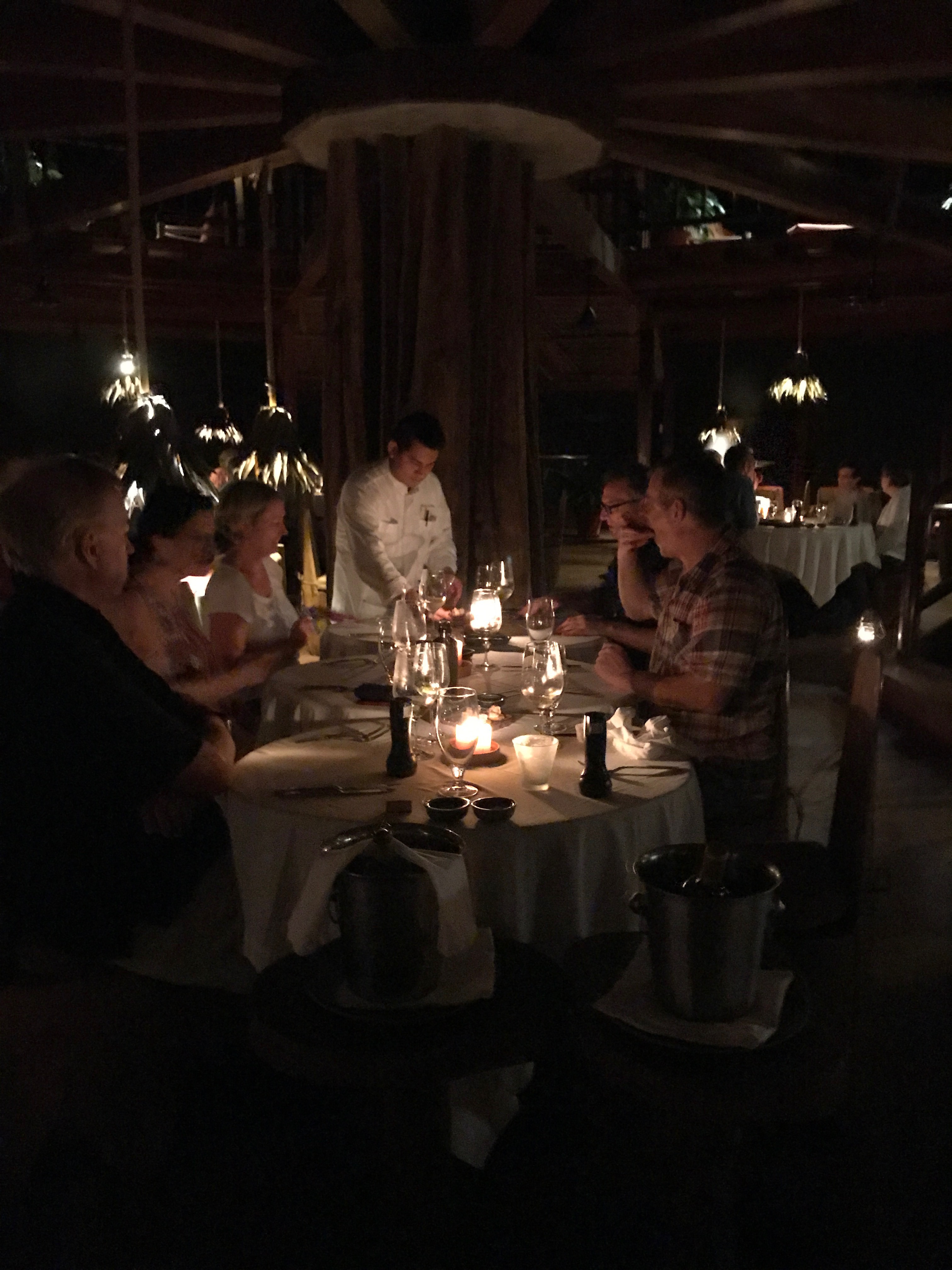
We met some very nice Australians and spent a lot of the rest of the trip together.  Food was fantastic and the candlelit dining room very atmospheric.  


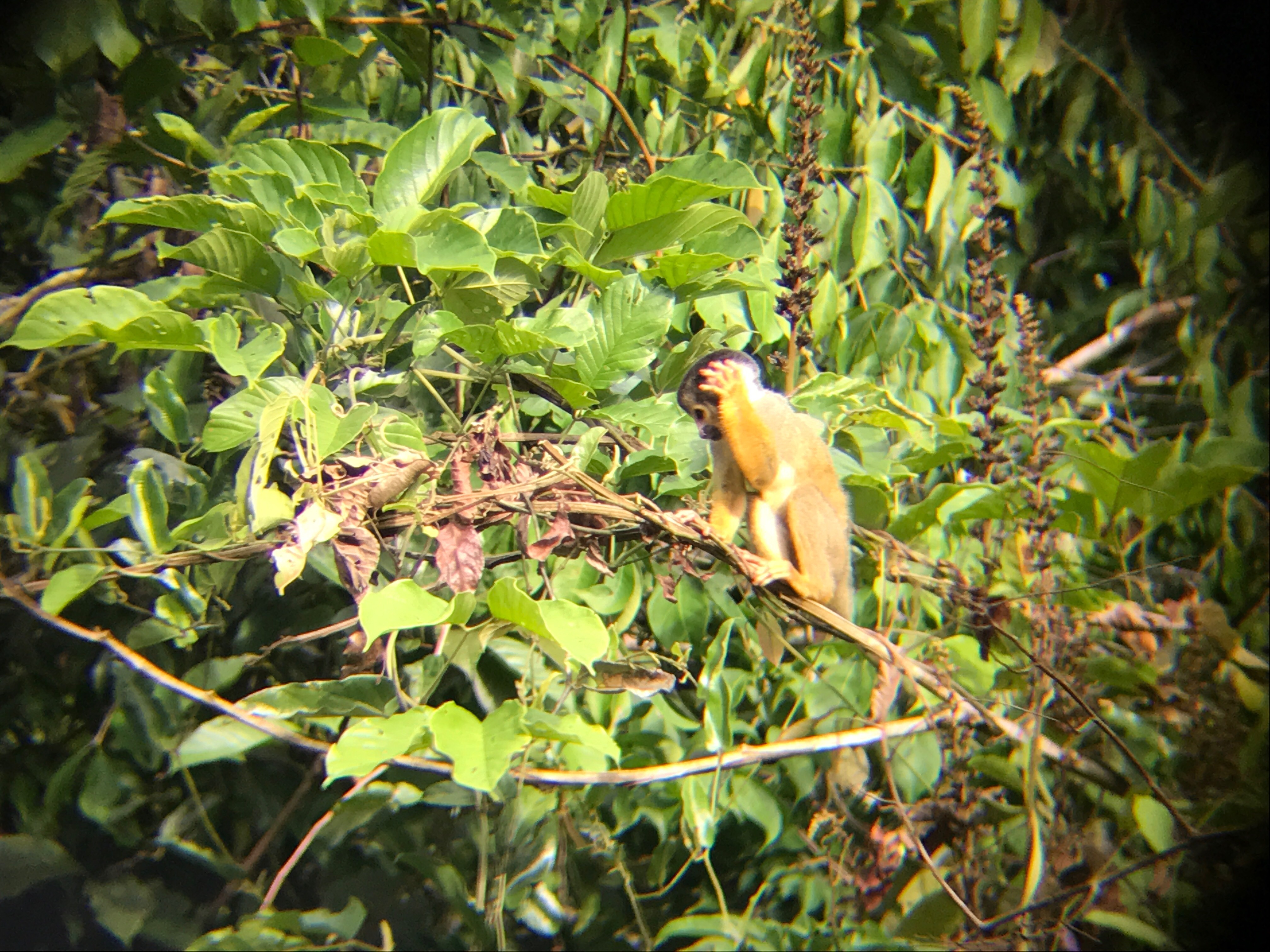
We went to a lake the next day and saw giant otters and monkeys amongst other things.  


We also saw Mosquitos.  I was really hoping with long clothing and 3 layers of deet and citronella, that I could escape them but the little buggers sneak in somehow.  Luckily the bedroom was pretty clear because of the netting 


The other thing is the damp.  It shouldn’t come as a surprise, but for some reason it did, it really rains a lot in the rain forest.  Even when it’s not raining it’s humid as hell.  Your clothes are damp, your books curl up like a toilet roll that’s been dropped down the loo and dried out.  You know that episode of friends where they go to Barbados and Monica’s hair goes nuts?  That was me.  I didn’t even think about makeup.  It would have slid of my face in a Dali-esque manner within seconds.  The good thing is that you can hang up your clothes and they iron themselves and no one ever has to water the petunias.  

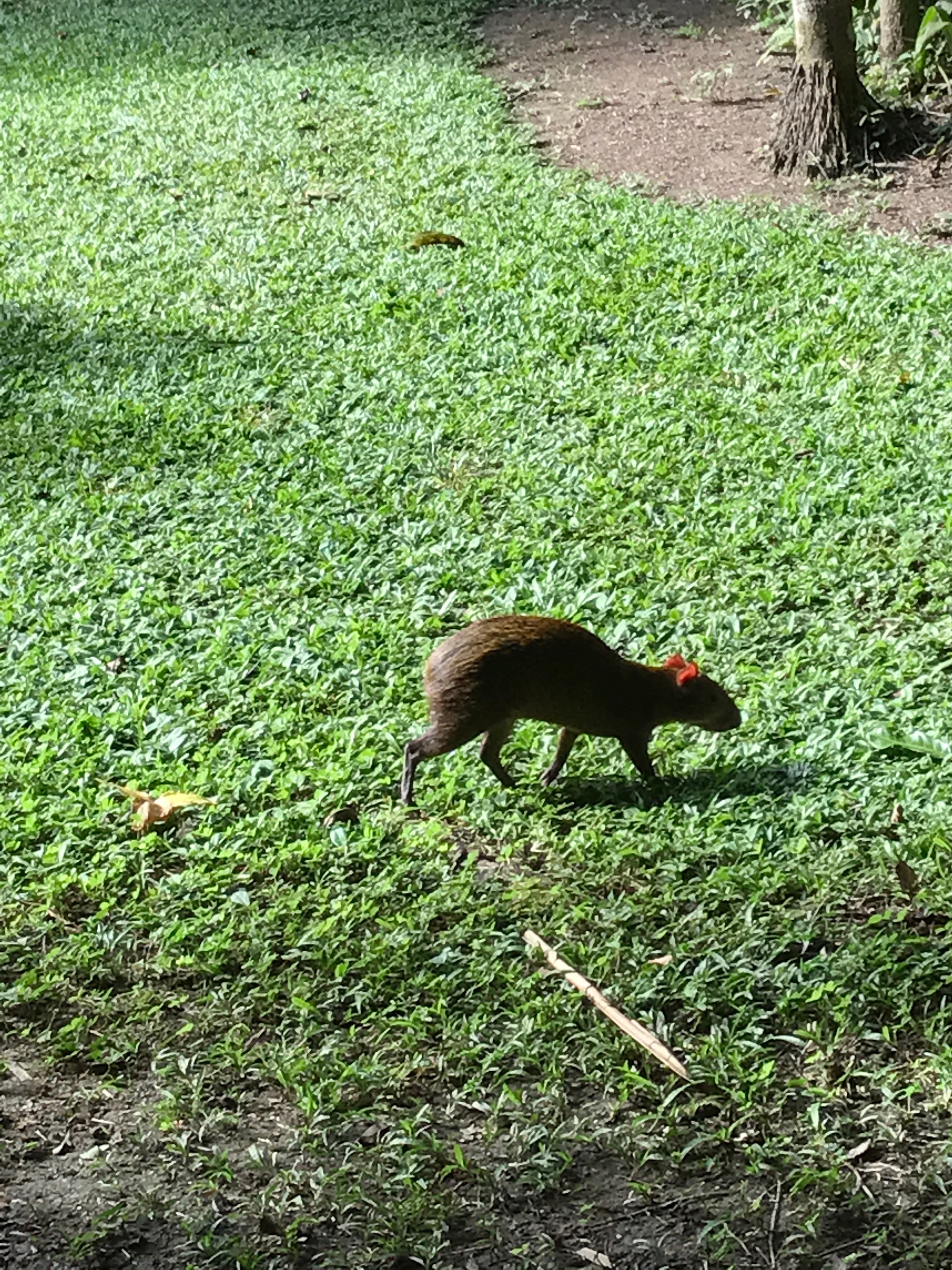
The peace is wonderful there although it’s not quiet.  The animals take their turn to make a racket.  Tree frogs and crickets and birds at night, the parakeets in the day, but they are kind enough to quieten down in the morning to let you sleep.  Apart from one pesky Aguti who decided the best time to eat his nuts was at 6am under our cabin.  


I’ve written this from Cusco – more on that later.   

We loved the rainforest and will be back, maybe to the Brazilian side next time.  


Haste luego Cuba

We bid a sad farewell to this beautiful Island and our lovely guide Ariel at Jose Marti airport.  Pretty much everything in Cuba seems to be named after Jose. 

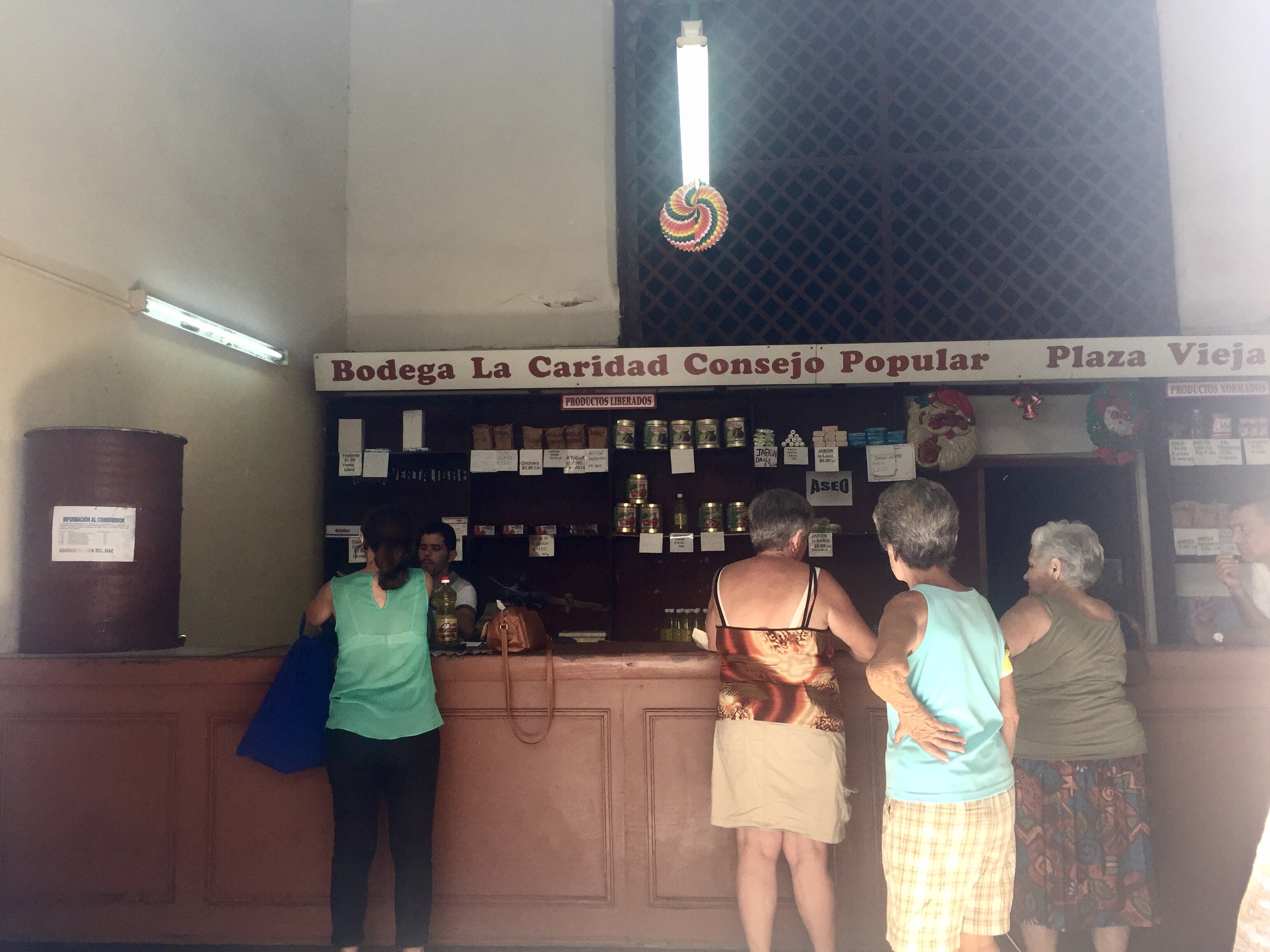
We’ve met some lovely people.  They are attractive, lively, kind and fun to be with, but there is rarely a conversation that doesn’t turn to politics and the frustration of their lives.   Most people work for the state wage which is about 15-20 pesos a month (£12-16).  They get paid in the local currency which is worth about a quarter of the “convertible” peso which has been devised to halt the wide spread use of the US dollar.  Everyone gets a ration of food which is affordable and can be bought with local currency.  It amounts to a big bag of rice, another of beans, one leg of chicken, sugar,oil, coffee and a bar of soap. That’s for a month!  Anything extra is expensive and has to be bought in convertible and they are given a bad exchange rate, so everyone is working overtime trying to get extra convertibles so that they can buy food and clothes.  But they can’t earn convertibles and it all has to be done backhanded.  It’s very confusing.  The state bans any kind of free lance work or selling goods on the open market.  The healthcare and education is good but who wants to train as a doctor and still not earn enough to feed and clothe your family?  Everyone wants to get out, mostly to the US, but it’s nigh impossible to get a visa and even if they could the ticket alone would cost several years salary.   

The rations shop.

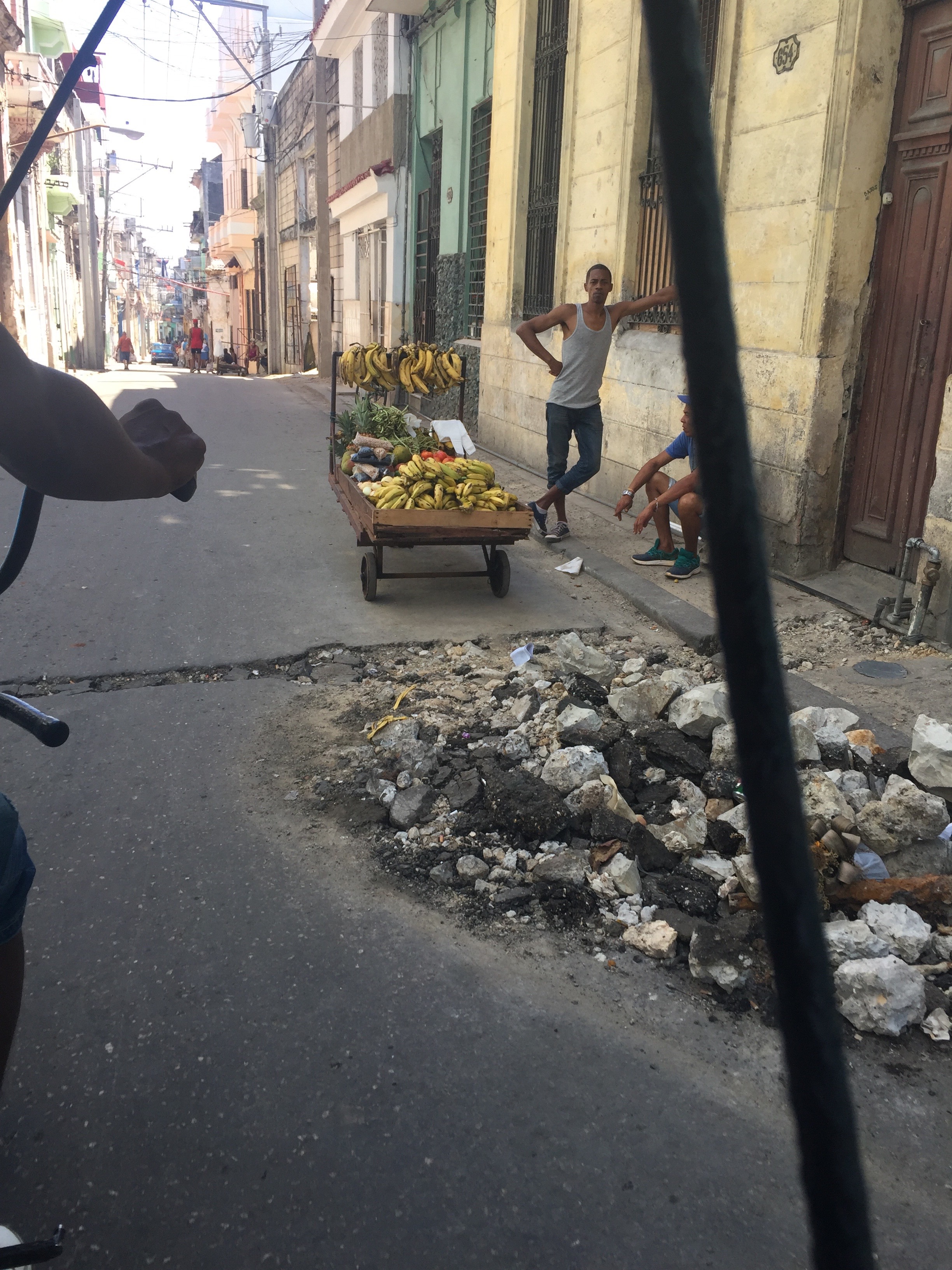
Street vendors sell produce, often illegally, but it keeps the food supply going.  
What you have is a nation of people who aren’t starving, but are hungry, not just for food, but for opportunity and more freedom.  And with Castro gone and his aged little brother now commanding but without such a strength of support, it’s a powder keg.  
On a positive note we spent a lovely afternoon with Juana and Rodrigo, 2 friends from childhood who did the tourist pickup thing and somehow we ended up buying them lunch in a bar that everyone swears Mick Jagger and Madonna went to and where they filmed Fast and Furious 217.  Apparently.  Both single parents (divorce rates are high and birth rates are low due to the expense of having children) she is a trainee teacher and he is a social worker.  Anyway, the rum flowed and the rice and beans and goat was delicious, and they told us more about Cuba than you could get from any guide book.  Like everyone they are working hard and getting little back, and their frustration verged on anger at times, but when they talked about so many people trying to leave they were adamant.  “No, never.  It’s hard here, but mi alma, my soul is in Cuba.  The reason we look happy is because we are happy people despite everything.  We struggle but we dance and drink and enjoy life on this beautiful island”.   Ok, that wasn’t their exact words, I was on the rum too and I’m translating, but that was the gist.   On a superficial note, we assumed they were in their 20s.  You could have knocked me over with a palm leaf when they told us they were both 48.  I’m envisioning a whole new diet fad.  We embrace the glorious revolution whilst losing weight and staying young.   3 portions of rice and beans a day with as much tropical fruit as you can eat and no need to go to the gym as you walk everywhere because you can’t buy a car.   The GR plan.  

Vinales

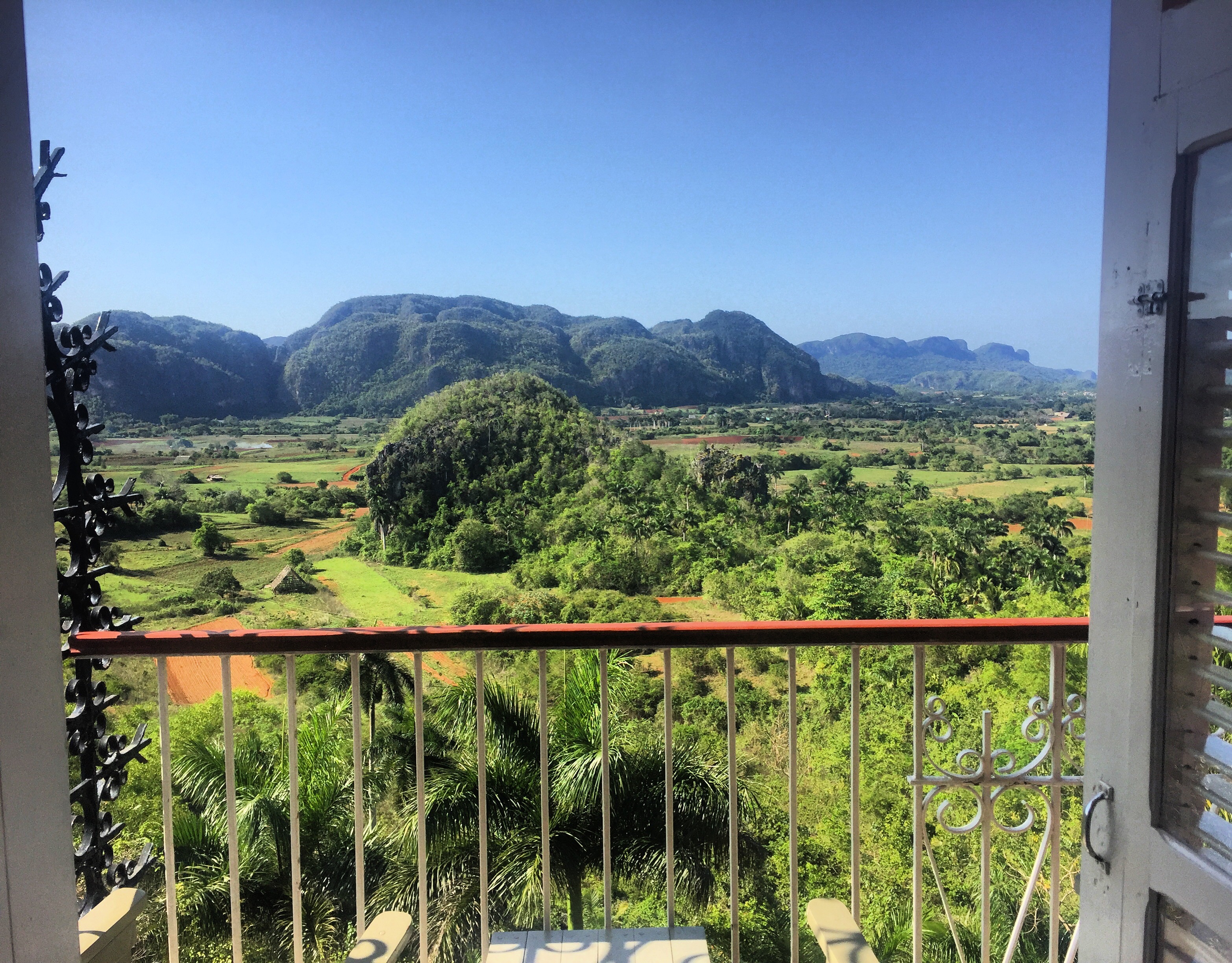
A 6 hour drive to get here from Trinidad.  It didn’t seem worth it for one night, despite the odd diversion on the journey such as the young guys racing their pony and traps 3 abreast on the highway, and various people selling all sorts from mangoes to a dead turkey.  Then we arrived and were greeted by this view.


The photos doesn’t do it justice – just stunning.  The hotel was basic.  Someone clearly decorated just before the revolution and forgot to come back, but it didn’t matter.  

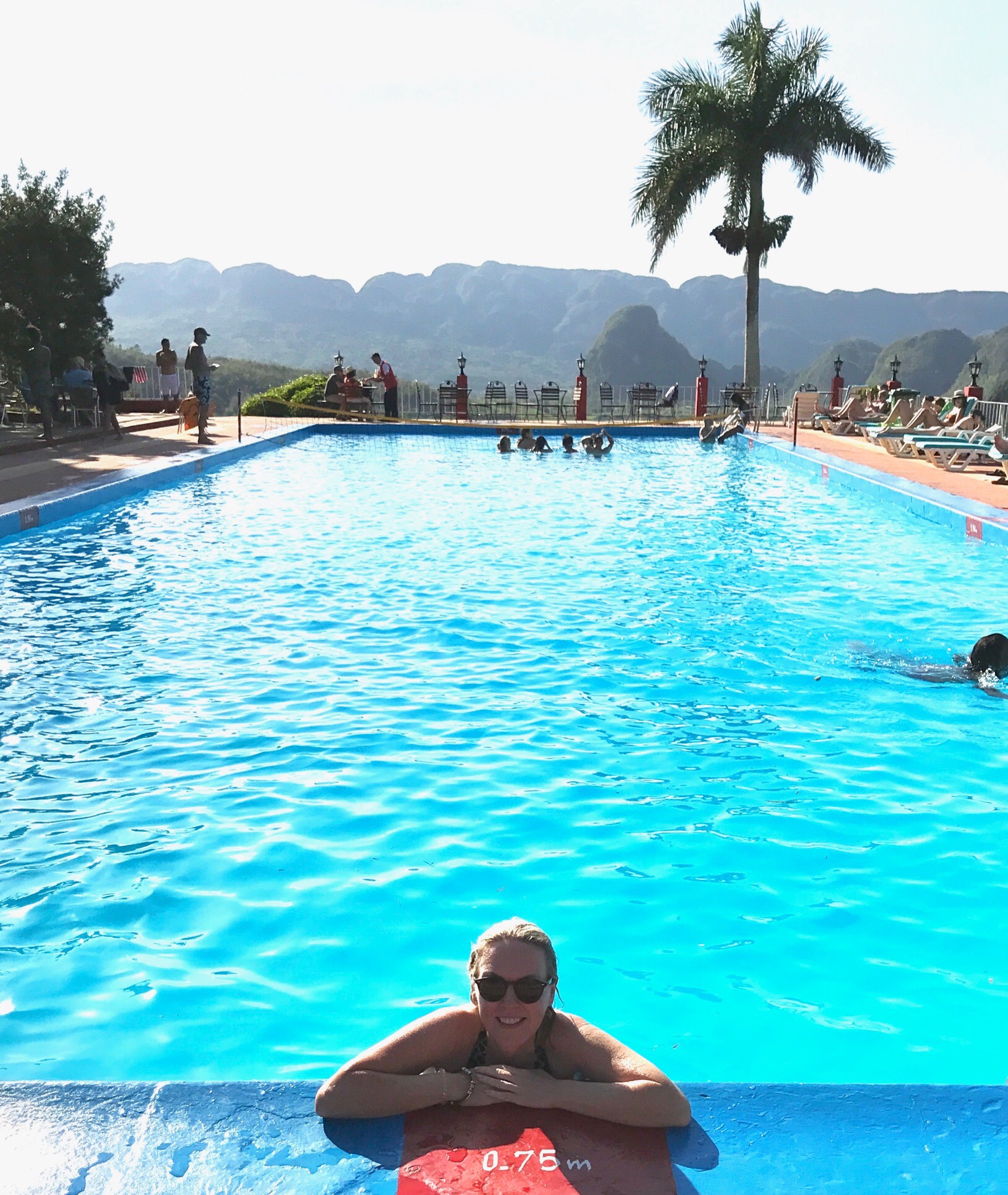
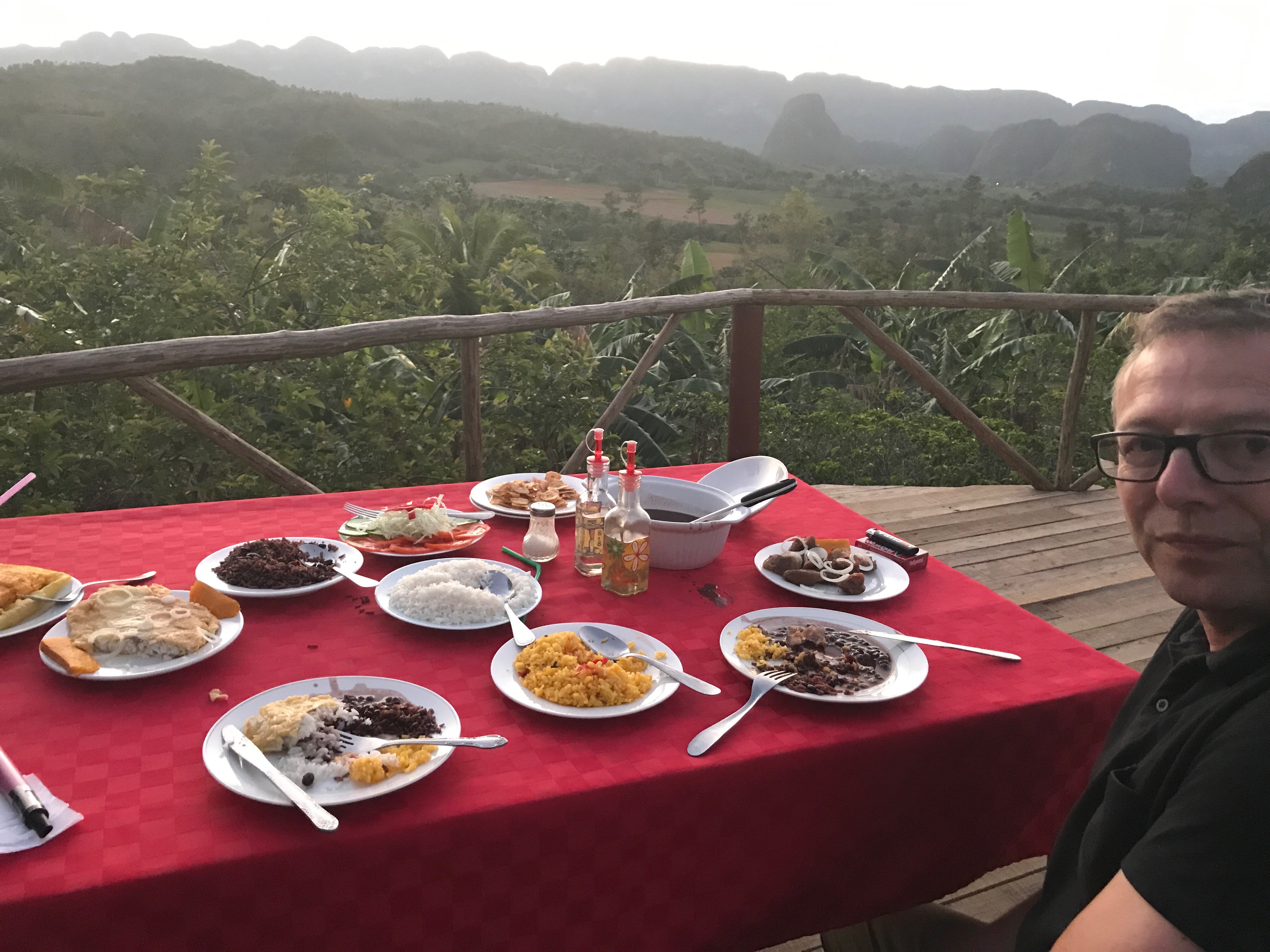
We hung out by the pool for a bit then had dinner nearby watching the sun set over the mountains.  Then when it got dark watched the stars ping one by one amongst the bats and fireflies.   Magical.  


Quiero basilar la salsa – part 2

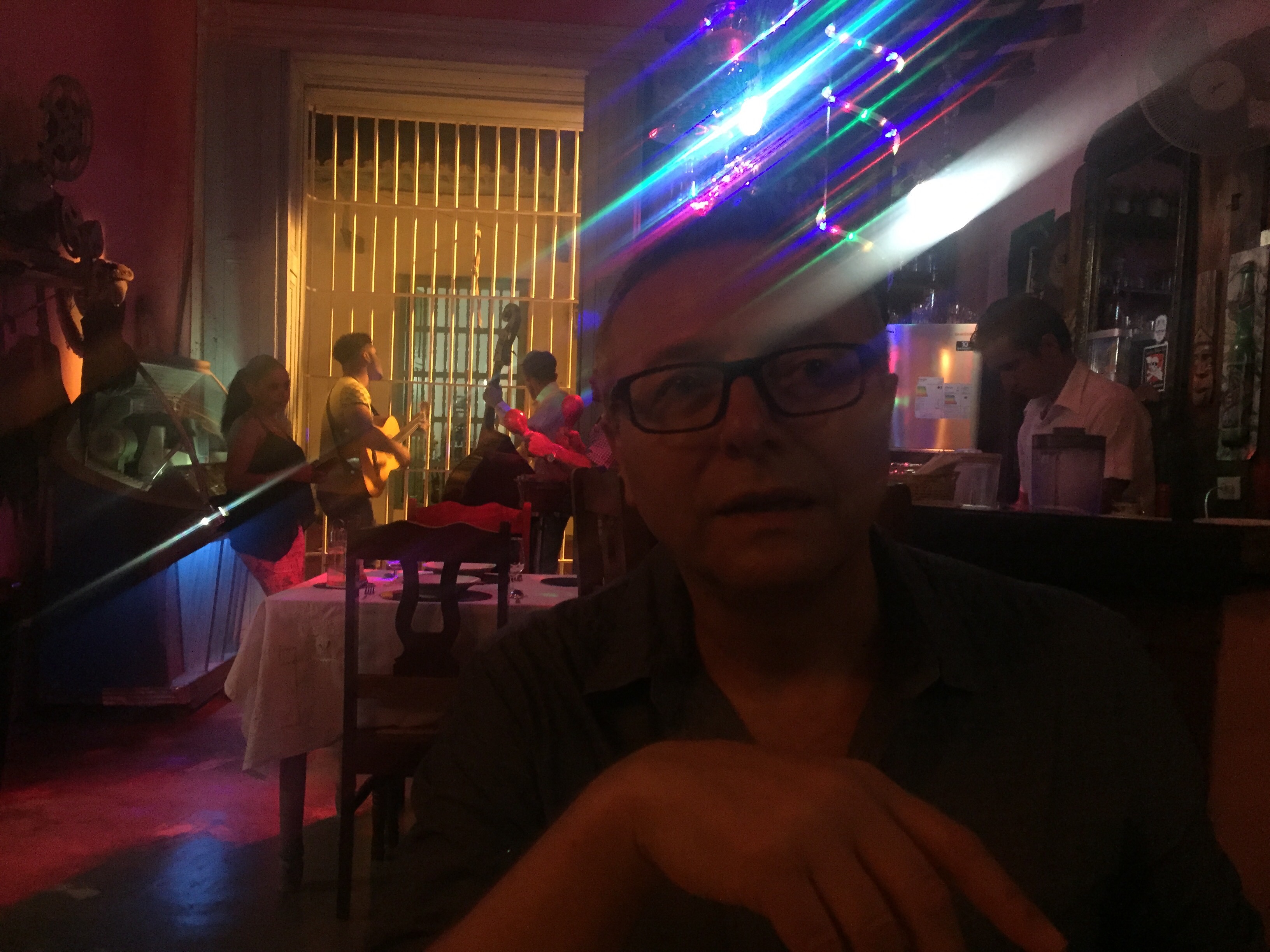
You can’t fault the Gibson Brothers for getting the message across that Cuba is all about the salsa and they weren’t wrong.  The music is everywhere, blaring out of houses in the evening, in every bar and restaurant, and guys walking down the street with little speakers.  But we didn’t get to see much dancing.  Most of the restaurants we went to had a live band and the quality was amazing but no one dances because they are all full of tourists who are too inhibited.  So I did my jiggling table dancing while Tim looked embarrassed.


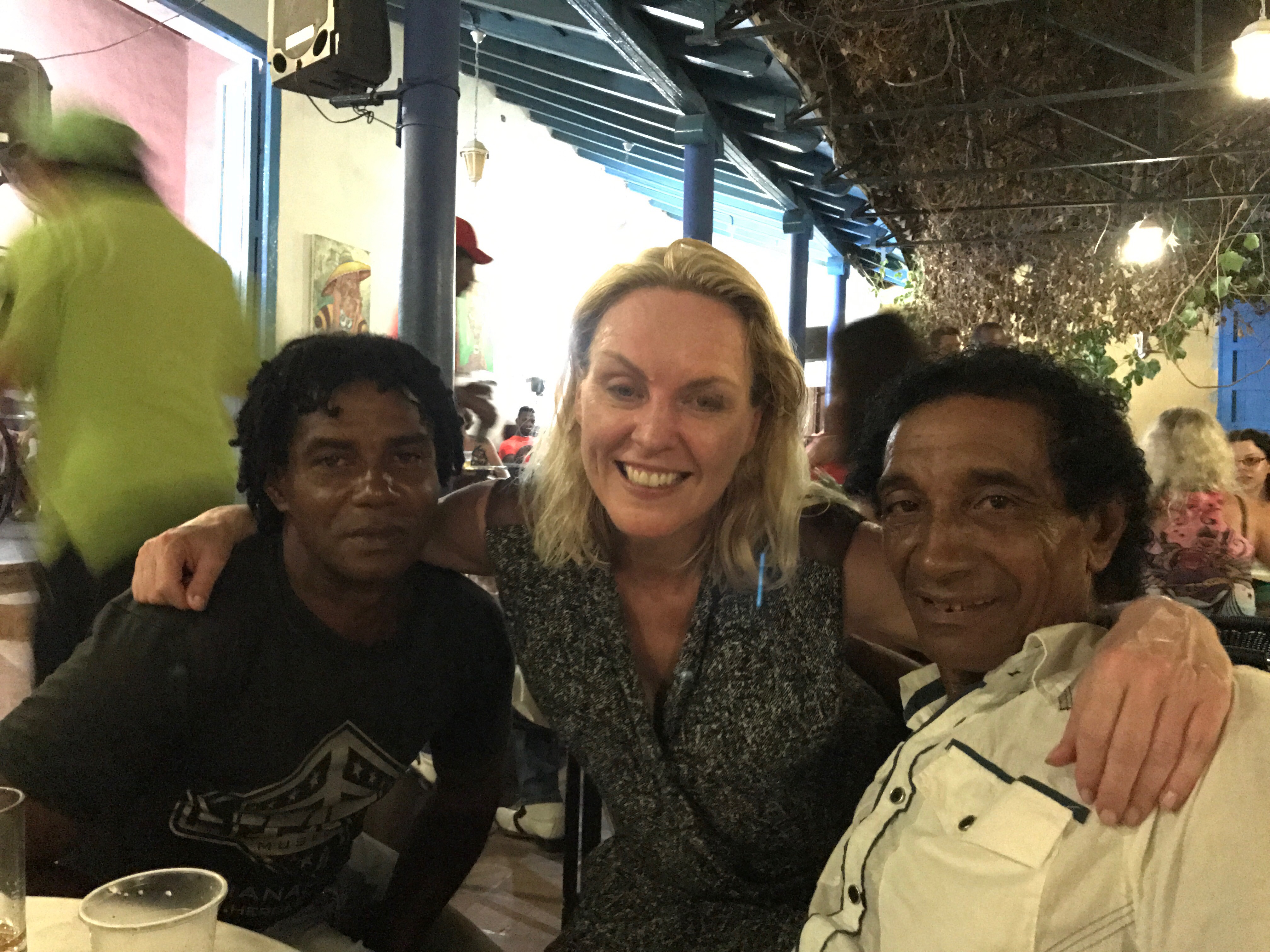
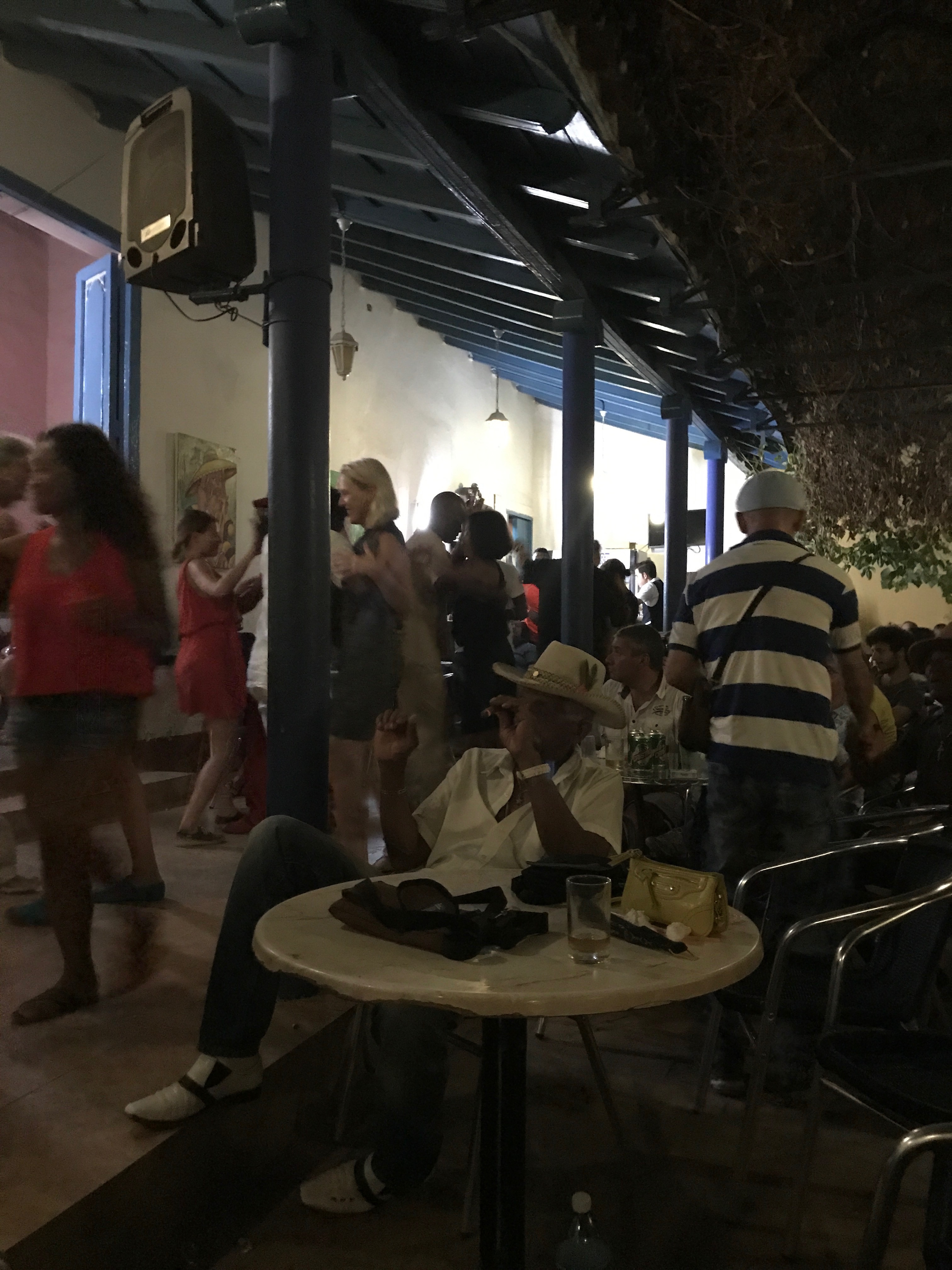
Then in Trinidad we stumbled into a bar and I was in heaven.  A crowded and sweaty mix of Cubans and tourists with great music and a buzzing dance floor.  There were about 5 Cuban guys leading a line dance kind of thing doing salsa and cha cha cha with a gang of European and American women dancing along while their bored-looking husbands sat clutching their drinks and looking on.  A solo singer came on and we all sat and listened.  When he sang “Che Guevara” the Cubans all sang along and some looked like they may cry.  A revolutionary love song.  We got chatting to a couple of locals and when they realised that Tim wasn’t up for dancing, one of them took me to the dance floor when the music livened up again.  The Cubans just have dance in their veins and it was brilliant dancing the salsa with someone who was such a natural.  I was walking on air.  After a couple of songs we went home as Tim was losing the will by that point but I’ve ticked one off the list.  Proper salsa in Cuba.


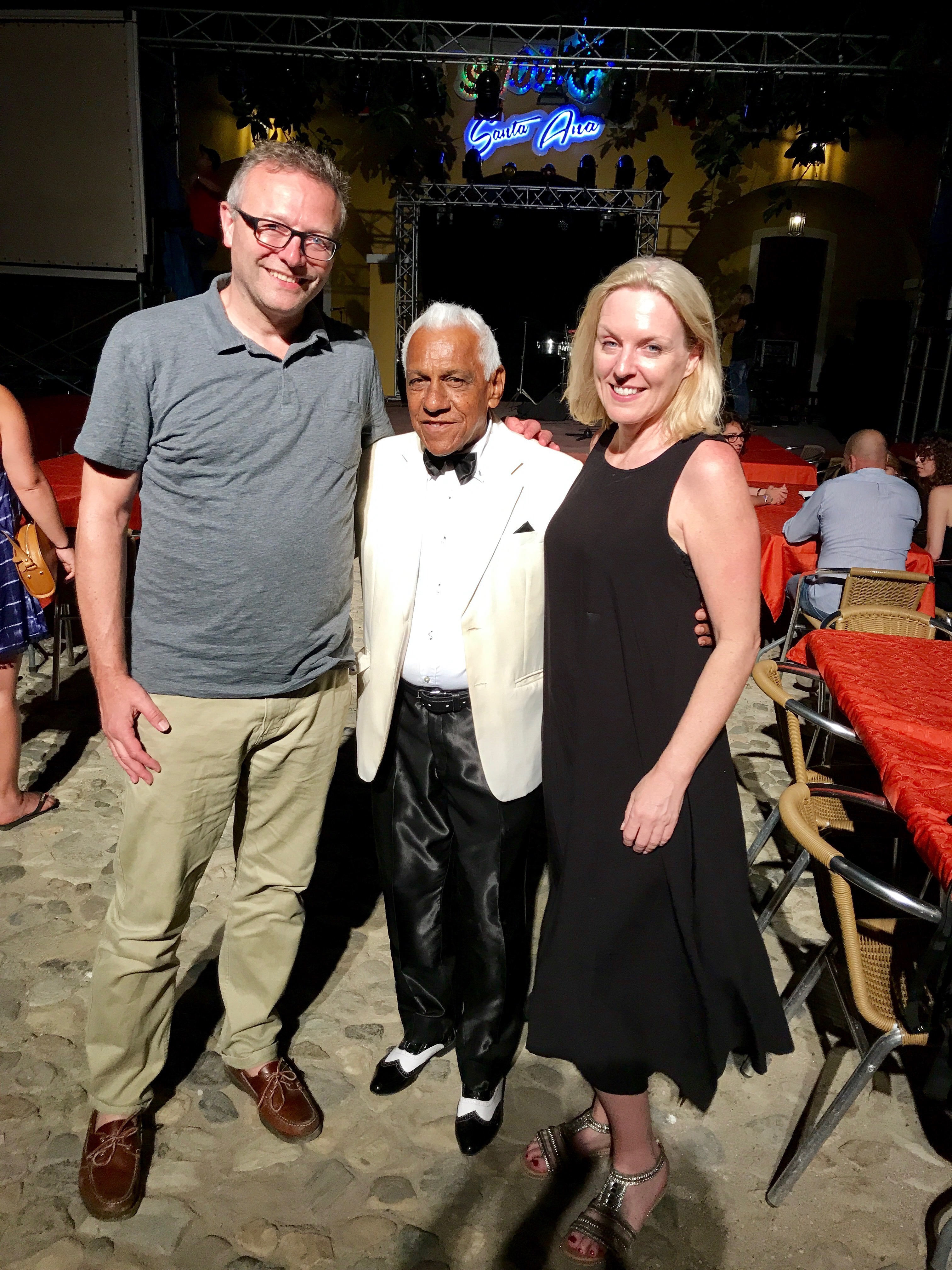
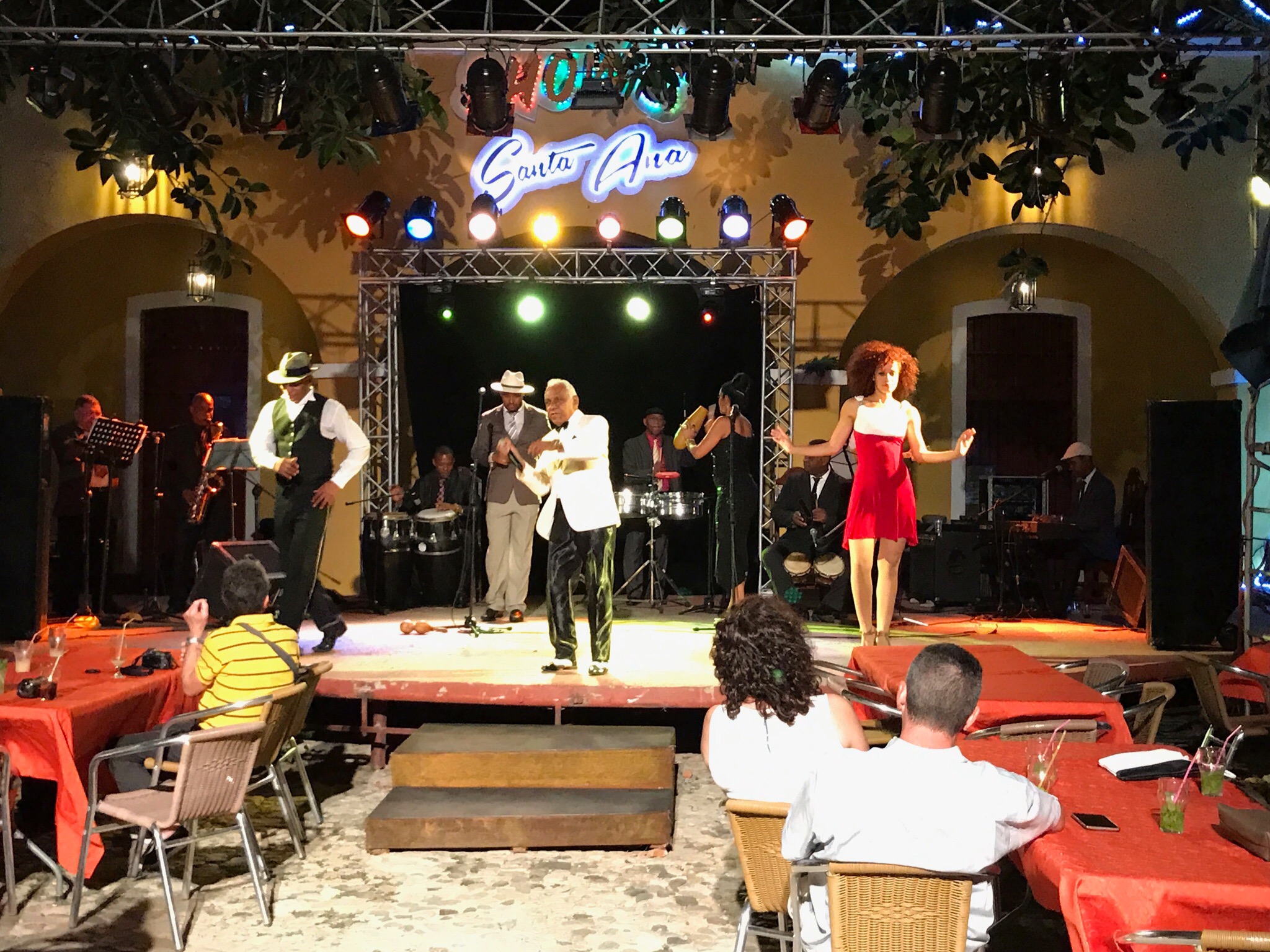
I wanted to go back the next night, but made a compromise and booked tickets for the Buena Vista Social Club show instead. They were great.  Very accomplished and a wide range of talent but because it was all tourists again and only about 30 of us in a huge club, the atmosphere was subdued.  In the end they got us all on stage dancing, even Tim, but it did feel more like a Latin Butilns show than anything.  Worth seeing though.  

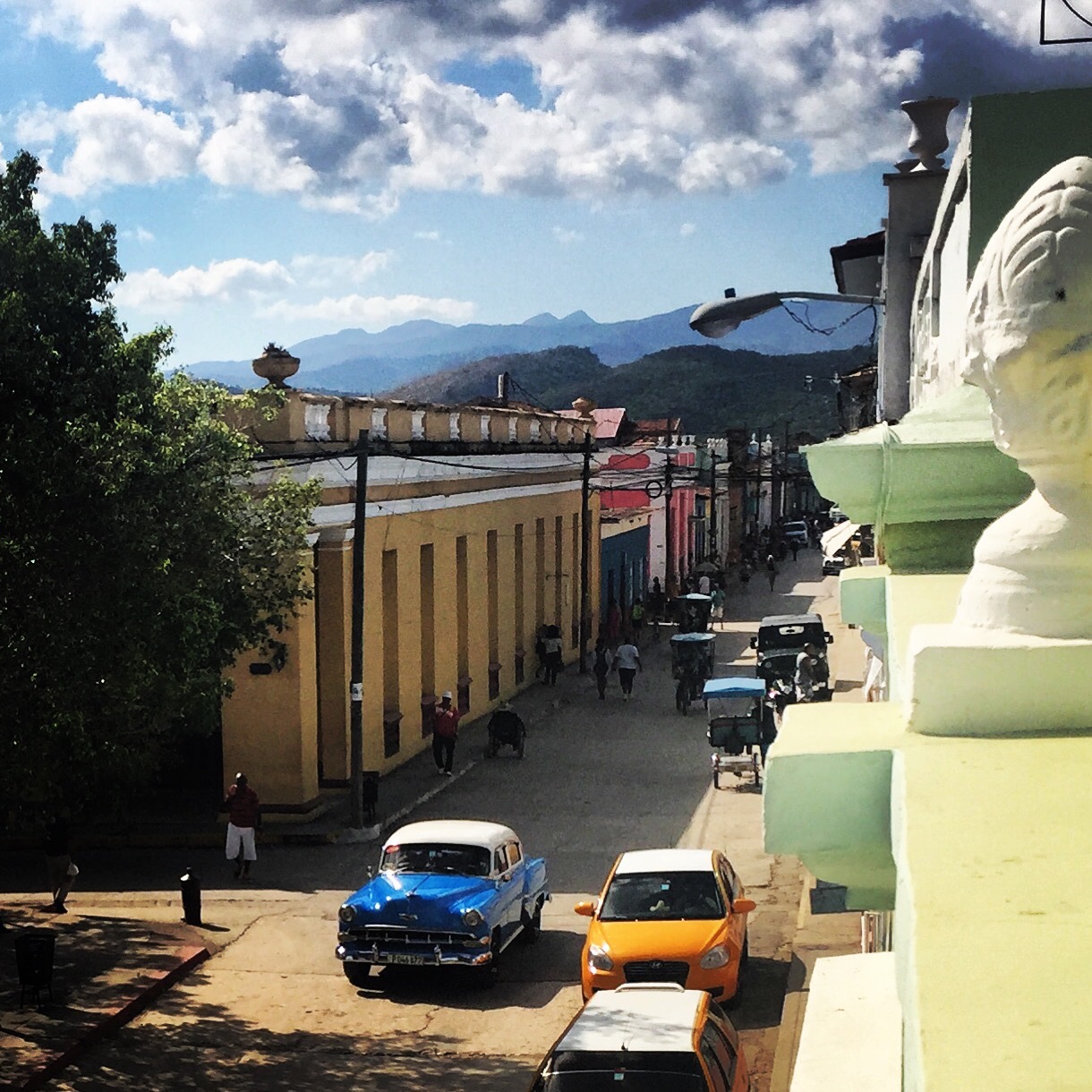
Above Trinidad

Lovely hotel.  An old colonial building overlooking a square.  The internet is tricky.  Our hotel is about the only place that has it and even then you can only use it in the bar for short periods.  Baptism of fire for Tim and his email addiction and me and my constant perusing of crap on social media.  Because of the internet zone, the square is always busy with people connecting with the internet and consequently each other.  The internet is a social thing here because you have to do it in a crowd.  I even spotted a police officer parked outside last night looking at Facebook.  


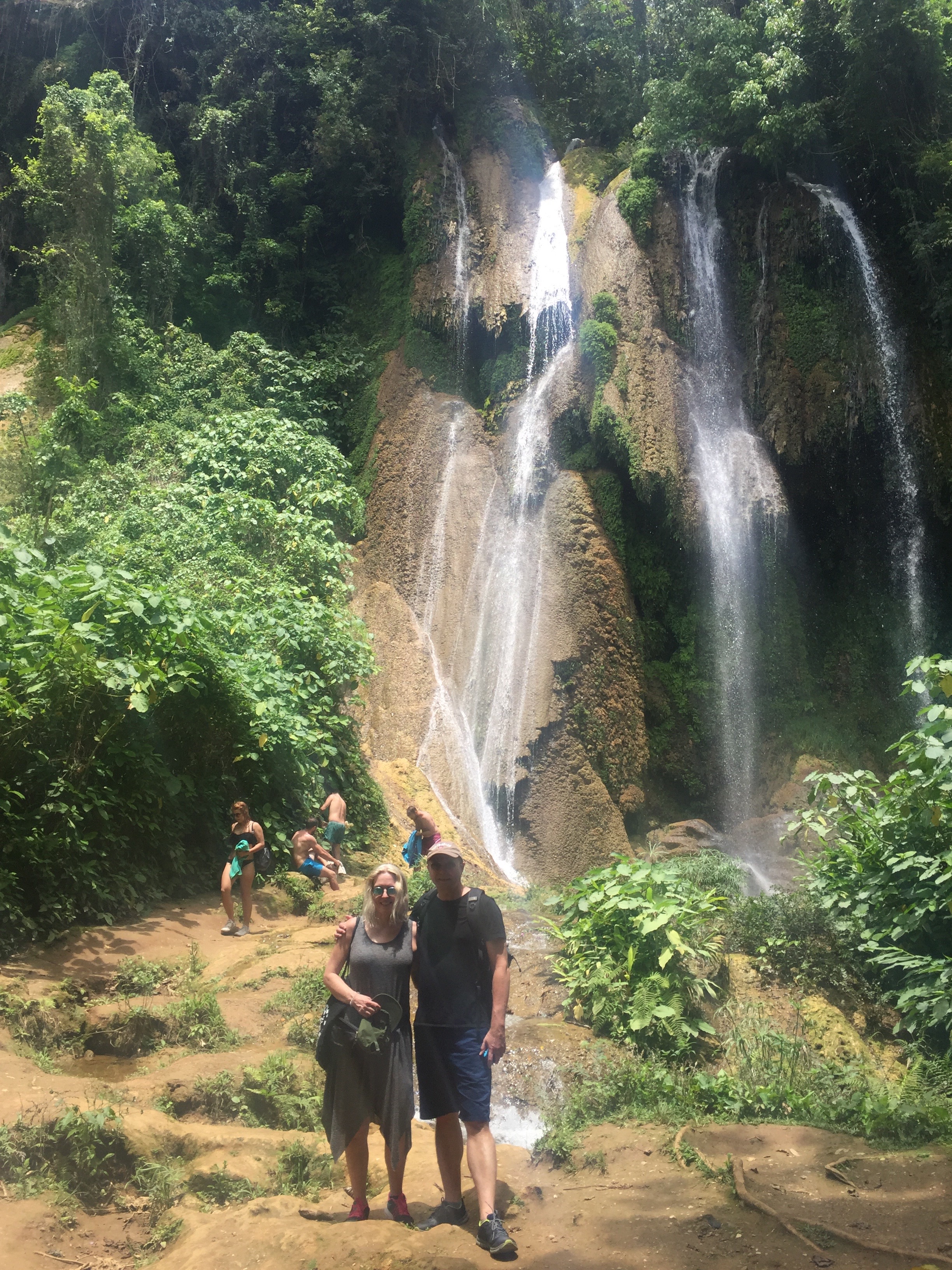
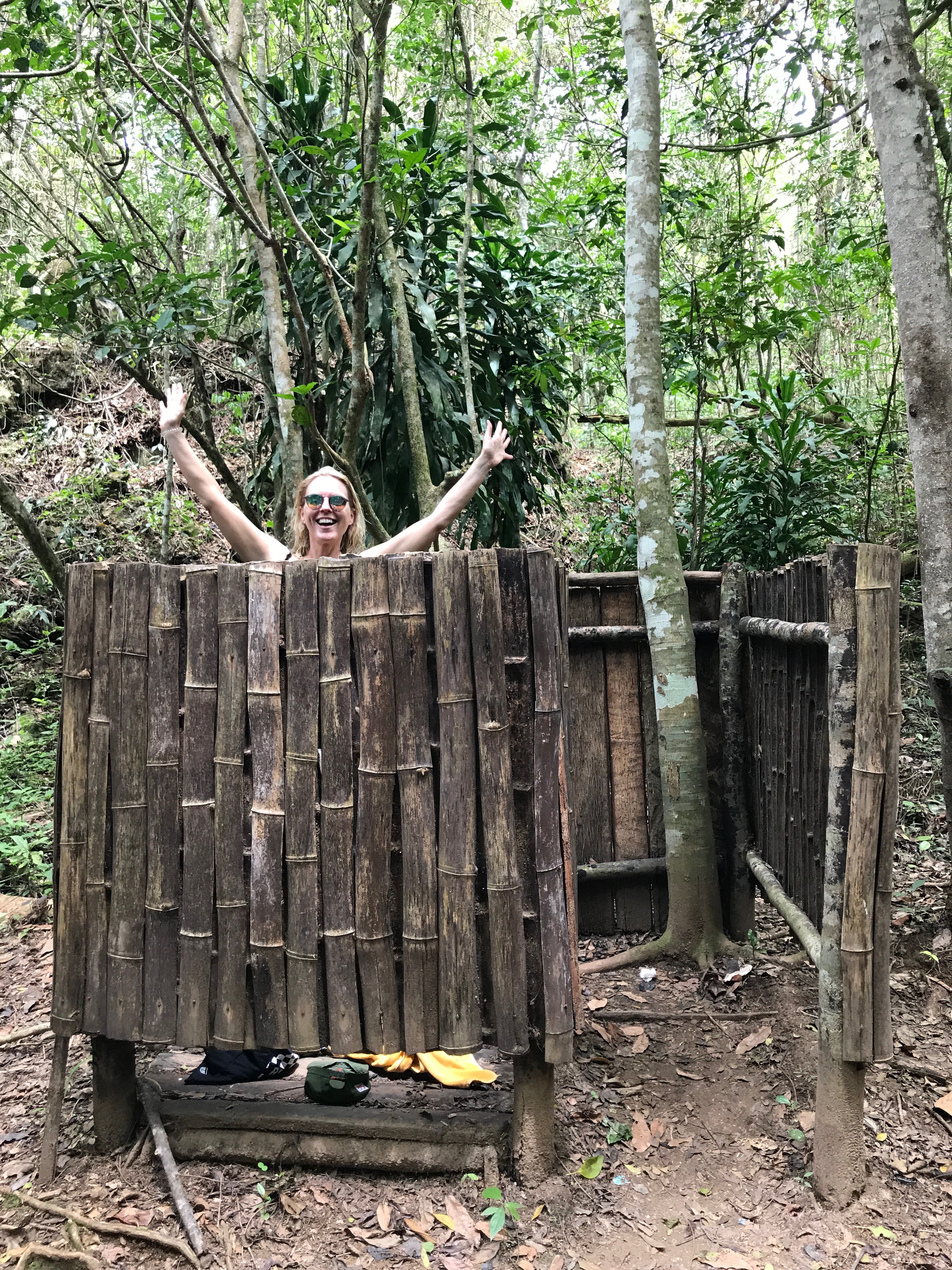
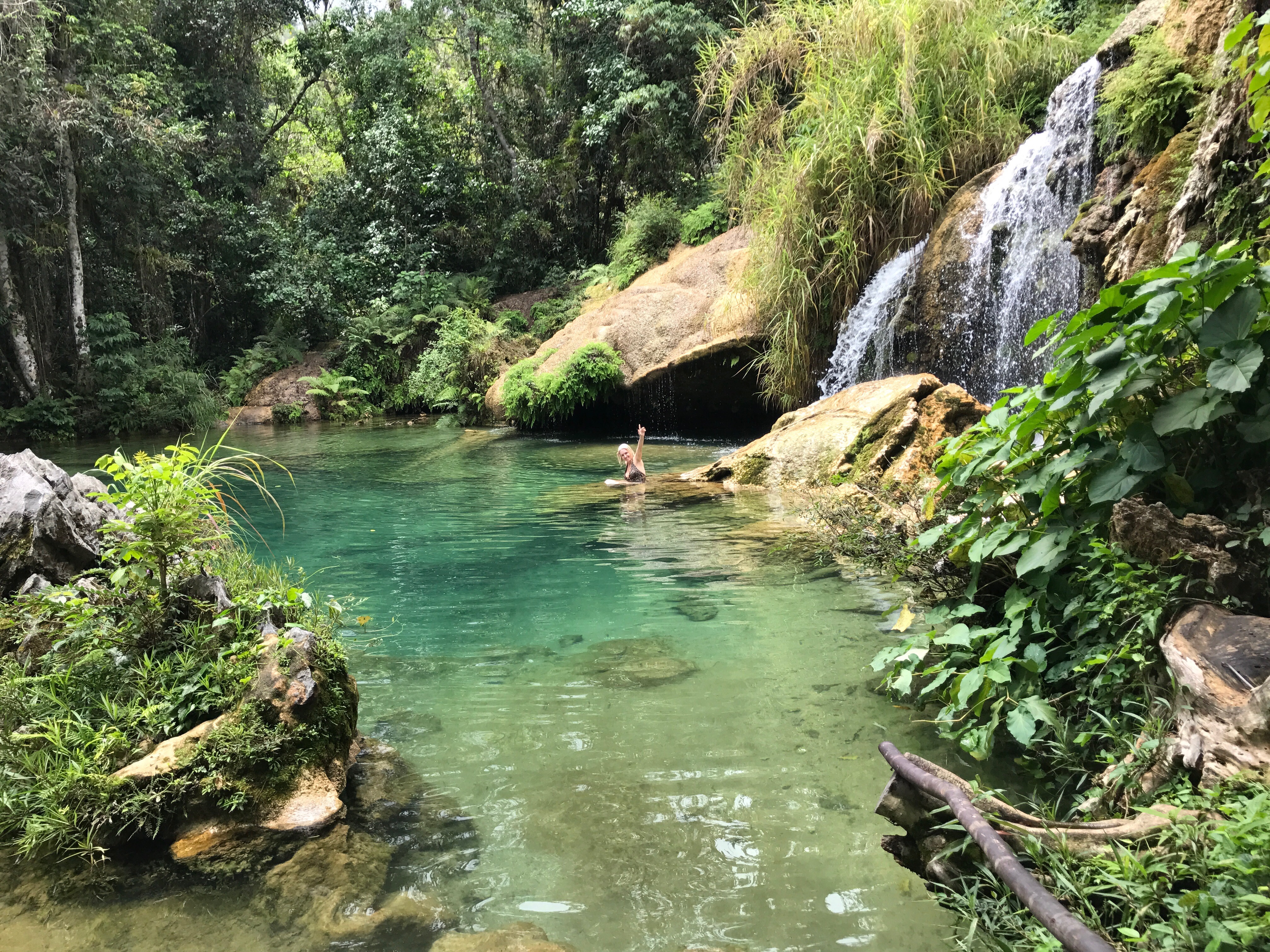
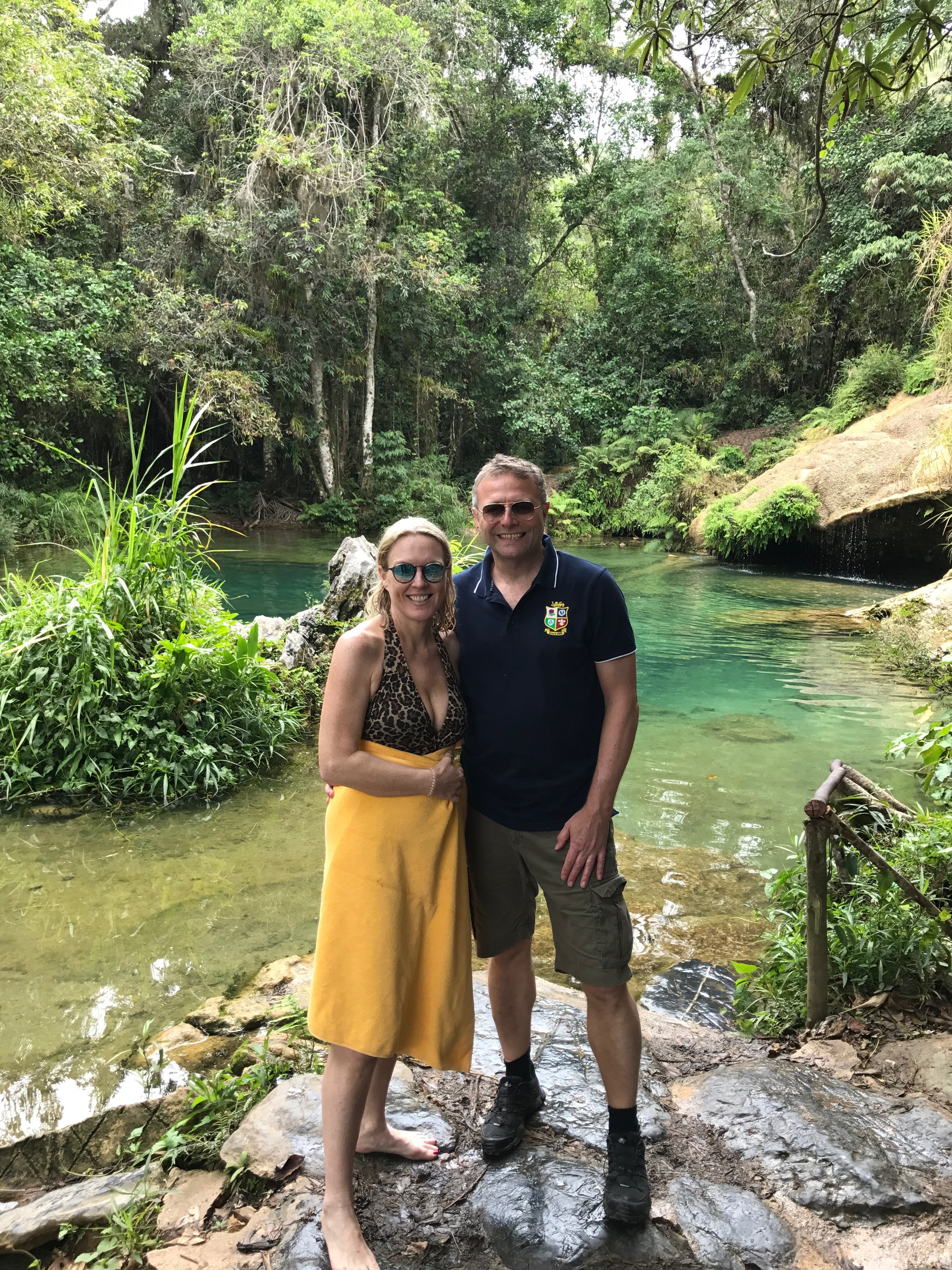
Yesterday we went up out of Trinidad in a 4×4 taxi to the Sierra del Escambray to do the Guanayara tour which involved a vey bumpy drive up and down the mountain roads and a 5km trek through the forest with a guide who gave us the lowdown on all the plants and birds.  We then ended up swimming at a beautiful pool with a waterfall.  It was a bit crowded and trying to get dressed in the company of 50 other tourists is a little daunting but we managed to save our modesty for what it’s worth.  We climbed higher and were driven to a weird “ranch” in the middle of a sanitarium complex where we had a utilitarian lunch in one of the state owned restaurants.  Cuban food is nothing to write home about but it’s good.  If you like rice and beans you’re onto a winner.


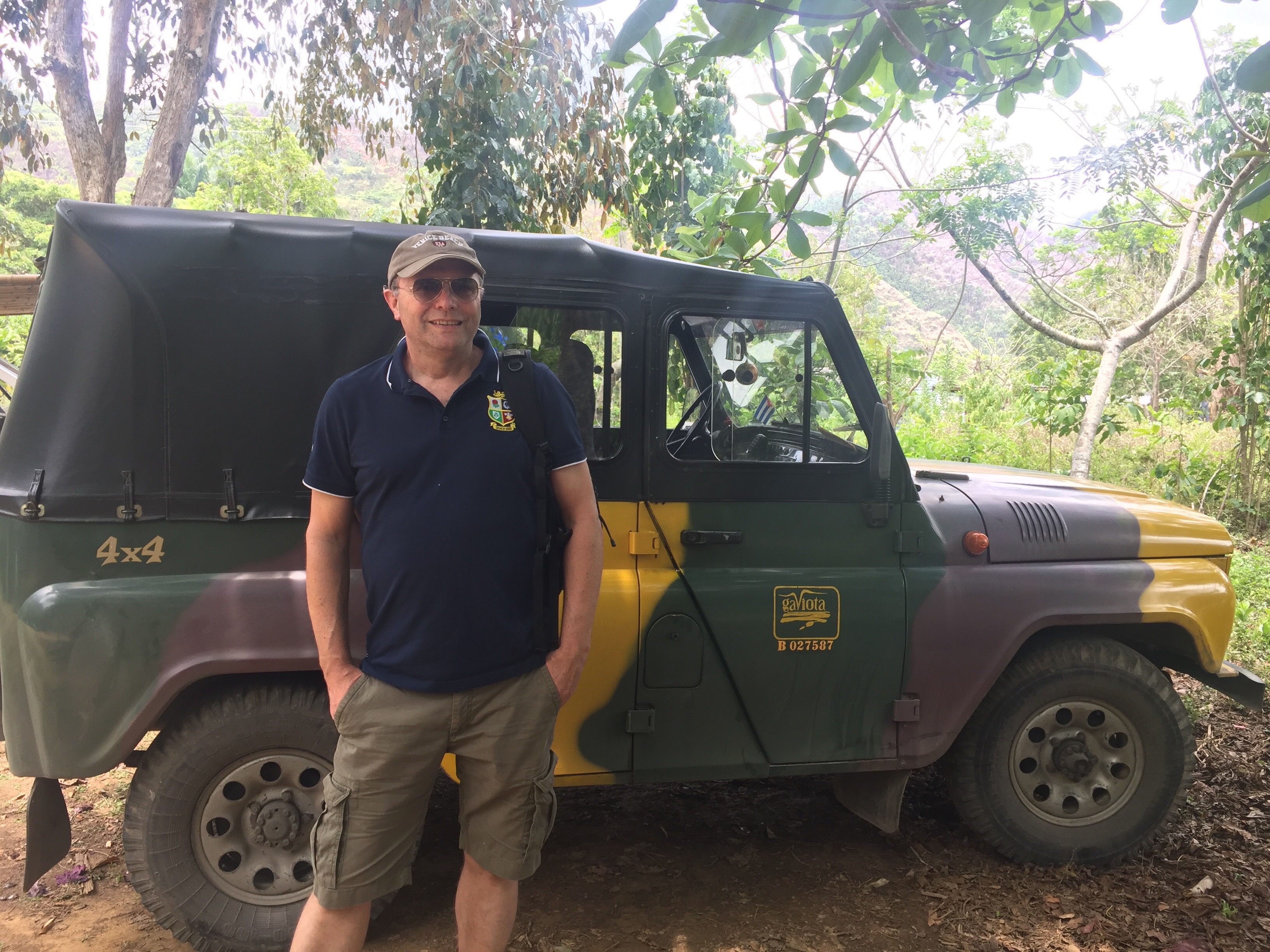
Today, for some reason we had been booked onto a similar tour but this time to El Nicho, further up and in an old Russian army jeep that was born long before the concept of seat belts or suspension had been imagined.  5 hours round trip being chucked around, dodging chickens and stray cows, for a 1km trek and another waterfall swim.  It was stunning and this time we were alone so it was almost worth the bone shaking journey.  


Most of the road is forest, coffee and bananas.  Not much to see except greenery but the villages are fascinating, as if you’ve stepped back in time.  Very handsome young cowboys on horses, kids riding carts pulled by oxen, livestock roaming freely on the road, the farms hands who wave when you pass and the omnipresent slogans painted on the side of houses praising the glorious virtues of Che and Fidel.